
The RCTS returned to the Czech Republic for a fifth week-long tour, this time based in Brno in the south-east – the capital of Moravia. As always, the tour was organised by the ever-knowledgeable Steve Ollive, Chairman of the Windsor & Maidenhead branch. Most participants were regulars, with a couple of newcomers trying it out. People arrived by train, plane, and automobile, and most stayed at the very central Grand Hotel opposite the main station.
The tour officially began on Sunday 31st May, but a large group explored the tram network of Brno on the Saturday and visited the main railway facilities around the city. A few alterations to the planned itinerary were made because of “events”, so the details of journeys and haulage published here are the actual outcome for the main group. Some variations were made by individuals, with a WhatsApp group proving to be an invaluable tool for coordination. The Czech One Ticket, sponsored by the Czech Ministry of Transport – (£95 1st Class, £80 2nd Class) covered most journeys
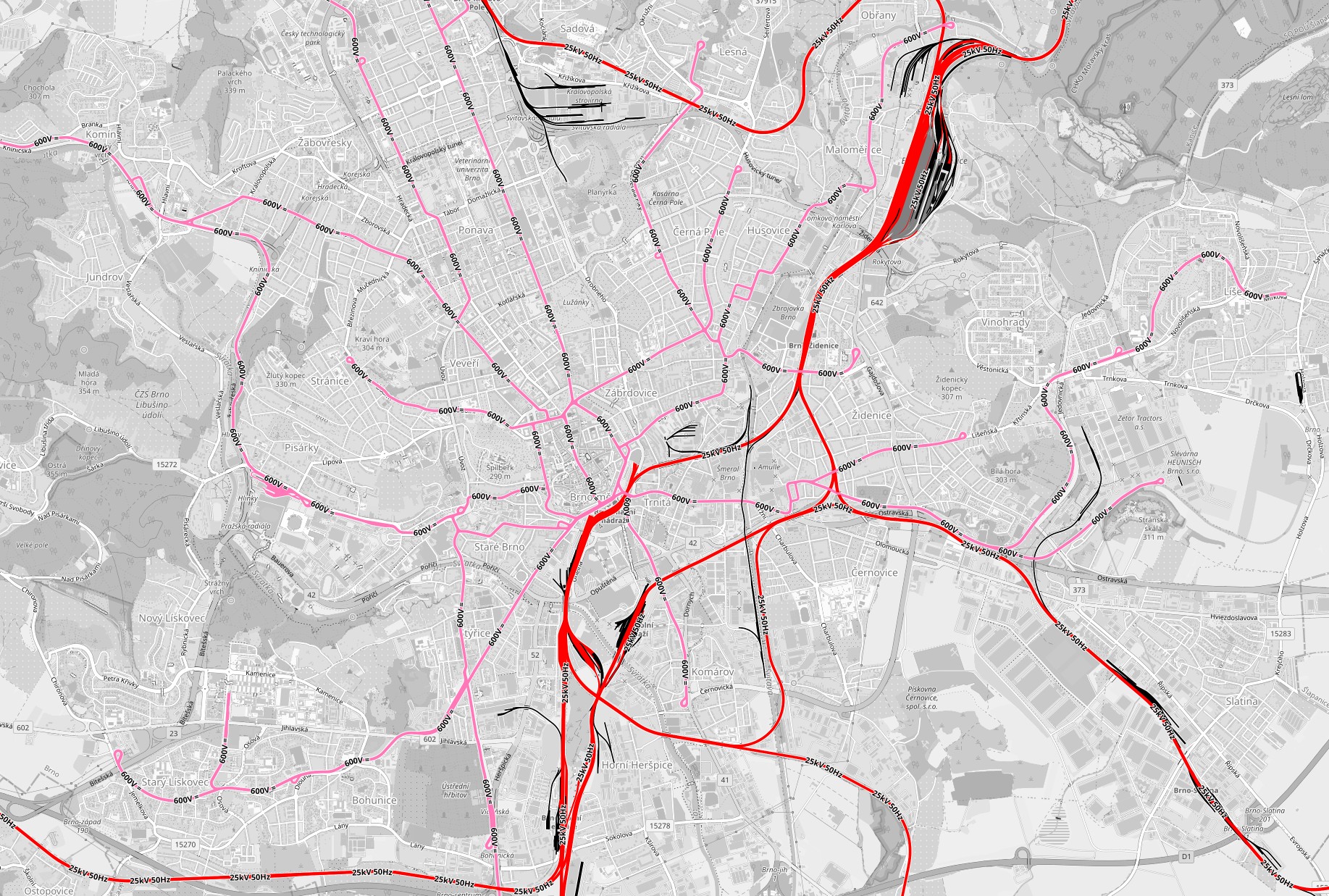
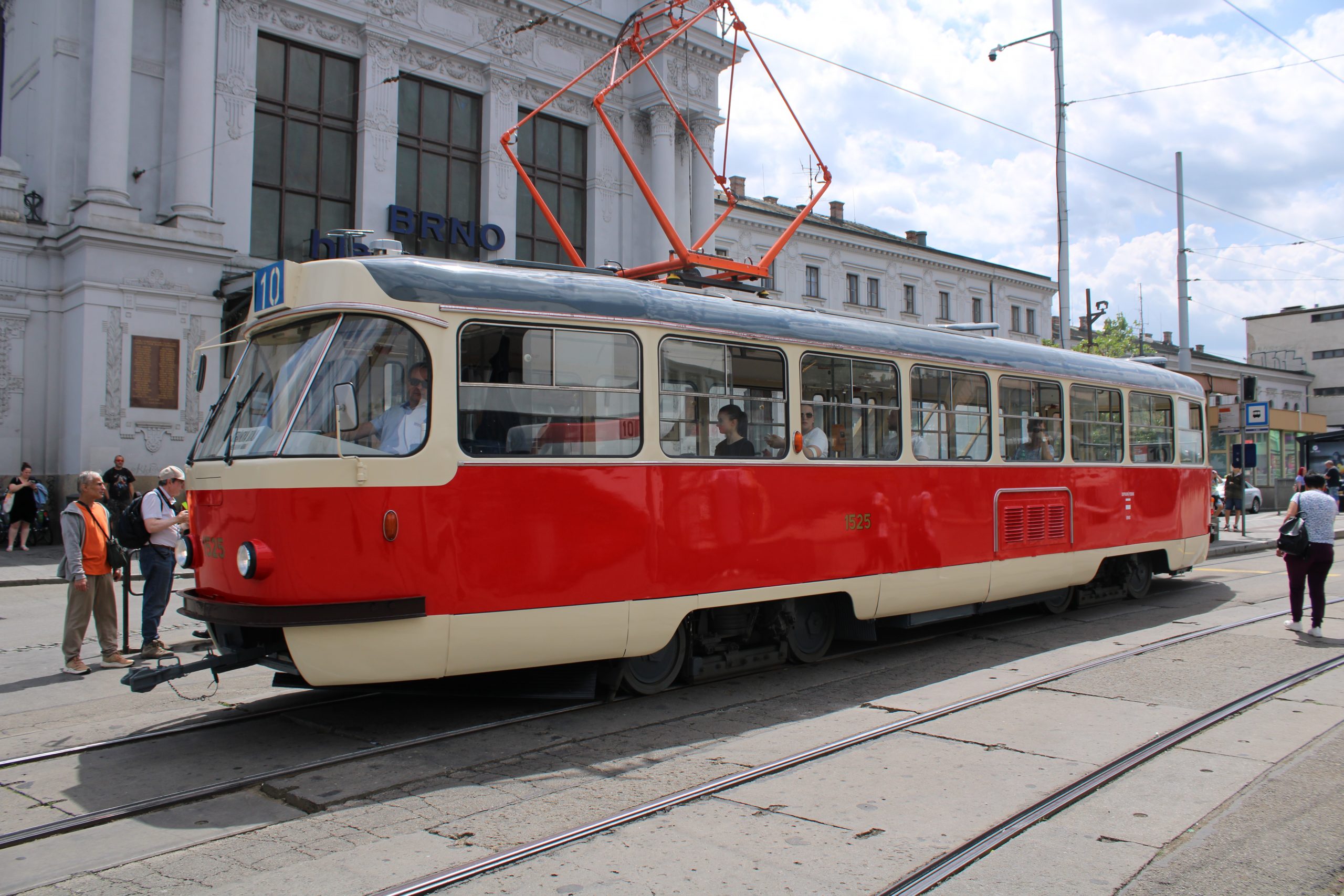
Brno is the Czech Republic’s second city. The core is historical and very attractive, but the heavy industry that previously surrounded it is in decline. The tram network comprises 11 lines, most of which funnel past the main railway station entrance via a 4-track halt. Line 1 extends far out of the city to a leisure area adjacent to a lake and is one of several “rapid” lines that skip stops. Several lines were following diversions because the central routing through the historical squares was suspended for construction work.
The Brno City Transport Company (Dopravní podnik města Brna or DPMB) operates a fleet of 286 tram vehicles. Sitting in the bar at the Grand Hotel on a Friday evening turned out to be an ideal location to see a large percentage of them. The older vehicles built during the Communist era are by Tatra (Prague), the newer vehicles by Škoda. Škoda’s ForCity Smart 45T low-floor, bi-directional trams are assembled in Plzeň from parts welded in Finland.
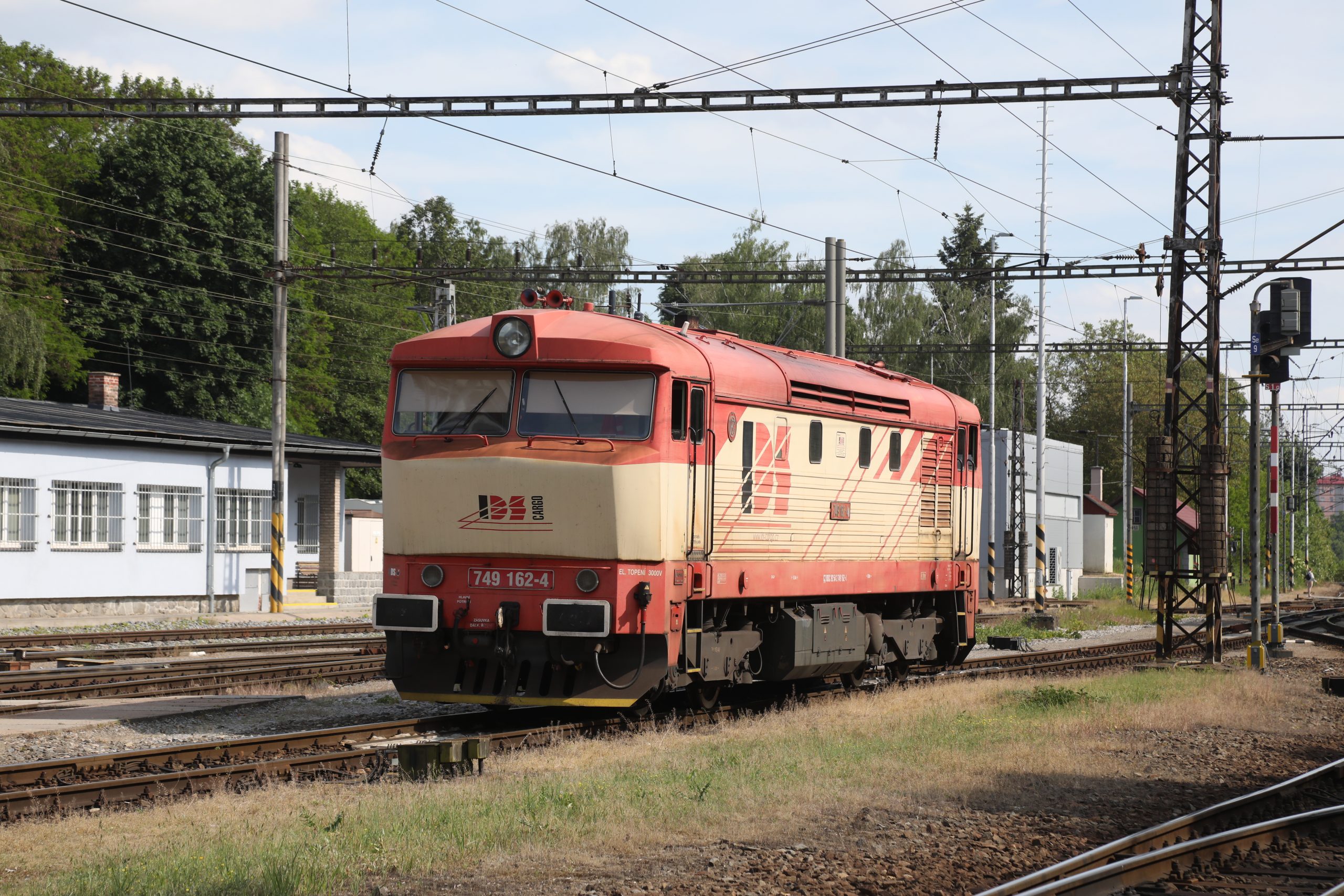
Not many tram tickets were required for the tour. The Over-70s were free; the Under-70s could pair up to share a £3.50 24-hour ticket. The tour began with a short train ride to Horní Heršpice to attempt a shed-bash. Everyone was kitted with hi-vis and it was a quiet Saturday morning but the answer, sadly, was “Ne!”. To continue the tour, the nearest tram stop was in the median of a motorway, and finding the unadvertised entrance in an underpass took a little while.
The group used trams and a bus to reach the hump marshalling yard at Maloměřice in the north-east. It is colloquially known as the “Harfa” (The Harp) because of the shape of the 25 sorting tracks. There is a well-positioned 200m footbridge that allows people to watch operations. Entry to the depot was also met with a “Ne”.
It was a hot day, and people wilted by 3pm. Dinner was at the hotel.
The tour proper began with a run down to Břeclav, close to the Austrian border. This line originally opened 7th July 1839 as part of the Vienna – Warsaw route, at which date the Great Western in England had just reached Twyford. The aim of the day was to visit to the Jemnice branch. Public service to this historical town only operates at the weekends and uses a heritage 4-wheeler railcar. The timetable enforced a 2-hour lunch break, spent exploring the old town, the castle, the fortifications, and its beautiful park. On the way, there was a 40-minute wait at Znojmo, which allowed time for a quick scoot around that town too. Under the Beneš Decrees of 1946, the entire (German) population was forcibly removed.
Dinner was in Břeclav. No restaurants were open nearby on a Sunday evening, but special arrangements had been made for a group meal at the station bar. Beef goulash, dumplings, salad, and beer for all. Czech dumpling is loaf-like, usually served as thick slices, fluffy rather than stodgy.


This was a day of two halves, returning to Brno for lunch.
The morning was spent visiting two small, but electrified, branches off the line to Břeclav. The lines around Brno all use the 25Kv AC system, but the Czech Republic also uses 3Kv DC. The industrial north began extensive electrification in the 1940s using DC, which was the Polish system but then the technology (and the policy) changed around 1960 to adopt AC for new projects. As the two networks converged, Czech railways find themselves lumbered with a hard-to-resolve compatibility problem – six “frost-lines” where the two systems meet.
Back in Brno, the heavens opened. Luckily, new clothes were close at hand.
The afternoon was a circular journey, heading anticlockwise south-west from Brno to take in the Ivančice branch. The group had passed through Hrušovany n.J.-Šanov the previous day but this time a change of trains was needed. There were 45 minutes to wait at this junction station, which had been newly rebuilt. It seemed an odd prioritisation given the lack of nearby population but would make sense if the line into Austria were reinstated.
Dinner was at the Park Restaurant in Břeclav, then back to Brno.


Tuesday was a long circular run on secondary lines north-west from Brno to take in the Humpolec branch. The lengthy section between Tišnov and Žďár n.Sázavou was via a sinuous secondary line that offered an alternative to the electrified main line. It involved a bus replacement service for the last part where, interestingly, the train conductor joined the passengers on the bus.
The return journey to Brno via Jihlava gave a second alternative to the main line. An at-seat buffet service in the 1st Class compartment on the final leg was very welcome, charging regular prices (55p for coffee, £2.20 for beer).
Yet another route option is being planned as part of the Czech Republic’s extensive ambitions for high-speed rail. The proposed Prague-Brno line (the RS1) is due to pass through this area with construction due to start 2029.


Wednesday took the group eastwards towards the Slovakian border. A visit to the Vizovice branch was a late change, owing to the intended branch being covered by a replacement bus. The first section was another sinuous line through the rolling hills.
The Vizovice line passes through Zlin which was once the home of Bata, the world’s largest shoe factory, and now a thriving centre of high-tech engineering. An extensive trolleybus network (14 routes, 59 vehicles) was visible from the train. Who knew that Tom Stoppard (originally Tomáš Straüssler), Ivana Trump and journalist John Tusa all came from here?
The various classes of Czech multiple units are branded with animal names. They include Elephant (double-deckers), Shark, Panther, Fox, Spider, and Mouse. There are four Sharks providing the half-hourly service over the Vizovice branch.
The afternoon was focussed on visiting the branch to Zborovice.
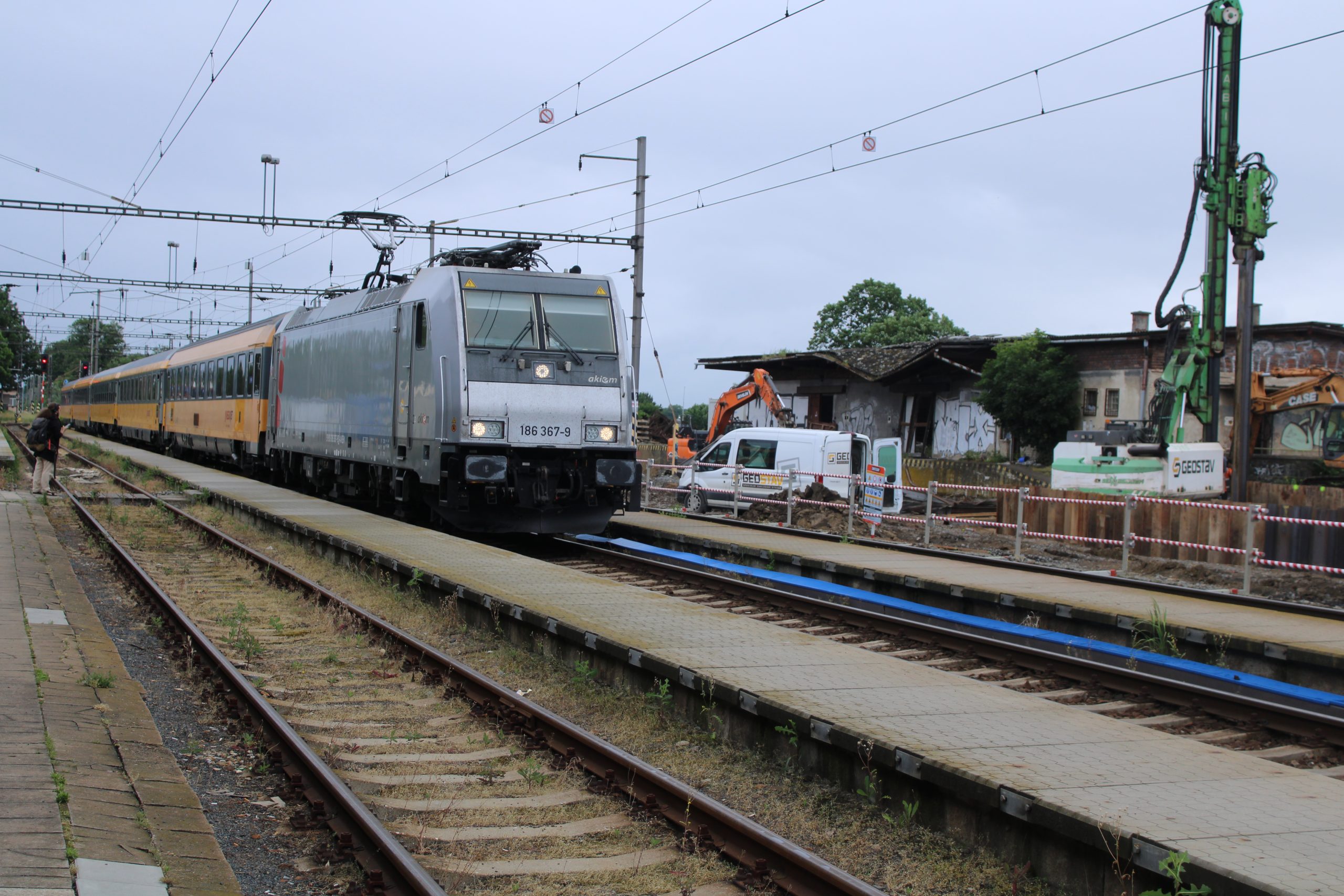
The group returned to Brno on a RegioJet loco-hauled service. The line between Kojetín and Brno is due to be upgraded to 200km/h running as part of the high-speed programme, mainly by dualling and building cut-offs. RegioJet is an open access operator (and bus company), founded in 1996 by Brno student Radim Jančura originally as a student travel agency. It’s now the largest private operator in Europe, having expanded into adjacent countries.


Thursday on tour of southern Czech Republic turned out to be quite eventful. The group travelled northwest to Pardubice and spent a couple of hours train watching at this busy mainline junction. The trolleybus network in this post-War town on the river Elbe opened in 1952, and the Skoda fleet uses in-motion charging to enable battery operations beyond the wires. The Semtín chemical plant in Pardubice is known for producing the explosive Semtex.
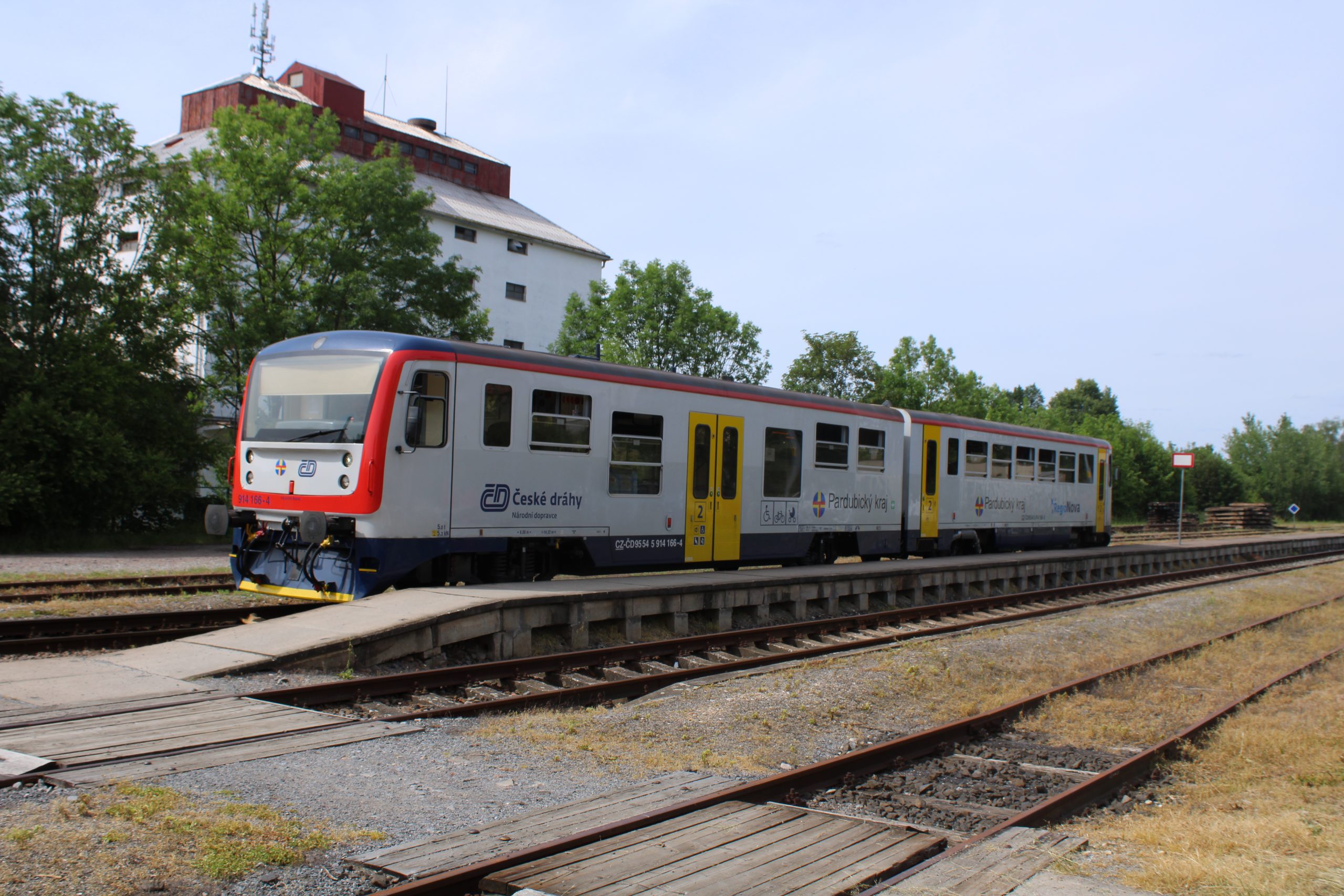
All went to plan until an afternoon journey up the Holice branch. The Nova power car was repeatedly cutting out and couldn’t be fixed at Holice – the most inconvenient place possible. A replacement bus was promised but wouldn’t start until later. The group waited a while before concluding that the best way back to Brno was to take a service bus back to Pardubice, then fast train from there. Info was hard to come by, but eventually a 16:50 bus was identified a short walk away. Arrival in Brno was only 11 minutes later than planned, meaning that the restaurant booking was honoured.


Friday on the tour was a wet day. The plan involved two periods of train watching, at Hradec Králové (in Bohemia, north of yesterday’s Pardubice) and Česká Třebová, both of which have extensive yards and loco depots/workshops.
Trains were noticeably busier on a Friday, with numerous parties heading off for camping, hiking, and cycling weekends. The Boskovice branch is short, just north of Brno and substantially cut back from the original. After returning to the main line at Skalice n.Svitavou, the service to Pardubice crossed into the 3Kv DC zone at Svitavy.
The Lanškroun branch offered some flexibility. The service was sufficiently frequent that some of the group returned later before heading for the evening meal in Česká Třebová. This restaurant turned out to be a group favourite, with good food and excellent beer.
The use of locomotives on Czech railways is much more prevalent than the UK. Whereas the UK is a services powerhouse, the Czech economy gets 37% of its GDP from industry and is also in a central position for cross-border flows. So, freight traffic is heavy, yards extensive, and wagon-load traffic still widespread. It is not unusual to see clusters of stabled locos. The network is being modernised quite rapidly, with lines being dualled and stations rebuilt, but the secondary lines and branches still prosper by being well integrated with buses. Some lines have been cut back, but not many.
Time-keeping is usually pretty good, though delays of 5-10 minutes are not uncommon but connecting trains will be held. A “person under a train” incident and a “wires down” incident during the week both caused huge disruption but didn’t materially affect the tour group.


The final day saw the group heading south to Břeclav again. The branch from Břeclav to Lednice only operates on summer weekends. There are no volunteer-run heritage railways, but this line is operated by ČD Nostalgie, a division of Czech State Railways using diesel railcars and (occasionally/16th May) steam. The trips were not covered by the One Ticket, but a full-fare return is about £6 (half for over-65s). The rake for the group’s return journey was a power car and trailer in Czechoslovak livery, with wooden seats. Run-arounds were required after each journey. The station at Lednice is remarkably ornate.
Later, the group made the 6-minute journey between Moravský Písek and Bzenec. Service was provided by a Class 810 “Mouse” 810 652. These 4-wheeler railcars are in decline, and this was the only one the group got to travel on. A very pleasant hour was spent in a nearby beer garden.
The tour returned to Brno briefly, before heading off for a circular ride to take in the Zastávka u Brna to Studenec line (to the west).
The final meal was held in Brno, where Steve Ollive was thanked for another successful trip. Plans are afoot to return next year, with Prague the intended base.


Author: Matthew Shaw
Images: Gordon Adams, Mike Martin, Laurence Milligan, Steve Ollive, Adrian Palmer