
The LNER
The LNER existed between 1923 and 1947. It was formed in the aftermath of the 1914-18 War by grouping seven leading companies that operated railways along the eastern side of the island of Great Britain. The centenary of its creation is 2023.
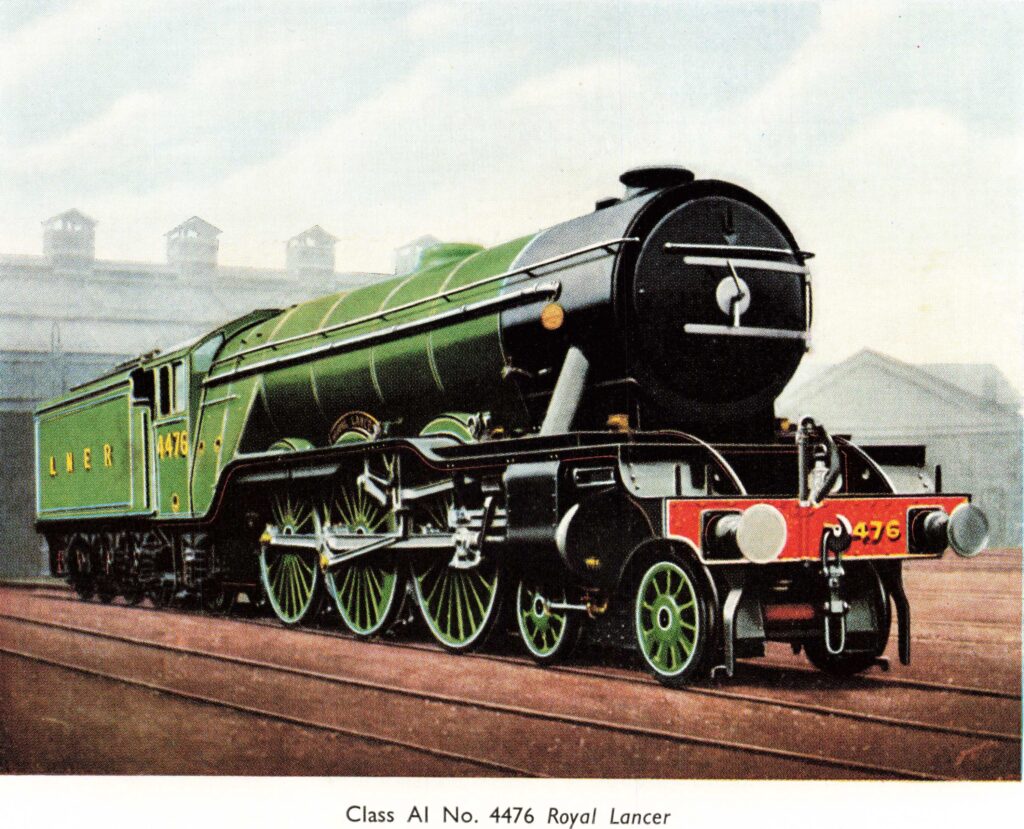
An eclectic mix of locomotives was acquired from the forerunner companies. A talented cohort of engineers was assembled under Chief Mechanical Engineer Sir Nigel Gresley and went on to stamp its mark on the LNER’s fleet.
The LNER came to an end after 25 years with Nationalisation of the railway in the aftermath of the 1939-45 War. It then took 40 years from inception in 1954 for members of RCTS to complete the definitive locomotive history for the LNER.
Locomotives of the L.N.E.R.
Locomotives of the L.N.E.R. – colloquially known as the “LNER green books” – was published by the RCTS in 19 parts 1963-1994.
Background
It was a unique voluntary endeavour by a team of researchers and writers under the dedicated leadership of Eric Fry.
At the time Part 1 was published in 1963 as the Preliminary Survey, there were still a few ex-LNER engines in operational service. It was envisaged that 10 volumes would be sufficient to complete the series:
“Within the compass of these ten volumes an attempt will be made to describe in detail the history of the 10,000 or so locomotives owned at one time or another by the L.N.E.R. and the work they have done. The articles on individual locomotive classes will be on a uniform basis covering the full history of all engines, including details of origin, leading dimensions, dates of construction, rebuilding and withdrawal of each engine, together with sections covering detail variations, classification, engine diagrams and allocation and work. Photographs of each class and variations will be included.
For a number of reasons, the parts will not be published in a numerical sequence but a complete numerical index will appear in Part 10.”
19 parts later, the series was completed in 1994. Some parts sold in their thousands and were reprinted often, but all had progressively gone out of print.
The original 19-part series is available in three formats:
The eight PDFs and books are grouped as shown in the table.
| Reissued book | Original book | Released | Coverage |
|---|---|---|---|
| Volume 1 | Locomotives of the LNER Part 1 | 1963 | Preliminary Survey |
| Volume 2 | Locomotives of the LNER Part 2A | 1973 | Tender Engines - Classes A1 to A10 |
| Locomotives of the LNER Part 2B | 1975 | Tender Engines - Classes B1 to B19 | |
| Volume 3 | Locomotives of the LNER Part 3A | 1979 | Tender Engines - Classes C1 to C11 |
| Locomotives of the LNER Part 3B | 1980 | Tender Engines - Classes D1 to D12 | |
| Locomotives of the LNER Part 3C | 1981 | Tender Engines - Classes D13 to D24 | |
| Volume 4 & 5 | Locomotives of the LNER Part 4 | 1968 | Tender Engines - Classes D25 to E7 |
| Locomotives of the LNER Part 5 | 1966 | Tender Engines - Classes J1 to J37 | |
| Volume 6 | Locomotives of the LNER Part 6A | 1982 | Tender Engines - Classes J38 to K5 |
| Locomotives of the LNER Part 6B | 1983 | Tender Engines - Classes O1 to P2 | |
| Locomotives of the LNER Part 6C | 1984 | Tender Engines - Classes Q1 to Y10 | |
| Volume 7 & 8 | Locomotives of the LNER Part 7 | 1964 | Tank Engines - Classes A5 to H2 |
| Locomotives of the LNER Part 8A | 1970 | Tank Engines - Classes J50 to J70 | |
| Locomotives of the LNER Part 8B | 1971 | Tank Engines - Classes J71 to J94 | |
| Volume 9 | Locomotives of the LNER Part 9A | 1977 | Tank Engines - Classes L1 to N19 |
| Locomotives of the LNER Part 9B | 1977 | Tank Engines - Classes Q1 to Z5 | |
| Volume 10 | Locomotives of the LNER Part 10A | 1988 | Departmental Stock, Locomotive Sheds, Boiler and Tender Numbering |
| Locomotives of the LNER Part 10B | 1990 | Railcars and Electric Stock | |
| Locomotives of the LNER Part 11 | 1994 | Errata for the series, now redistributed across the other volumes |
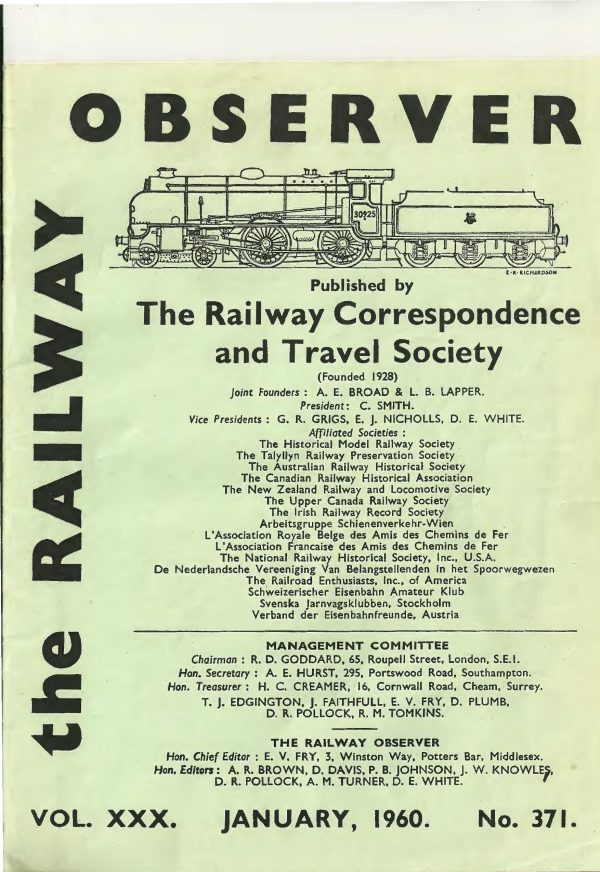
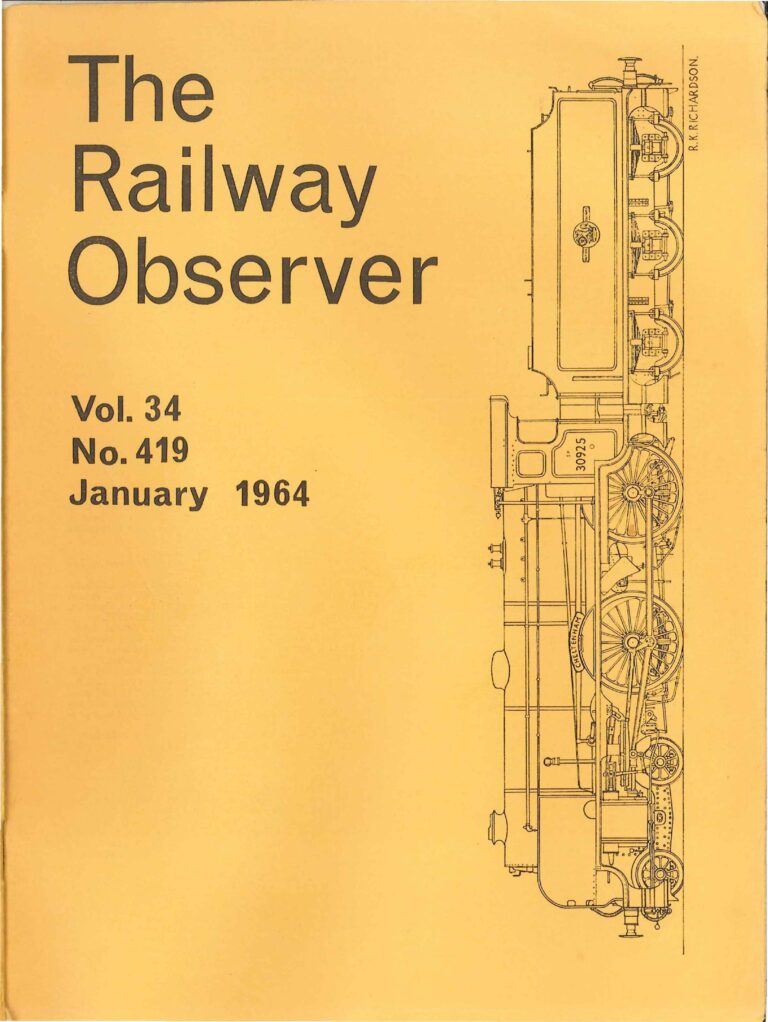
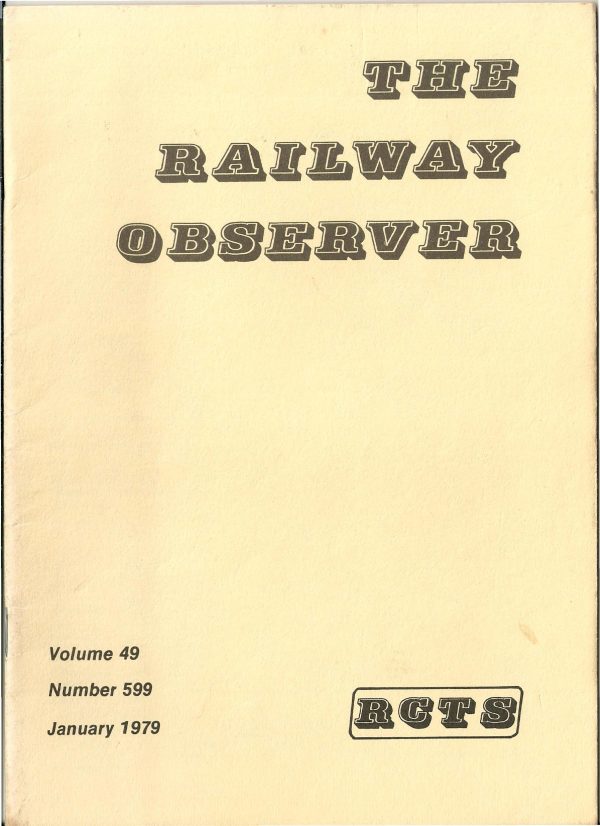
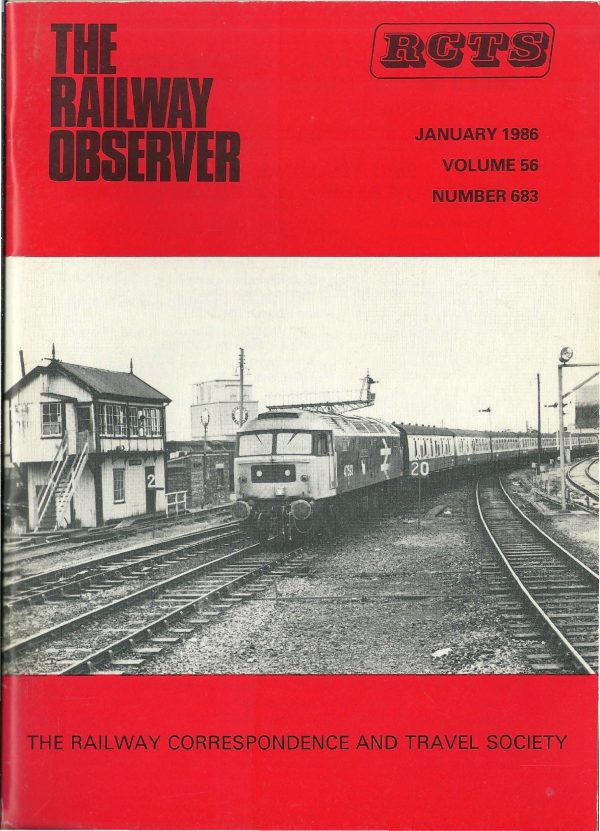
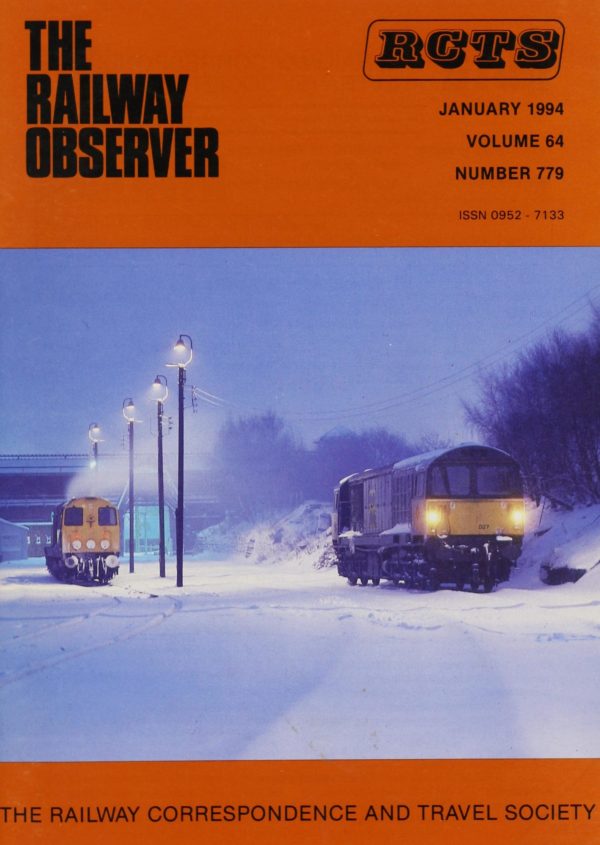
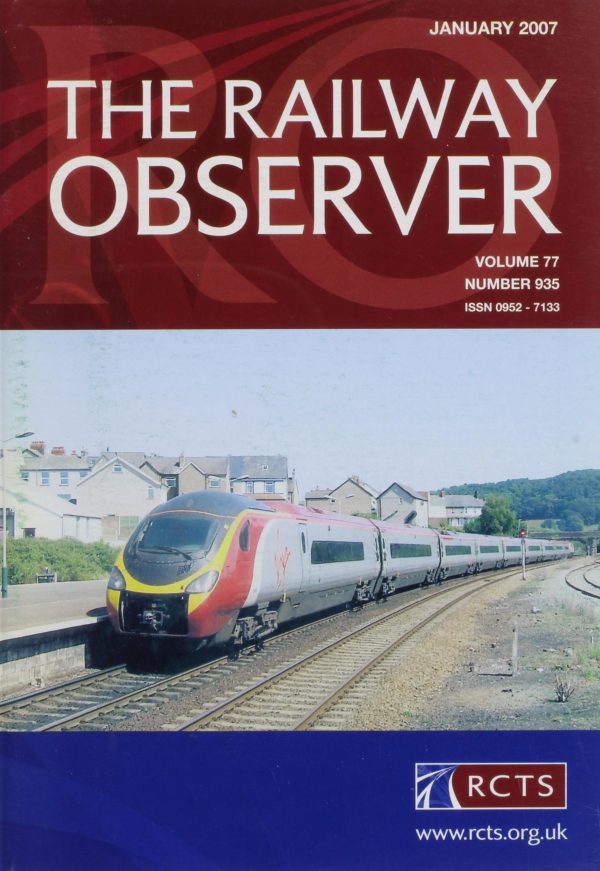
The Railway News was launched in 1928 as a monthly magazine and ran to ten editions before a copyright issue was identified with its name. The magazine was relaunched in March 1929 as The Railway Observer and continues to be published to this day.
The RCTS Digital Archive contains editions up to Volume 81 (2011). Online editions from 2012 onwards are available free to Society members (only) in the RCTS members area. Online-only membership is discounted to £10 for new joiners.
PDF files are available to purchase and download for your personal use, and must not be shared. Each download contains an index and 12 editions (or 24 editions in the War years), and maybe some extras e.g. fixtures lists. Every page contains a small RCTS logo. There are also bundles available covering multiple volumes.
The purchased PDFs are searchable and you can copy-paste sections from them. The OCR is not perfect.
Individual editions are available to read online free-of-charge. They are intended for browsing, are not searchable, and copy-paste is not supported.
Each purchased volume contains an index. There is also a complete index covering all years 1928-2021 available as a free download as a single PDF file.
Warning: The file is over 600Mb and runs to 1,393 pages.