
Les Lapper and Aubrey Broad demonstrated some prescience when they started the RCTS in Cheltenham in 1928. Grouping was already history, the war to end all wars would become superseded in just 10 years’ time by an even bigger and more cataclysmic conflict, and the nationalisation of 1948 was not yet even an emerging idea in the minds of the Labour Party politicians of the day.
So, how did a group of like-minded friends expand a desire to share their love and interest of their local railway scene into a national society? One clue is in the word “Correspondence” within our Society’s name, for, in those days, even the telephone was a novelty; the first transatlantic call had only been made in the previous year.
In 1928, therefore, the only reliable and established method of communication was by letter post. Effectively, widespread telephone usage was over the horizon, computers and e-mail at infinity and social media at “infinity and beyond”. Into this void, Railway News was launched (to become The Railway Observer in the following year).
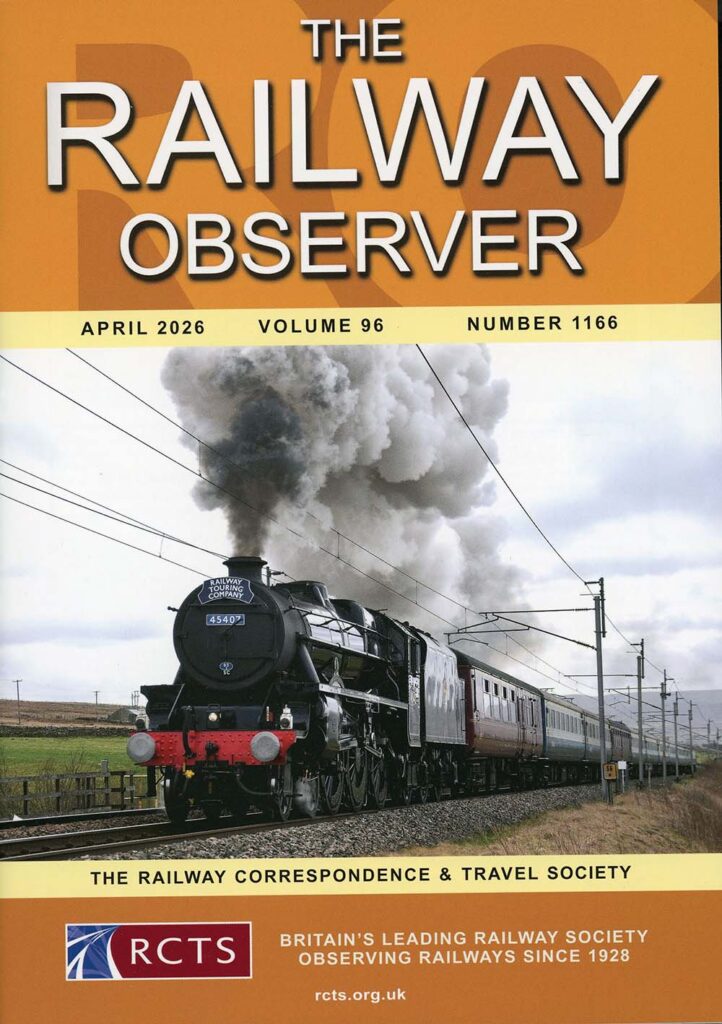
Produced on a simple duplicating machine in black-and-white, this embryonic news magazine has developed into a glossy 72-page monthly edition, not only maintaining the benchmark standard of railway operations reportage, but also has added high quality photographic content. Today’s RO is, to all intents and purpose, a professional magazine that rivals its commercial competition as seen in any newsagents. But remember this has all been achieved by volunteer effort from Society Members.
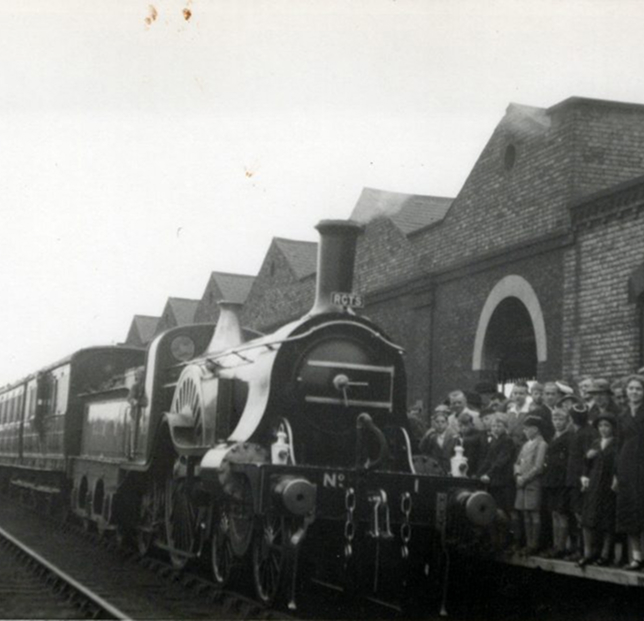
Another unique feature of RCTS was the foresight to organise and run rail tours, sometimes in conjunction with other railway societies. The first incarnation of an enthusiast Railtour was on 11th September 1938 on the East Coast Main Line from King’s Cross to York behind Patrick Stirling’s GNR No.1 Single and a set of vintage carriages. This locomotive can still be seen today in the National Railway Museum in York.
The Second World War obviously curtailed Railtour activity, but in the 1950s and 1960s, the predominate number of active railwaymen in the Society’s ranks become a considerable asset to gaining permissions from the nationalised British Railways to operate tours over main and branch lines, especially those under threat of closure under reshaping and restructuring of the rail network.
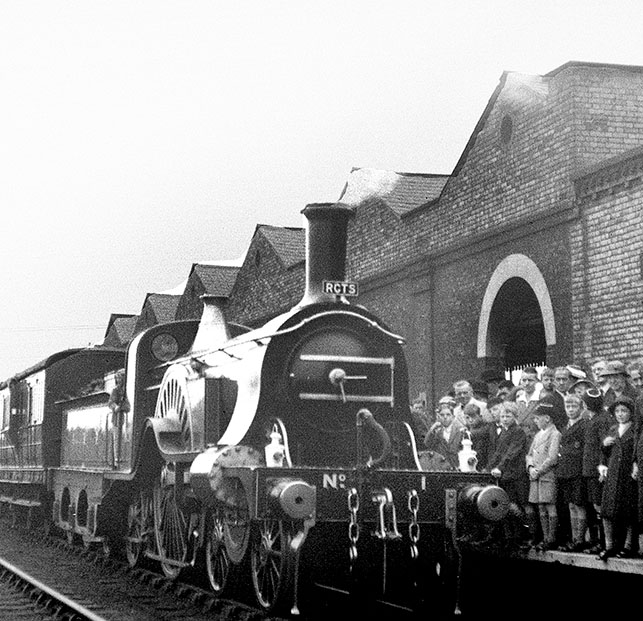
The 1938 special stands at Peterborough station.
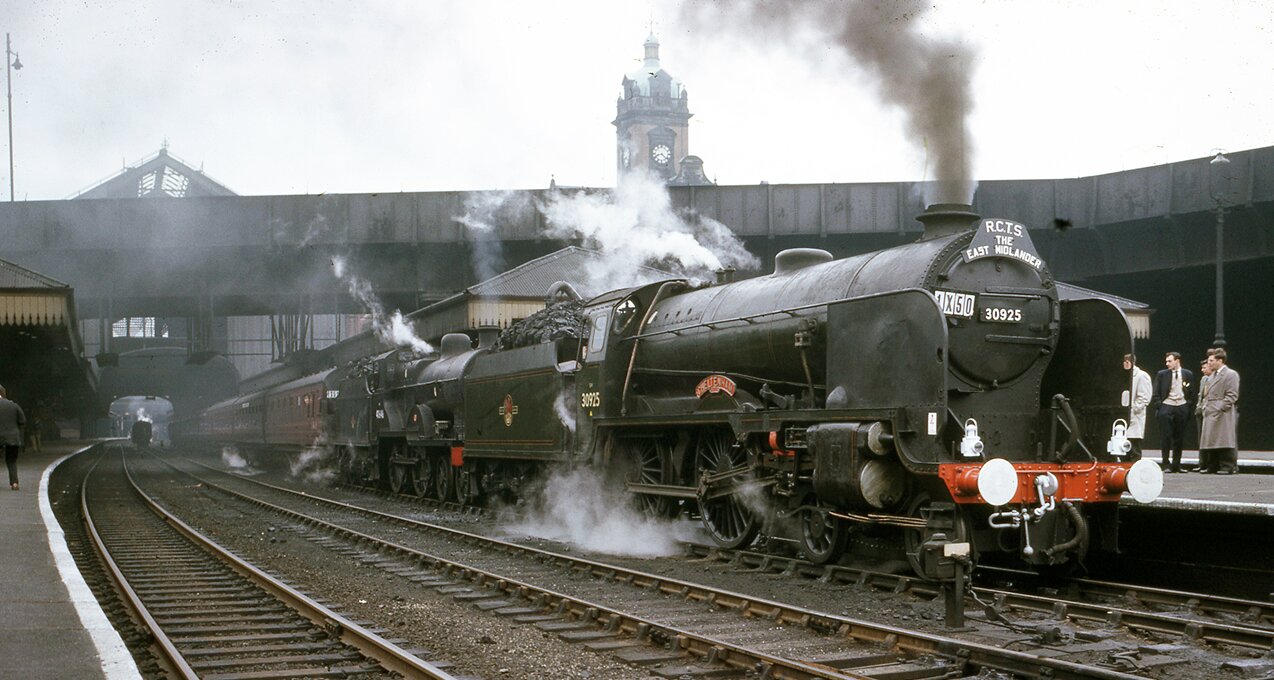
The society adopted Schools 30925 Cheltenham and used it on a number of railtours which on 13 May 1962 took it to Nottingham (as seen here) and onwards to Darlington.
With the demise of steam, the closure of unprofitable lines, and a drive for greater efficiency, meant that redundant and spare coaching stock was scrapped and the Society’s ability to organise tours became severely compromised. However, in the very recent past, the Society has switched its attention to organising small group tours to infrastructure sites; these locations are not normally open to the public and the behind-the-scenes visits provide fascinating insight into current-day railway operations. This latter activity revised one of the major offerings of the 1950s and ‘60s that drew many people to join us.
The RCTS has been a renowned publisher of definitive books on locomotives and other railway subjects since March 1935, when the original Locomotive Stock Book appeared. At that date, no up-to-date complete list of all the locomotives of main line railways had appeared. Following initial success, annual edition updates were produced up to 1939; reappearing after the end of hostilities in 1946, the Stock Book continued to be published until 1969.
In 1951, a giant step forward was taken with the publication of Part 1 of the now renowned Locomotives of the GWR – the first time a complete history of every locomotive class owned by a major railway company was attempted. The GWR series was eventually completed in 1993 after 14 parts. Similar locomotive histories for the LNER and the Southern appeared, with the LMS the last of the “Big Four” to be published, starting in 1988 and the majority of classes have already been covered.
In recent years, RCTS have been publishing some half-a-dozen new titles annually, encompassing both steam and modern traction, as well as pictorial reminisces by railway authors. With annual sales in excess of 1500 books established, the Society remains in the forefront of railway publishing; and our locomotive series are established as the benchmarked reference volumes for historians and enthusiasts alike. Changes in technology have allowed us to produce digitised versions of many long out of print books.
The Society became a Charitable Incorporated Organisation in November 2016 and our Objects include the formation and support of local Branches with a view to providing a programme of speakers to enable the public to study and understand various aspects of the practice of historic and current railway operation and railway heritage. In addition, in the old Stationmaster’s house at Leatherhead station, we have developed an extensive library/archival centre to conserve records, photographs and books for the benefit of Members and general public alike.
From the three major examples above the monthly Members’ magazine, rail tours and visits, and lastly, publications the ability of the Society to evolve, improve, and expand its offerings to meet the changing needs of railway enthusiasts over the past century has proved supreme to maintain its claim to be Britain’s leading railway society. This philosophy will be at the forefront of the Society’s strategy as we enter our second century. Come and join us on our exciting (and continuing) journey!
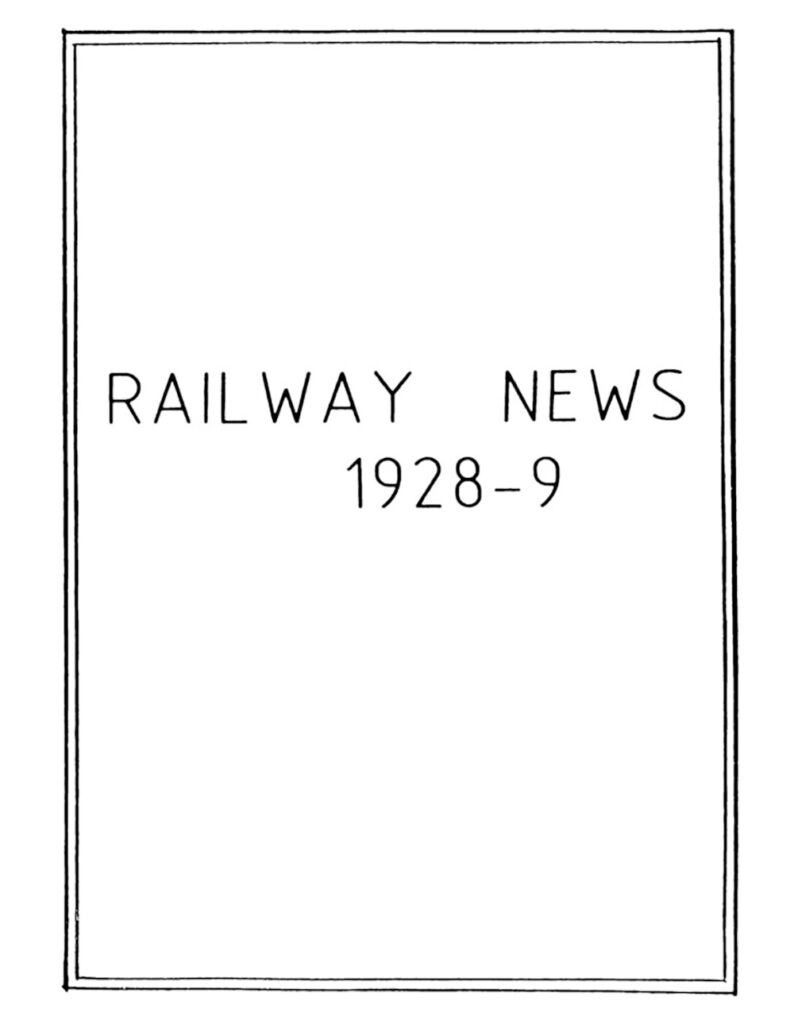
The very first magazine issued by the Society in 1928.
The Society was founded in Cheltenham in 1928 at a time when there was little official information published about locomotive stock, their allocations or regular duties. The Society set about rectifying this by members writing to each other, the publishing of a magazine and some meetings organised around the country. The growth of the Society was such that it ran the first enthusiasts railtour in the 1930s but the war years effective stifled both the flow of information and the growth of the Society.
Ian Allan inspired a generation of post war youngsters to take up train spotting and many of those that stuck with it through maturity joined a railway society to gain first hand information on what was going on and to visit sheds in organised groups. The RCTS prospered running frequent shed visits, publishing its magazine The Railway Observer each month, running railtours and substantially expanding its branch network. Membership reached a peak however long after the end of BR steam.
Move on to the present day and the Society is still going strong with 3000 members- see below for what we can offer you.
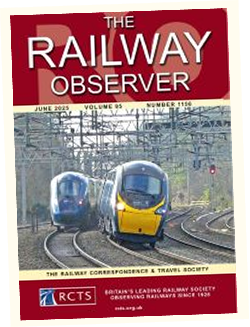
Our monthly magazine, The Railway Observer, usually contains about 80 pages (it is also available in digital format) of news, articles and high quality photographs. The news covers details of train workings, infrastructure changes and general industry information as well as full details of stock and livery changes. The heritage scene and world railways also have their own sections.
There is a photographic portfolio group who circulate pictures amongst their members and critique them to improve the quality of images.
Our branches hold meetings at least monthly in the season at over thirty centres and in the course of a year host over 200 presentations on a vast range of railway subjects covering the modern scene as well as history and nostalgia subjects.
Branches also organise outdoor visits to both railway centres and locations not normally open to the public, such as maintenance facilities and signalling centres, and there is also the annual members weekend which includes a number of outdoor visits and also talks, the venue for which is moved around the UK.
The Society has an extensive library located at Leatherhead railway station providing excellent research facilities as well as postal loans of books and working timetables. The facility to buy back copies of The Railway Observer and other information in digital format is being developed.
If your interest is in railway photographs then there are many thousand available to purchases on line as prints or downloads from the society archive which continues to expand.
The RCTS has been noted for many years for the quality and detail of its publications and members are entitled to discounts on many of these titles. In addition we have negotiated discounts for books purchased from third parties, travel on some heritage railways and reduced prices for a range of photographic services amongst other things.
Finally there is the website which has much information on specialist topics such as liveries and ‘diesel dilemmas’.
The society became a Charitable Incorporated Organisation on 2nd November 2016.
The objects of the CIO are to advance the education of the public in the subject of historic and current railway operation, including by
For the purposes of this objects clause “railway” includes: