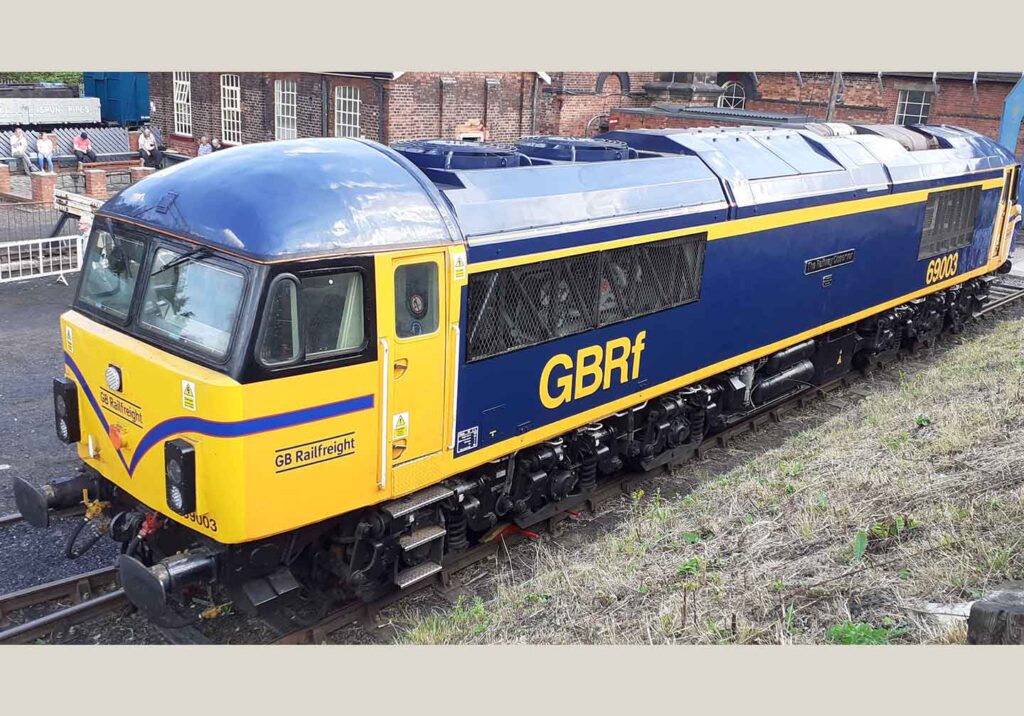
The Railway Correspondence & Travel Society has never owned any locomotives, but has adopted four during its existence.
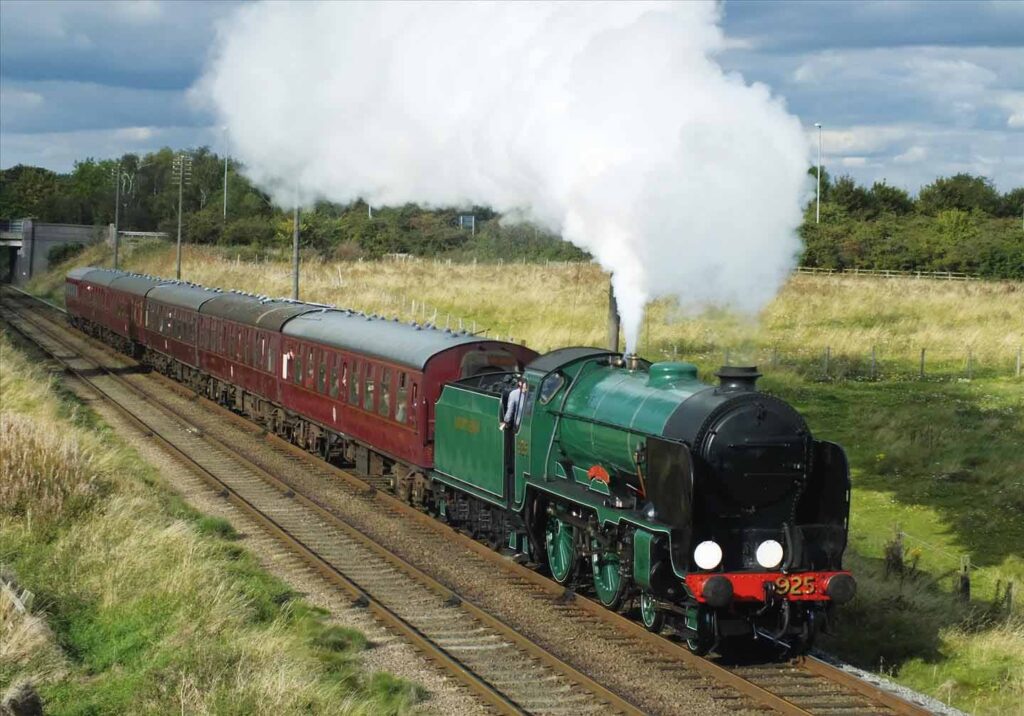
The Society was founded in Cheltenham, so it was natural for its members to have a special interest in the Southern Railway’s Schools class 4-4-0 925 Cheltenham and it became the Society’s mascot, later renumbered 30925 by British Railways. It first appeared on the cover of The Railway Observer (RO) in 1936, where it remained as a series of line drawings until December 1972. Even though it was the mascot, mentions of the engine in the RO were infrequent until the Society raised its profile by requesting it for rail tours. It made its first appearance in 1956, when it headed the Wessex Wyvern to Weymouth, although perhaps its most photographed outing took it from Nottingham to Darlington with LMS 2P 40646 in May 1962. 30925 was withdrawn in December of that year, having run 1,127,788 miles.
As the then Society President was on the consultative panel for the Preservation of British Transport Relics, he was able to influence the choice of 30925 for the National Collection over the likely choice of 30900. After storage at various locations Cheltenham was eventually displayed in the National Railway Museum before being restored to working order at the Mid-Hants Railway and visiting other heritage railways.
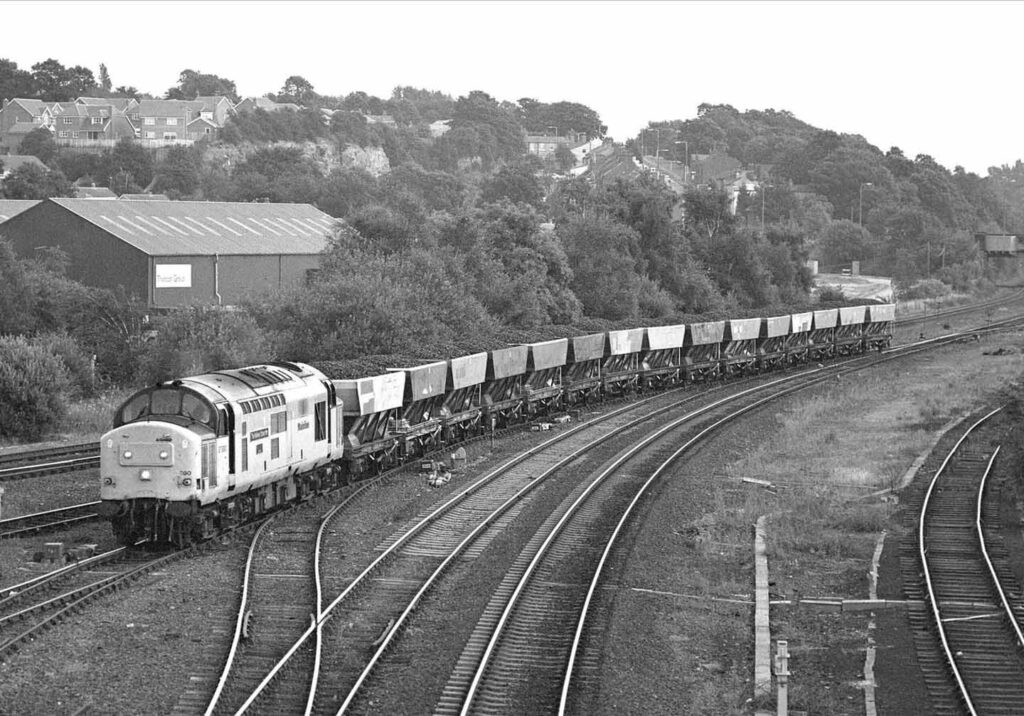
Class 37 D6868 led a standard life on BR and, after a brief spell in South Wales, spent most of its working life based in the north east of England. Having gone through BR green and blue liveries, then numbered as 6868 and 37168, it was renumbered 37890 in October 1987 with Railfreight’s petroleum sector livery and worked mostly in the south of England.
To help raise the Society’s profile, it was suggested that naming a current BR locomotive might be appropriate. 37890 was offered, and was named The Railway Observer on 18th February 1994 at Hither Green. Supplemental plaques which read The Journal of the Railway Correspondence & Travel Society. Founded 1928. RCTS were added later below the nameplates.
Unfortunately, 37890 was to run for only five years more before being selected to go to France, and its nameplates were removed before it left in July 1999. The locomotive returned to the UK in September 2000 and survived until 2010 before being cut up.
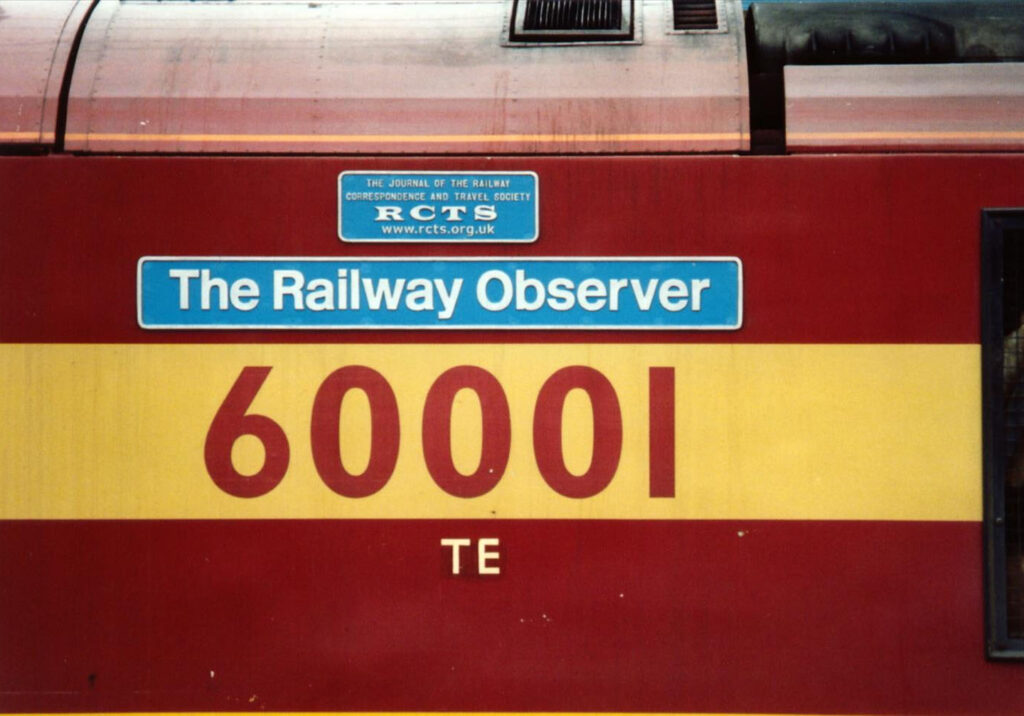
With the nameplates back with the Society, the search began for another engine to carry them. An approach was made to EWS, which selected 60001 to display them. It was built in 1989 and carried the name Steadfast when new, but this was removed in 1996. The second naming took place at Toton on 23rd February 2001 and again the nameplates were supplemented by a plaque similar to that on 37890 but also including the Society’s website address.
It might have been expected that the plates had a good home for years to come, but this was not to be. Along with many Class 60s, 60001 was put in store at Toton and gradually deteriorated, although it was then chosen to be one of the members of the class to be refurbished and returned to service at which stage the name and supplemental plates were removed. This involved being repainted in DB Schenker livery with no nameplates being carried.
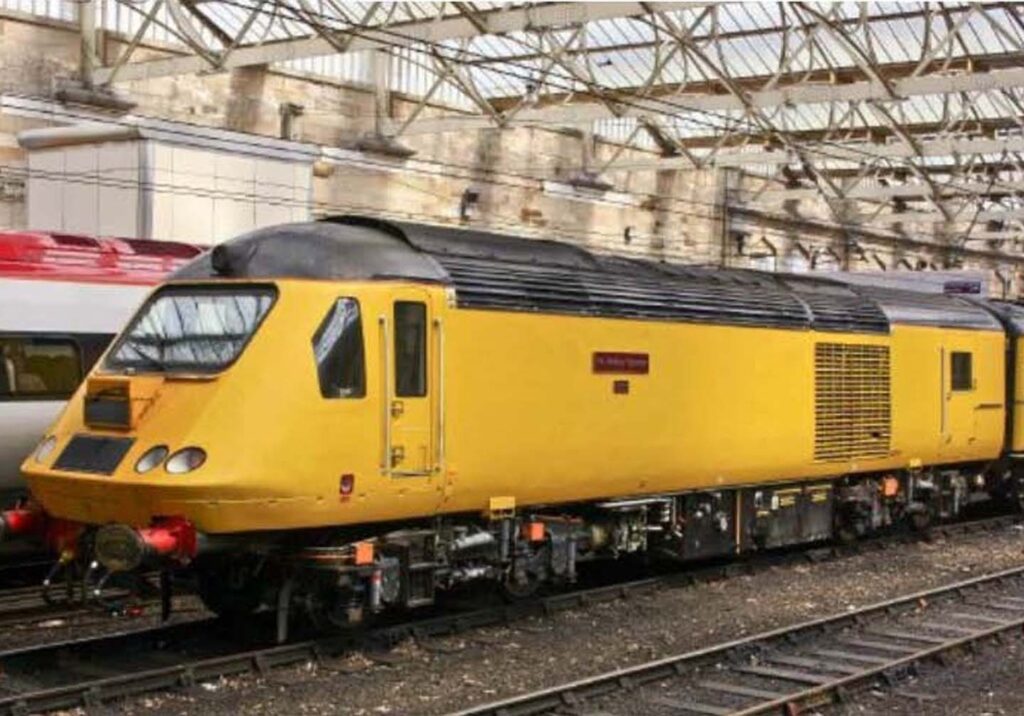
Once again, the search was on for a suitable locomotive to promote the Society. The RCTS approached Network Rail, which agreed to bestow the name The Railway Observer on HST power car 43014; the naming ceremony taking place at Derby on 17th June 2014. This is perhaps the most appropriate machine to have carried The Railway Observer name; as part of the New Measurement Train it could be observed in many more parts of the country than any of the former ‘Society Locomotives’. However the Society subsequently received a request from Network Rail who wished to remove the name and once more a successor was sought. An approach to GBRf resulted in the naming of the then newly built Cl. 69 69003 at Barrow Hill roundhouse, it thus becoming the fourth loco to carry The Railway Observer name.
The Society also owns several nameplates, and in recent years has sought to put them on public display. Some of these can be found at several heritage sites around the country.
For each locomotive the history and photographs attempt to cover the complete ‘career’, not just the period when it was ‘our locomotive’, although naturally the majority of photographs cover the named periods including the naming ceremonies. The history and photographs have been split into natural periods; also in the case of 60001, the named period has been split into different types of workings. The 60001 page starts with an impressive collection of photographs and documents covering the delivery, commissioning and trials; the delivery brochure includes a photograph of the power unit being lowered into 60001. Light engines and stabled locomotives have been omitted, except ones which show changes to 37890; stored locomotives and 37890 in the scrap yard were considered inappropriate for the photo gallery. The logs of trains known to have been worked by 37890 and 60001 are included at the ends of their sections. Photos of 925/30925 range from one in the 1930s through to its service in preservation, while those for 43014 start with British Rail and Virgin Trains CrossCountry up to current service with the New Measurement Train.
On the photo galleries, click on one of the small images to launch a ‘slideshow’ for that page; the selected image will appear first with left and right arrows to navigate the ‘slideshow’.
On a personal note, my favourite photographs are one of 60001 at Ais Gill with a snow-capped hillside in the background and several where trains are reflected in canals.
Text for the gallery by Paul Chancellor, Alan Cooke, Gordon Davies, Andrew Lait, John Lewis, George Toms and Bob Wallen.
The photo gallery has a good selection of photos for The Society’s Locomotives.
Further photos to fill gaps and expand coverage will be welcome to fill the following gaps in coverage.
Digital images, accompanied by an appropriate caption should be sent to Andrew Lait.
Negatives, slides or, if neither is available, prints should be sent to David Kelso. If negatives, slides or prints are to be returned they should be accompanied by an SAE with sufficient postage attached. If you send photos to David Kelso, please also advise me and include a photo caption.
The RCTS has a number of railway locomotive nameplates and other railwayana. Some of this we have owned for many years and other plates have come as bequests to the Society. Part of our charitable status states that we must educate and share as much as we can with the general public as we can on all aspects of railway history. Such nameplates are very much part of this process.
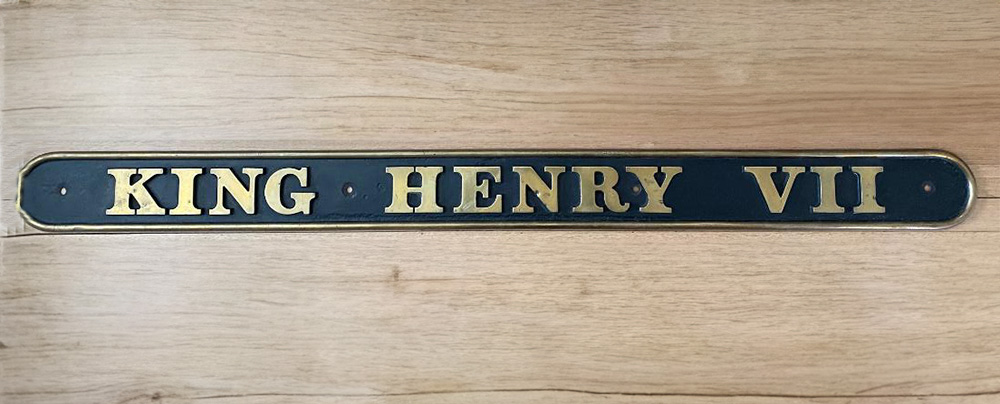
In order that the general public can enjoy these interesting and valuable artefacts we try to move these around the country. Typically we would loan a nameplate to a heritage railway for a period of between 3 and 5 years. We would then move it to another site in order other people can see and enjoy them. For example our two Great Western King class names have recently moved from display at Didcot and Highley on the SVR to the railway centre at Tyseley in Birmingham where they are on display.
| Isle of Wight Steam Railway | "RYDE" – Class E1 No. 3 |
| Rotherham Transport Museum | "Prince George" – ex GCR Class E11, BR D10 No. 62658 |
| Tyseley GWR Museum |
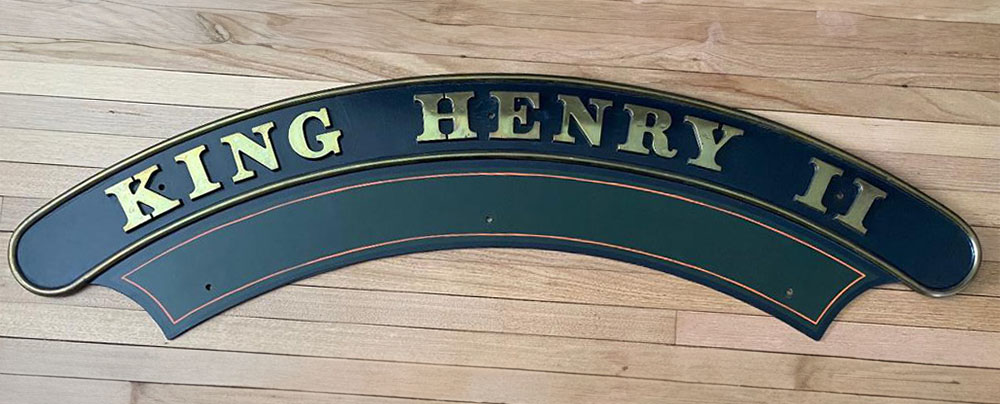
GWR "King Henry VII" straight plate (formerly at Didcot) GWR "King Henry II" curved plate (formerly at Severn Valley Railway) |
| Engine House, Severn Valley Railway |
GWR "Sir Massey Lopes" Bulldog Class 3371 BR/NR "The Railway Observer" – ex HST 43014 |
| Peco Museum, Beer, Devon | Ex-SR locomotive No. 734, "Clausentum" of 1890 |
| Bahamas Locomotive Society, KWVR, Ingrow |
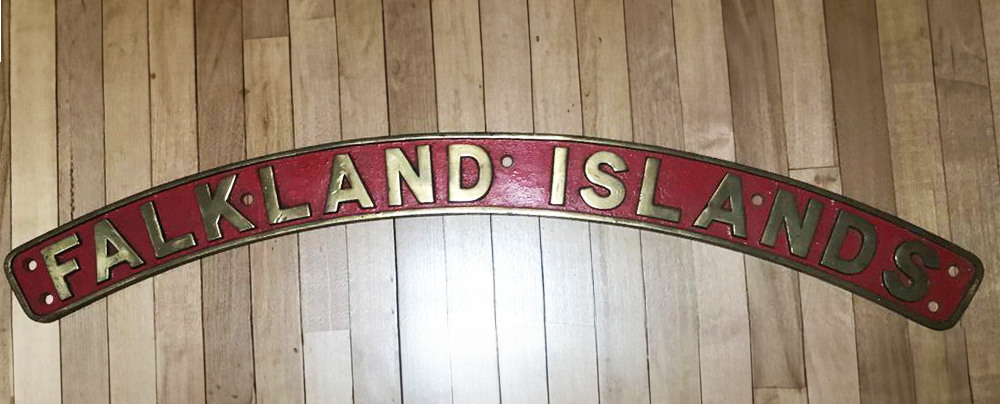
LMS Jubilee "Falkland Island" (BR 45606) L&Y front number plate No. 11113 from a 4-6-4T |
| East Anglian Railway Museum, Essex |
LNER N7 Class smokebox number plate No. 69664 Long-time Enfield Town locomotive |
| Middleton Railway Trust, Leeds | Manning Wardle industrial locomotive "Jupiter" |
| Barrow Hill Museum, Chesterfield |
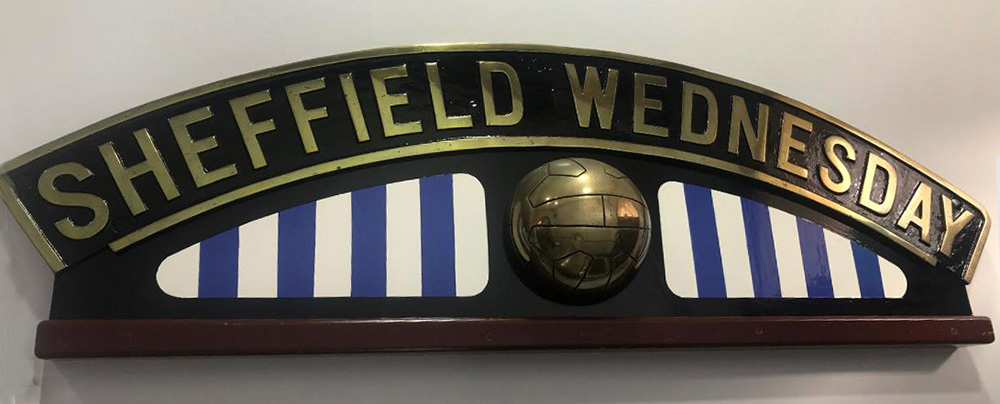
Two ex-BR B17 locomotive plates: 61649 "Sheffield United" and 61661 "Sheffield Wednesday" LNWR plate "Scirocco" |
| Ecclesbourne Valley Railway, Derbyshire |
Smokebox number plate from MR 2P 4-4-0 No. 40454 Builder's plate and headboards |
| Quainton Railway Society, Buckinghamshire | GCR "Sir Edward Fraser" – Class D10 No. 62653 |
| Bluebell Railway, Sheffield Park, Sussex |
King Arthur Class No. 30754 "The Green Knight" LBSCR Atlantic No. 32424 "Beachy Head" (RCTS) |
| Library, Leatherhead Station, Surrey |
Class 60 diesel No. 60001 HST Power Car No. 43014 "The Railway Observer" |
Currently not on display and looking to be placed, King Arthur class nameplate, 30449 “Sir Torre”.