Gallery-Cambridge
-
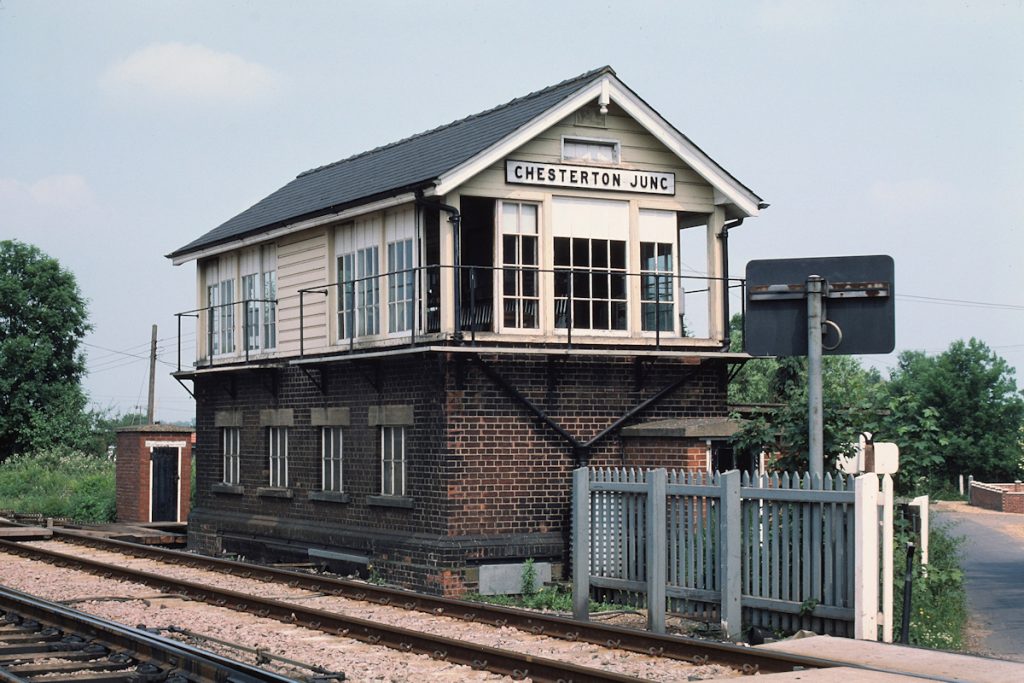
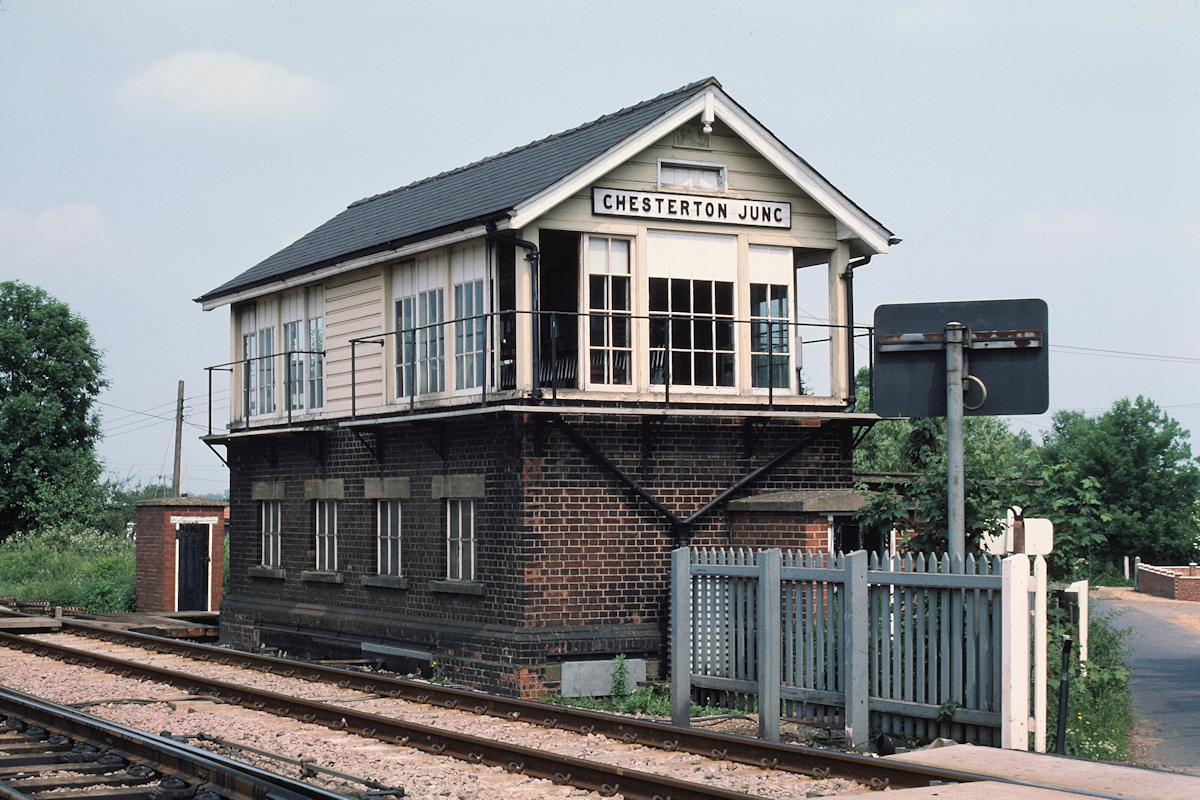
- Chesterton Junction was the junction for the former St Ives branch and for the Engineer’s Yard. The Signal Box is seen on a hot 9th June 1982. Photo: Stewart Jolly.
-
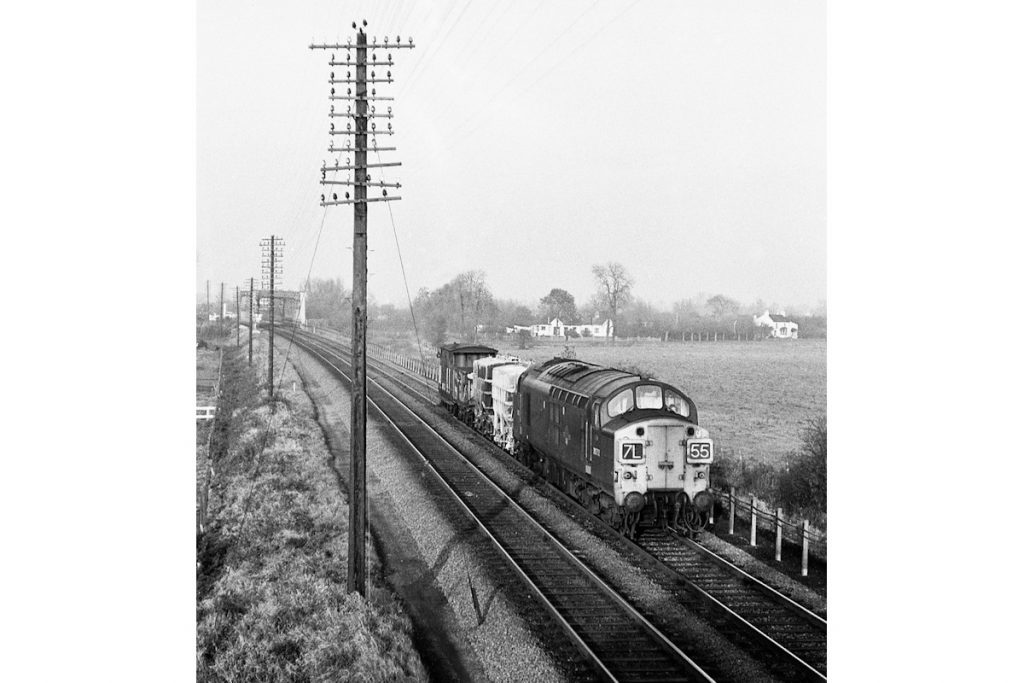
- By way of contrast with the profusion of foliage on the previous image of Chesterton Junction today, this view taken on 21st November 1968 shows the very open scene with a clear view toward the bridge over the River Cam. English Electric Type 3 No. D6752 (later 37052 then 37713) heads South with a lightweight consist of two cement wagons and an unfitted 16 ton mineral wagon. Photo: Michael Smyth.

-
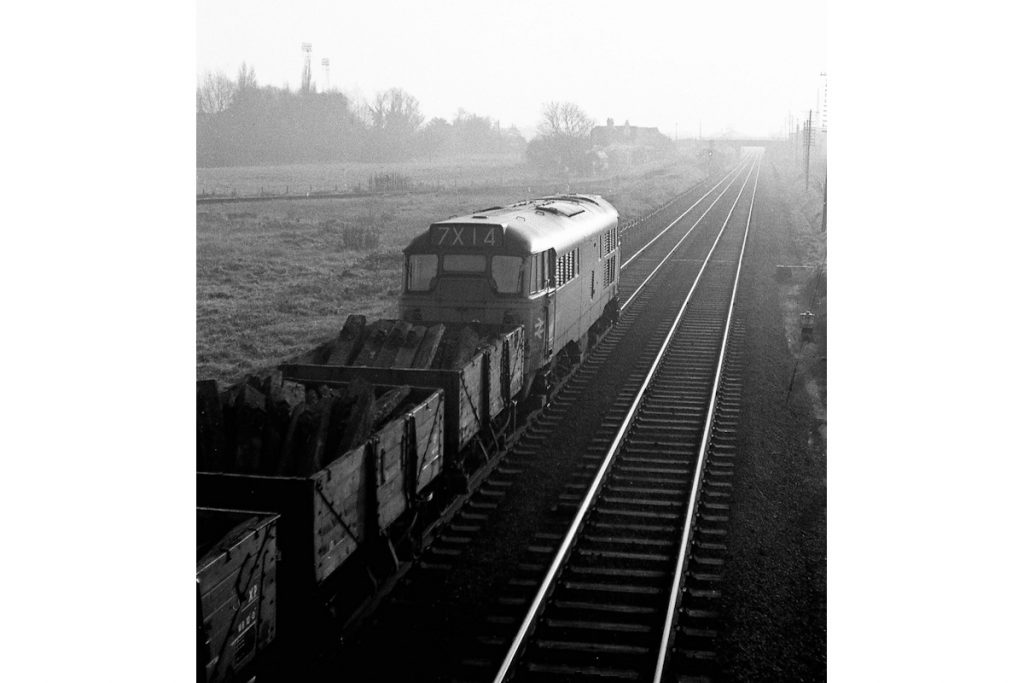
- Also at Chesterton Junction on 21st November 1968, Brush Type 2 No. D5637 (later 31312 then 31465) heads South with a permanent way working. The former Mildenhall branch can be seen coming in on the left. This was much photographed in the 1950s, being one of the last haunts of the E4 2-4-0s, the last of which, 62785, was withdrawn from Cambridge shed as late as December 1959. Photo: Michael Smyth.

-
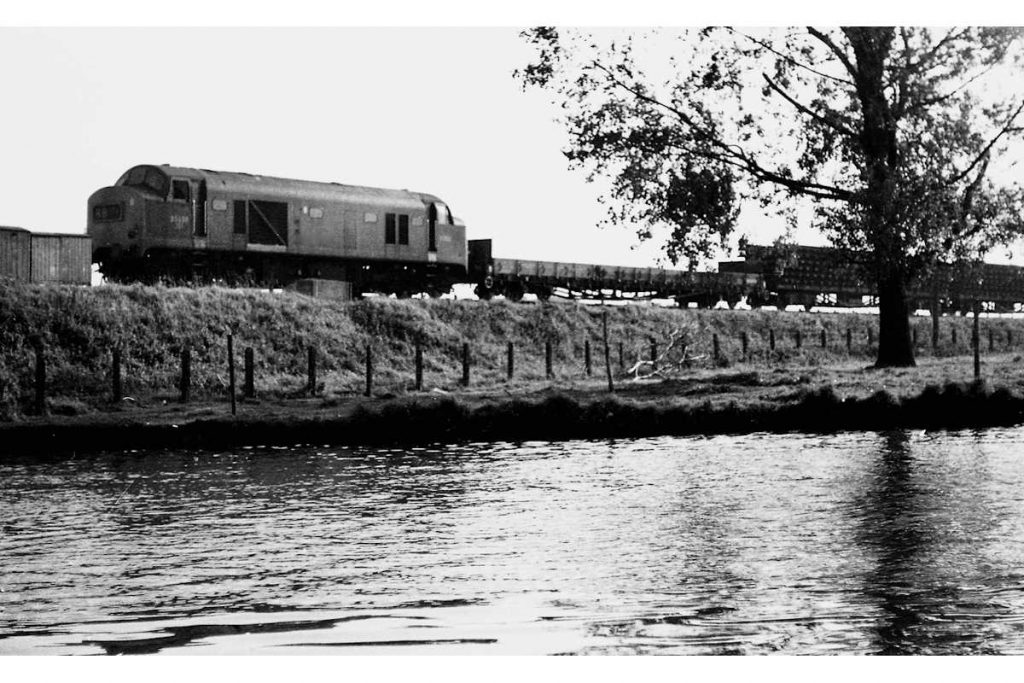
- Baby Deltic No. D5900 makes for a very unusual sight just to the South of Chesterton Junction as it heads towards the permanent way yard on 21st October 1968. This was a troubled class and D5900 had only a couple more months left in service before withdrawal in December 1968. Photo: Michael Smyth.
-
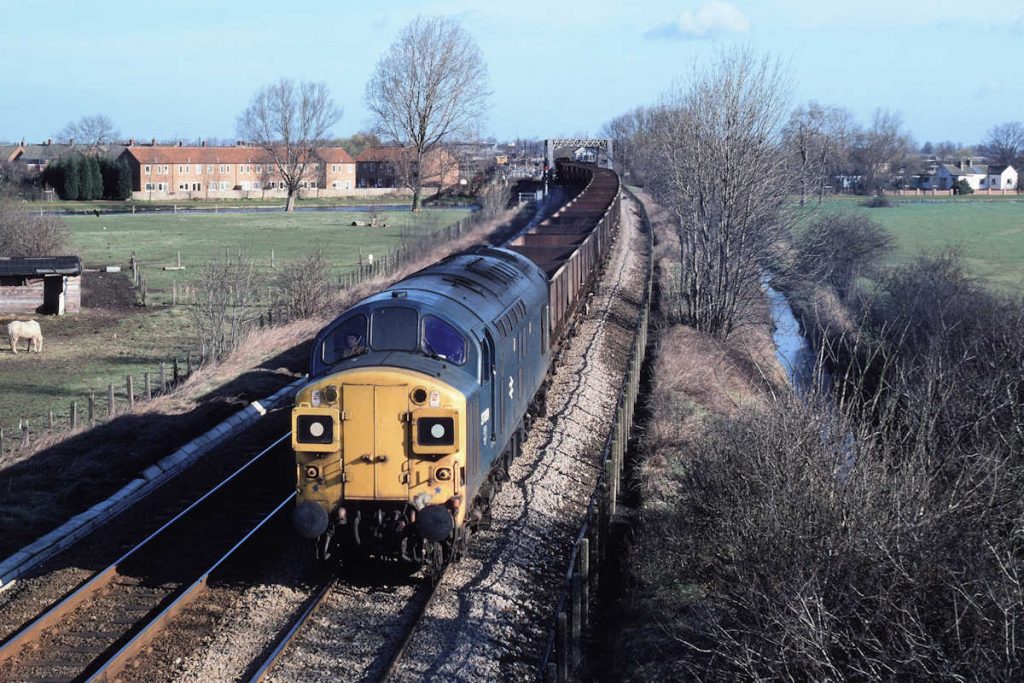
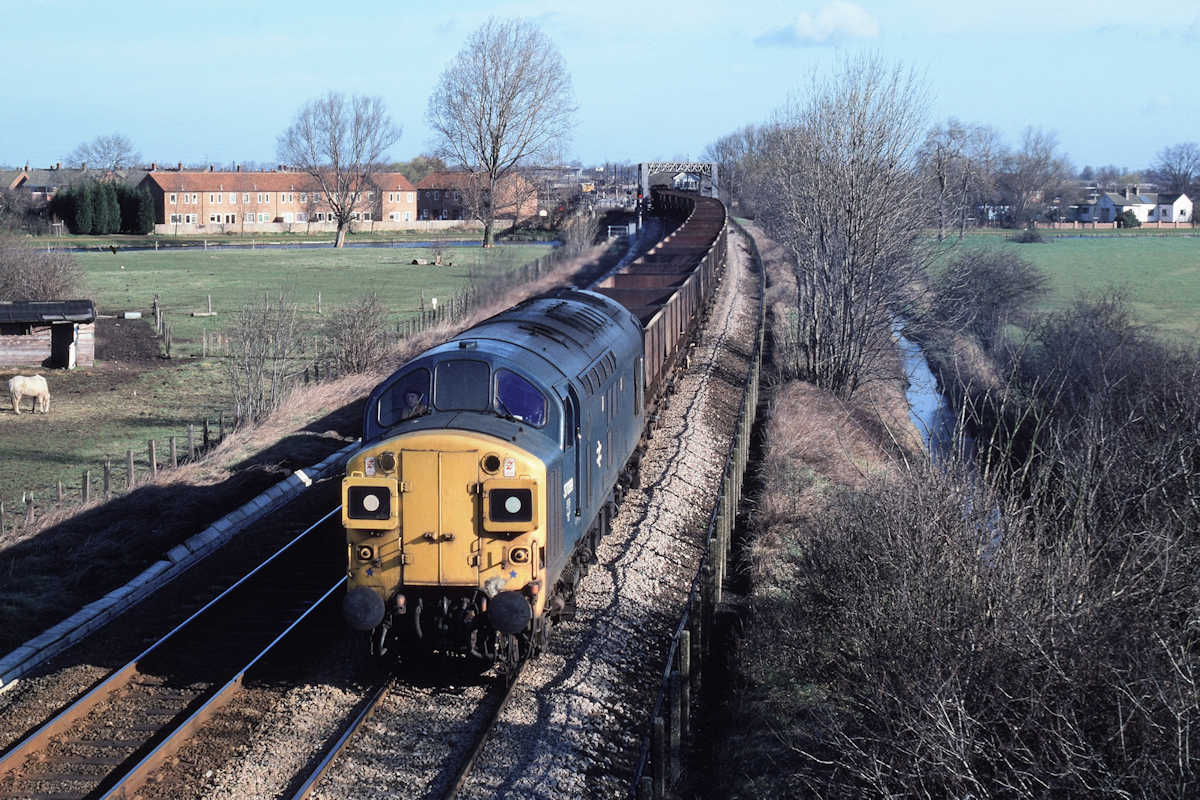
- Although vacuum fitted, a Guards van was used on trains over the St Ives branch because of the many train crew operated level crossings. Coming off the branch at Chesterton Junction on 11th March 1982, with the rear of the train still crossing over to the up main line, 37099 heads 8B45, the 07.58 (SX) Fen Drayton to Kings Cross gravel train. The van was detached at Cambridge and the train continued to Kings Cross as a Class 6. Photo: Stewart Jolly.
-
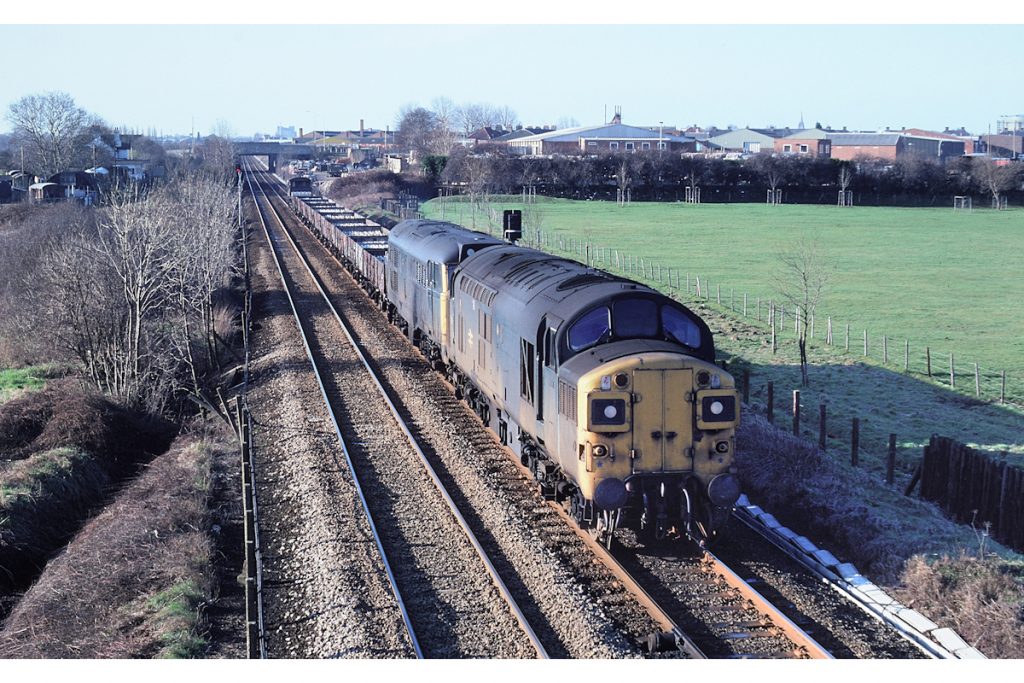
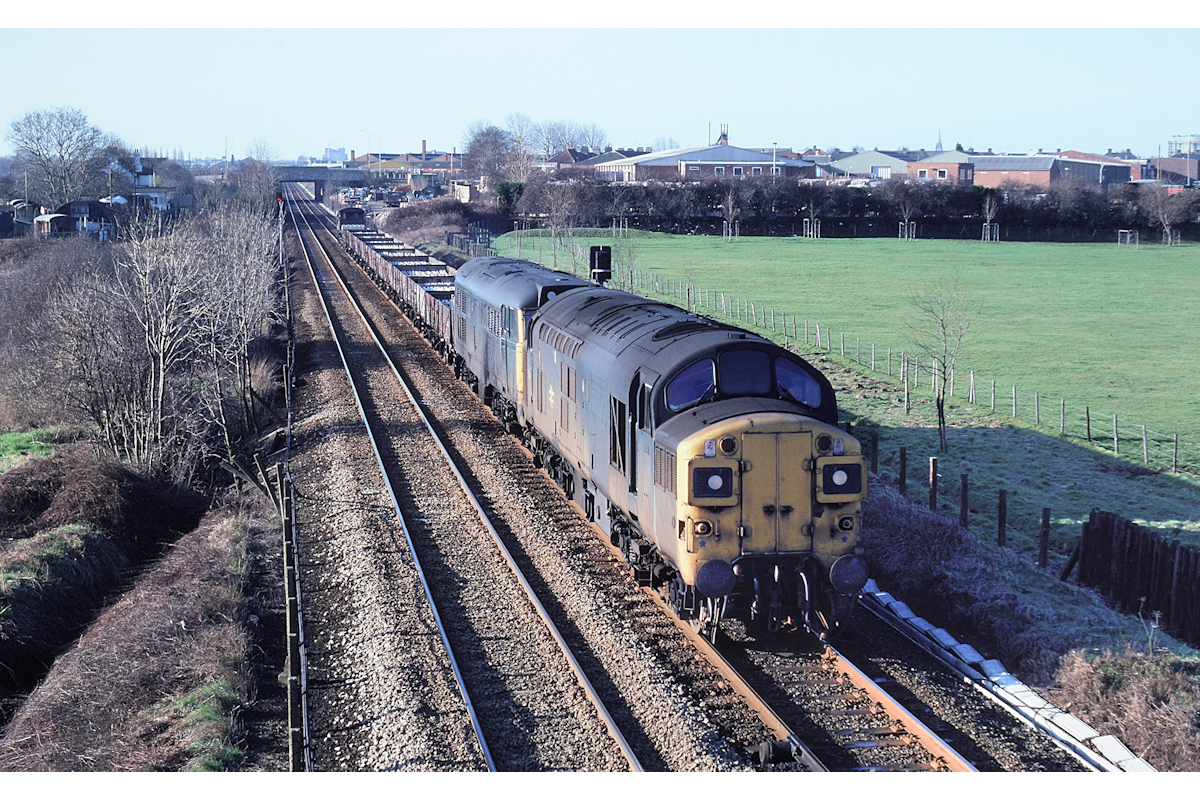
- On the bright and clear morning of 11th March 1982, 37088 and 31244 approach Chesterton Junction with a Down Engineer’s working. Photo: Stewart Jolly.
-
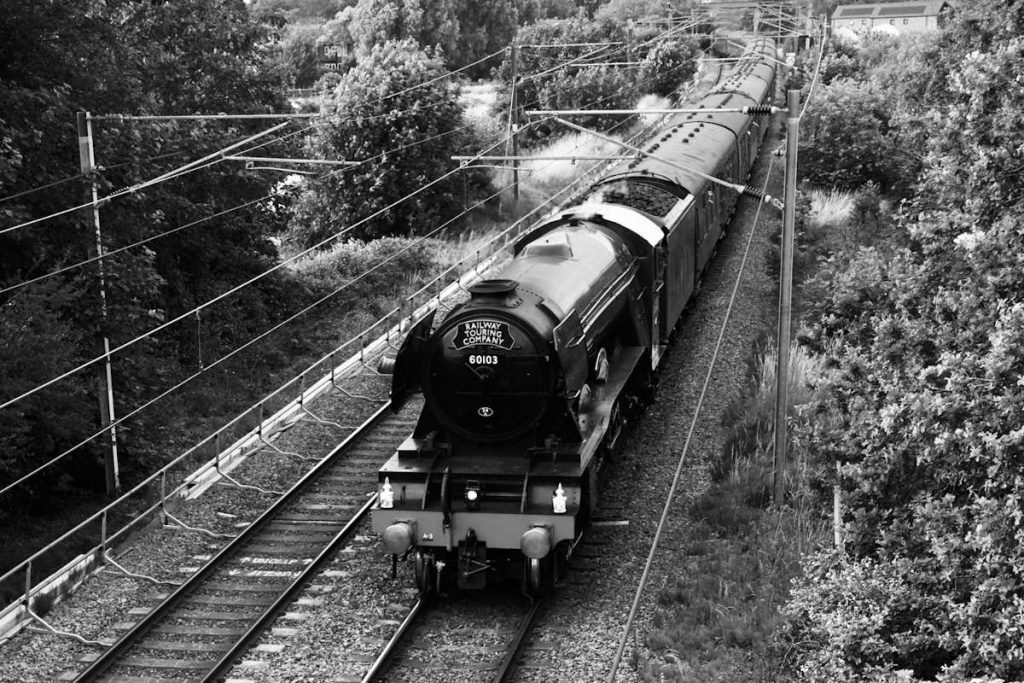
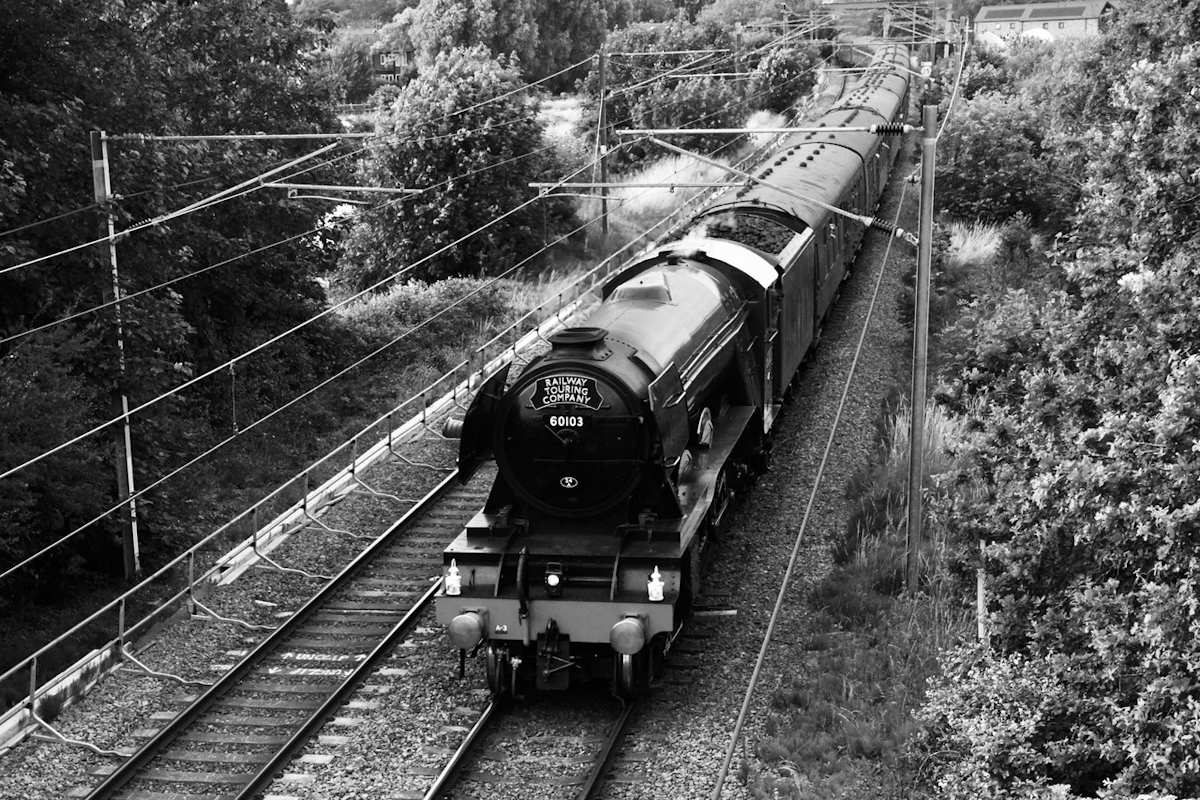
- Returning with the Railway Touring Company’s 1Z42 16.30 Yarmouth to Kings Cross on Friday 23rd June 2023, 60103 ‘Flying Scotsman’ took water in the goods loops adjacent to Cambridge North station then headed South. The rear carriages can just be seen crossing back on to the Up line for the run to Stevenage, Potters Bar and arrival on time in Kings Cross at 20.48. Photo: Michael Smyth.
-
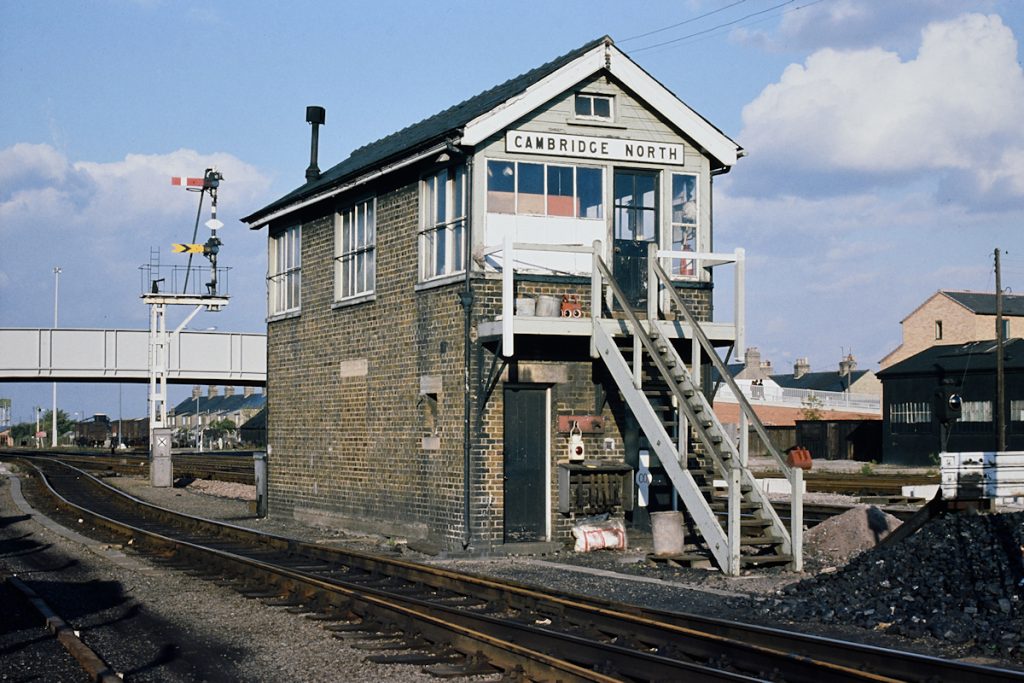
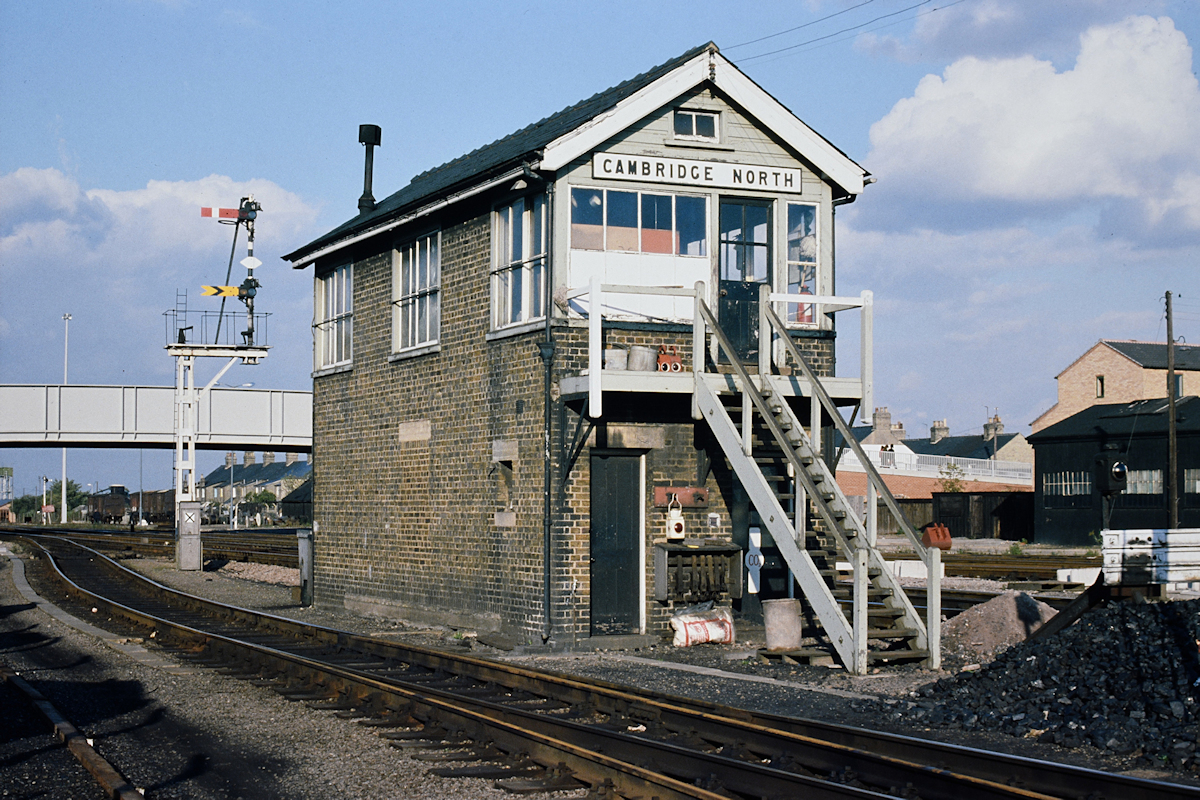
- Cambridge North Signal Box, 13th October 1981. Photo: Stewart Jolly.
-
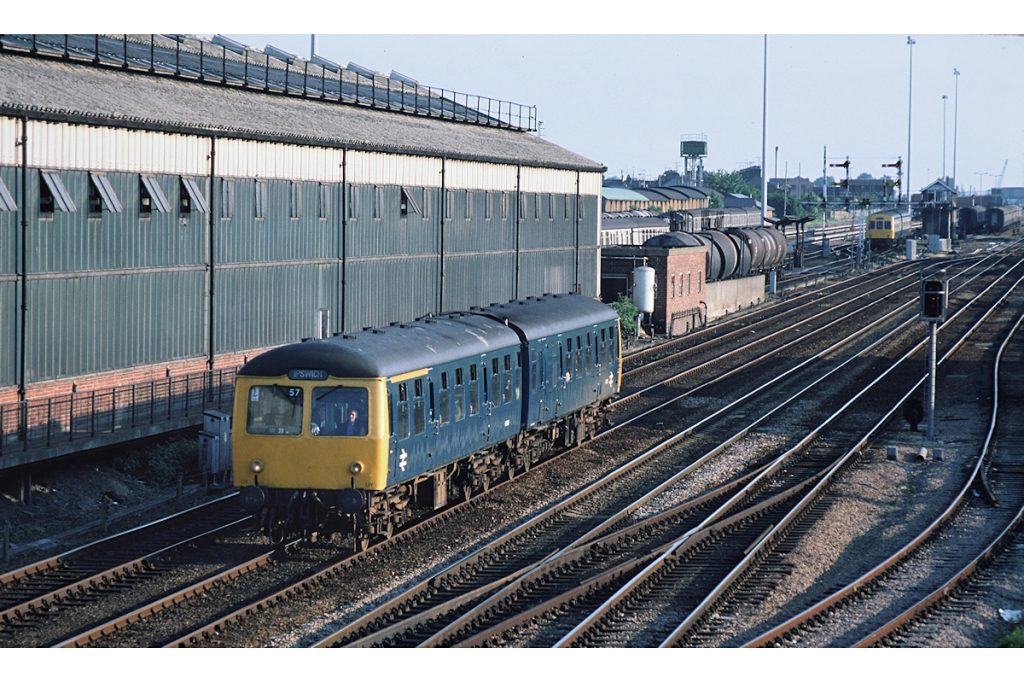
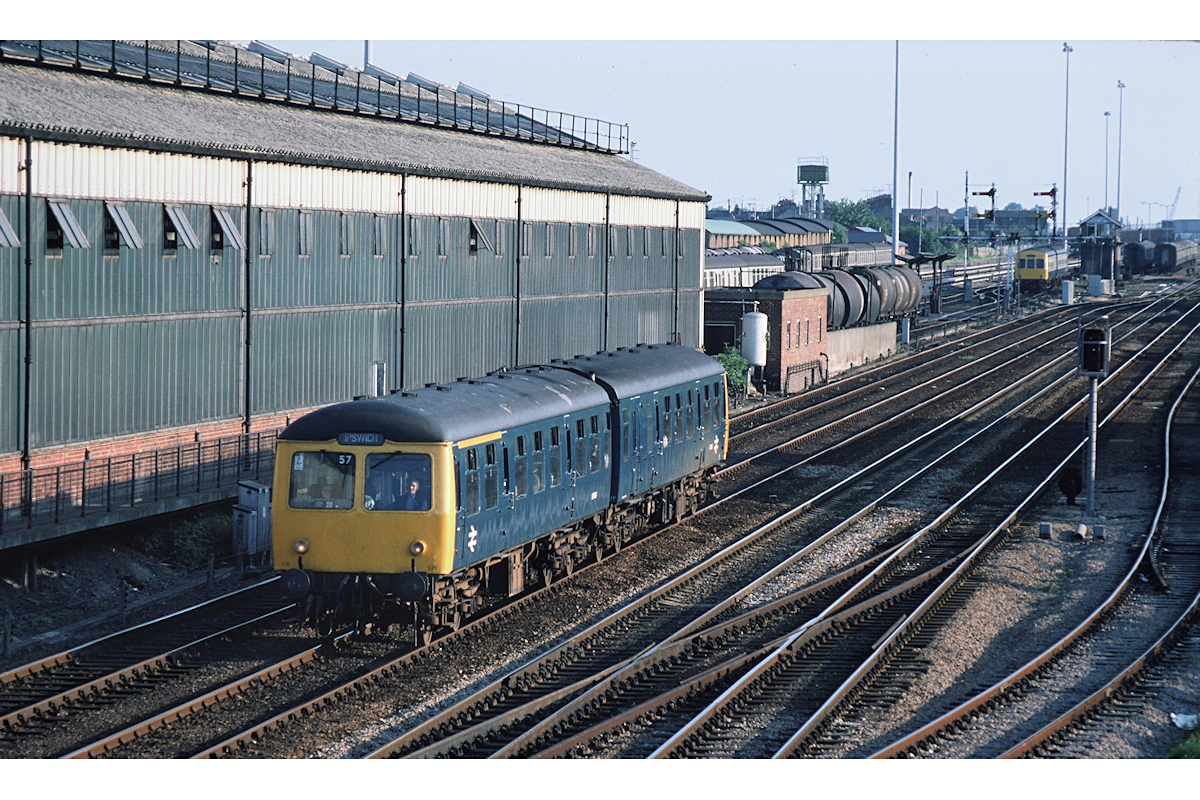
- Cravens set E56458+E51263 have crossed over onto the Newmarket line and are heading past the depot towards their first stop at Dullingham with the 18.58 Cambridge to Ipswich on 29th May 1982. Photo: Stewart Jolly.
-
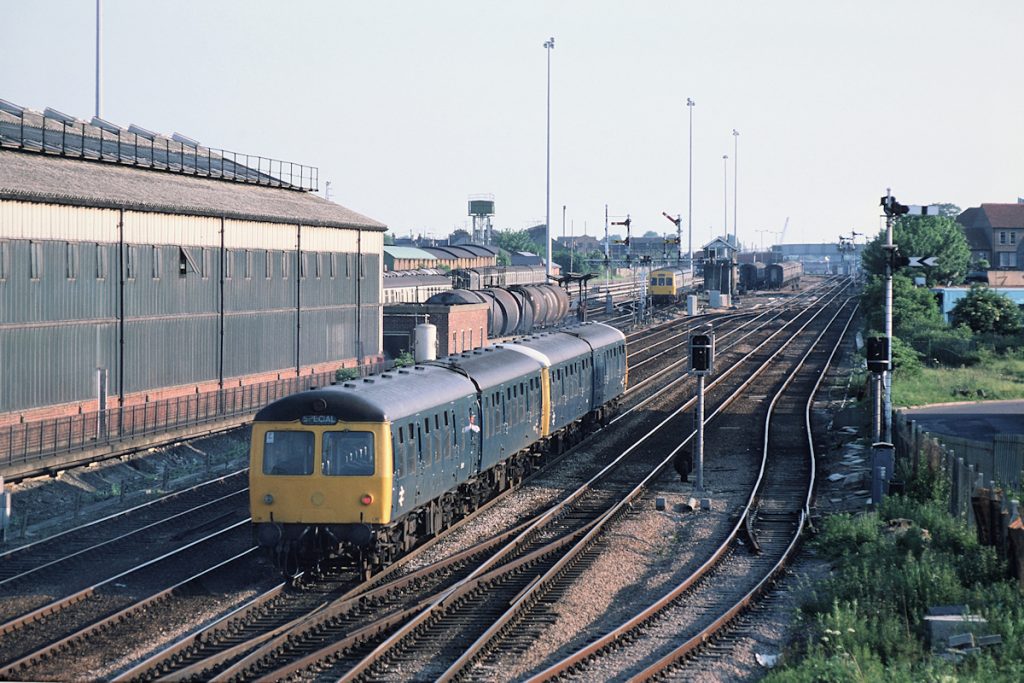
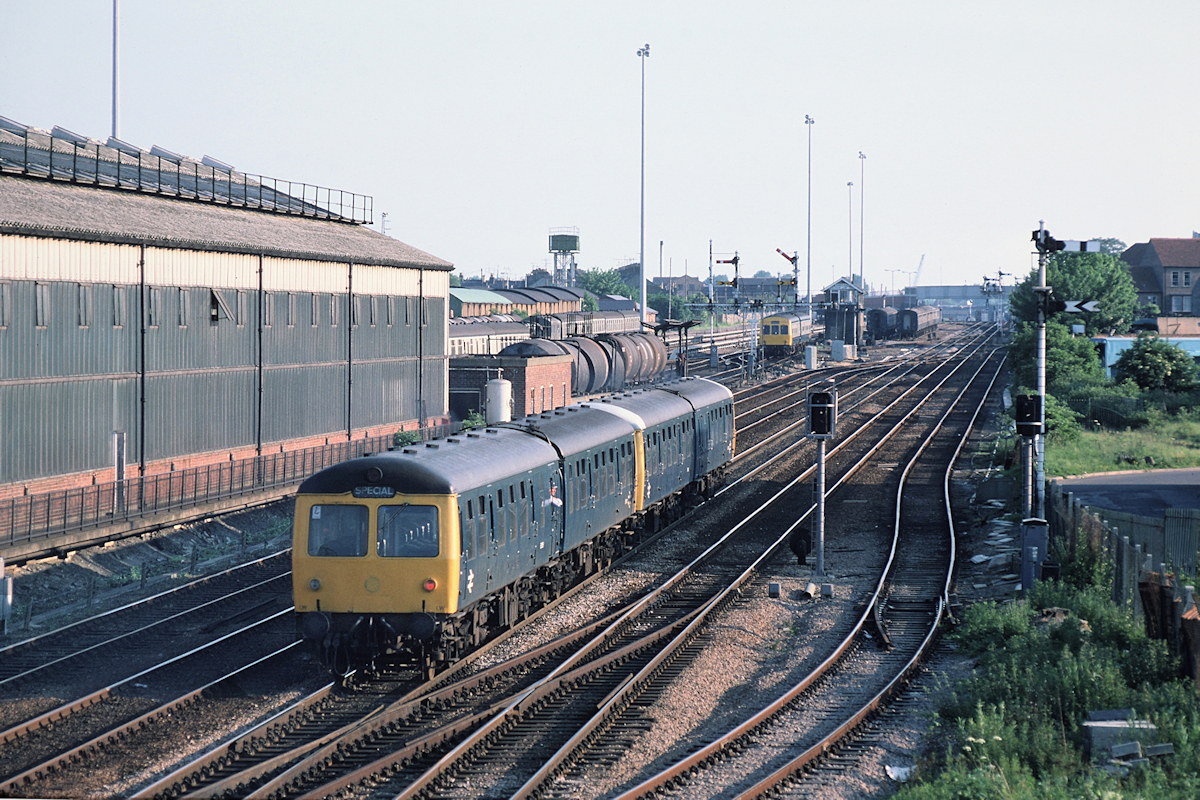
- The Guard enjoys the evening Spring air as a pair of Class 105 Cravens units heads an unidentified additional working into Cambridge from the North. Photo: Stewart Jolly.
-
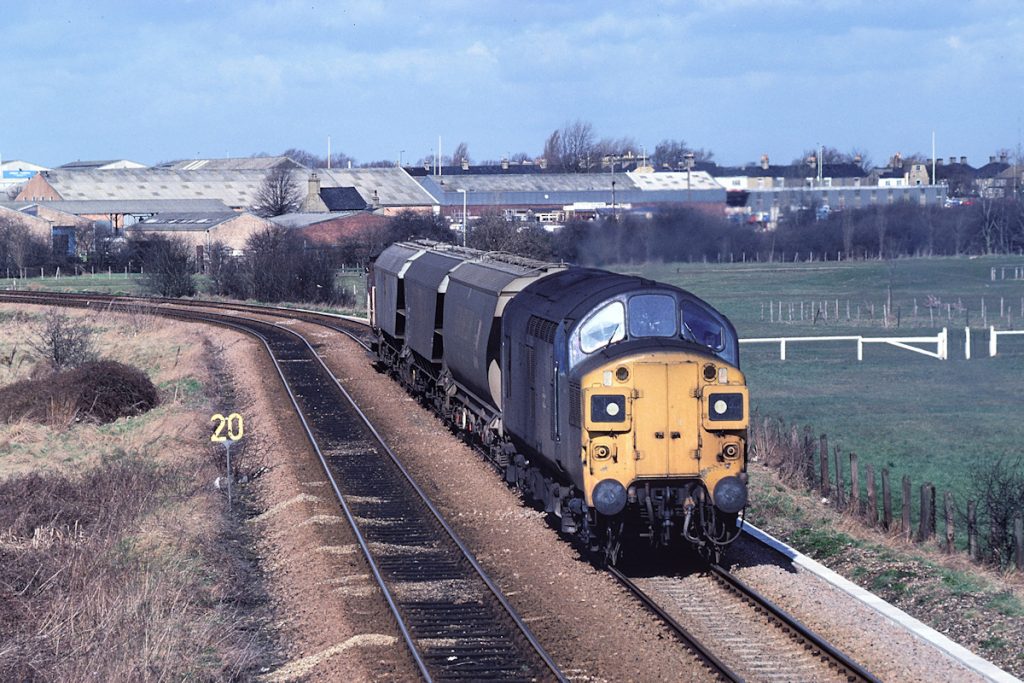
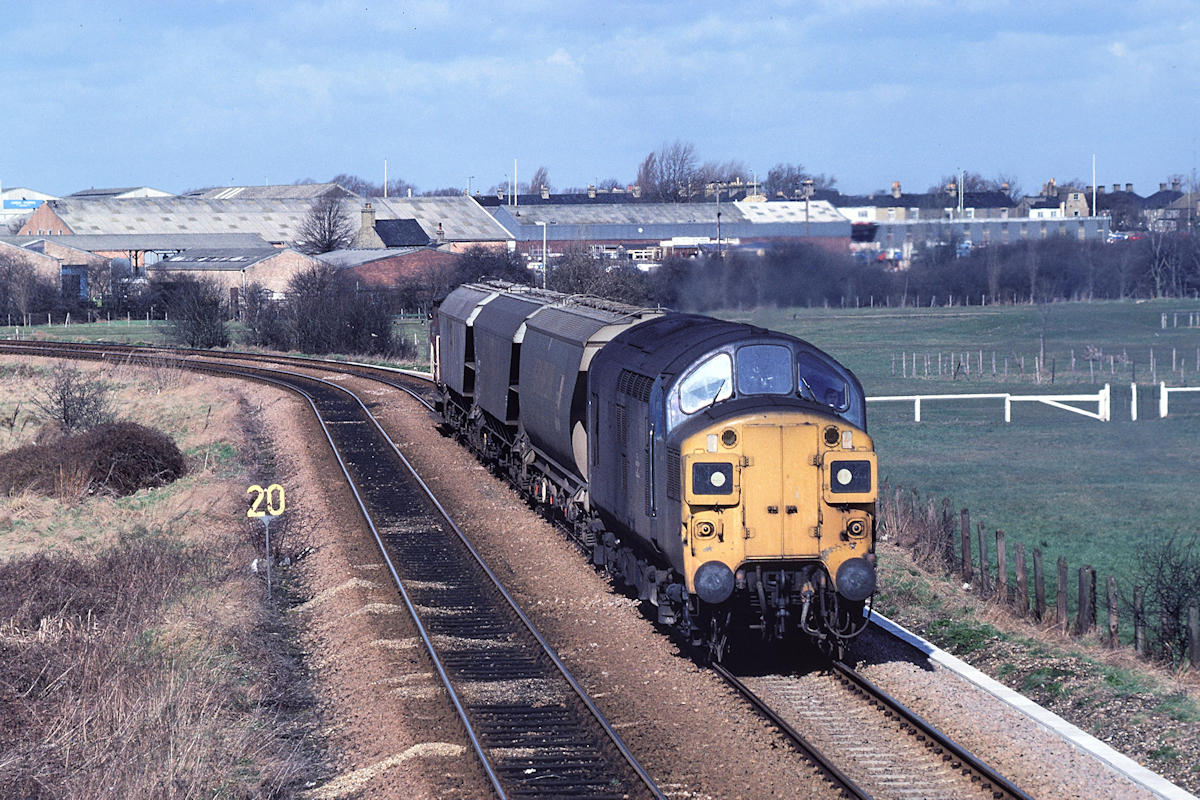
- Accelerating away from the tight curve off the main line, 37097 heads 8L07, the 11.00 (SX) Cambridge to Newmarket trip past Coldham’s Common on March 11th 1982. Photo: Stewart Jolly.
-
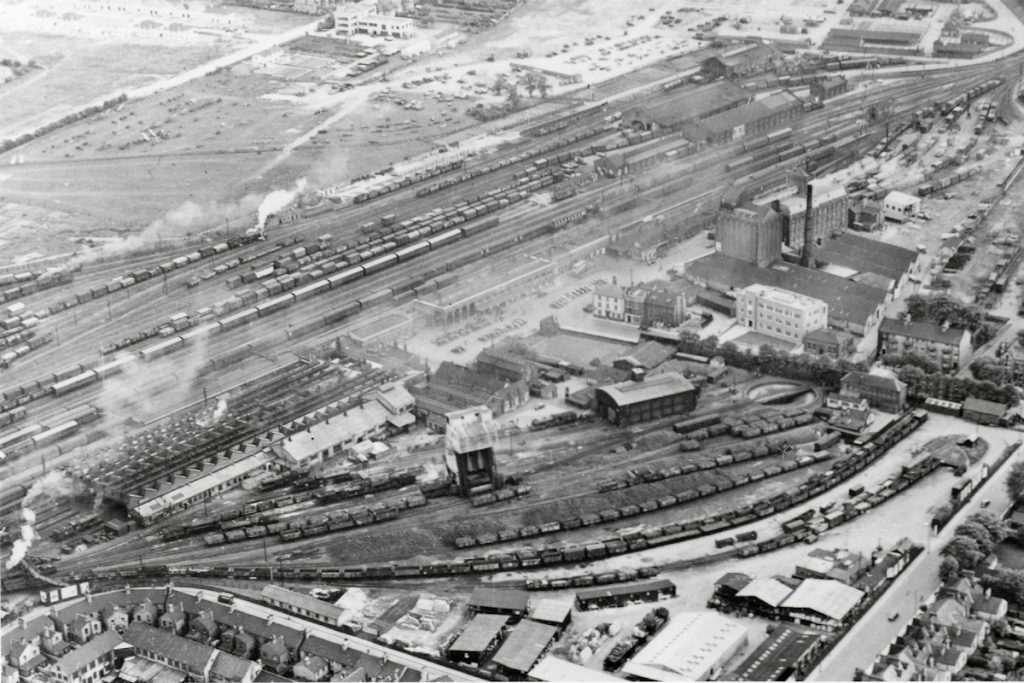
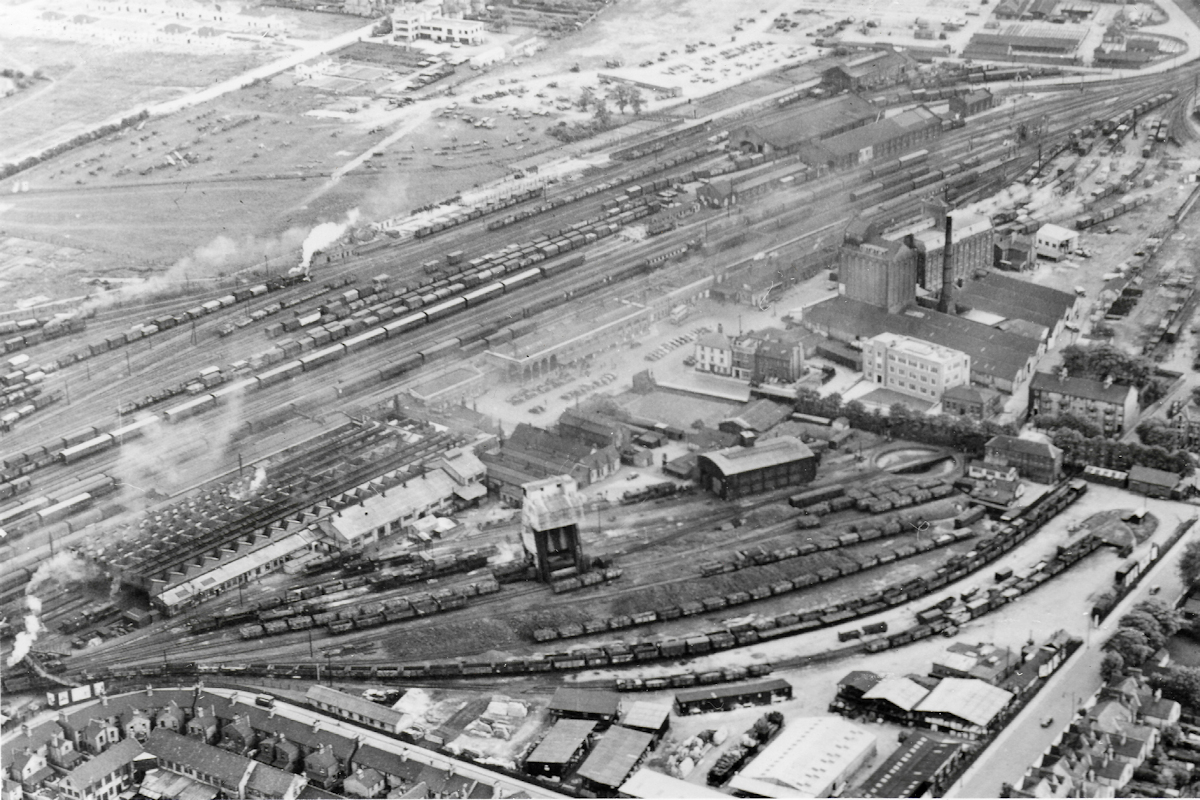
- The extent of the railway’s presence in Cambridge is well illustrated by this Summer of 1955 view of the shed and station. Photo: Cambridge Daily News.
-
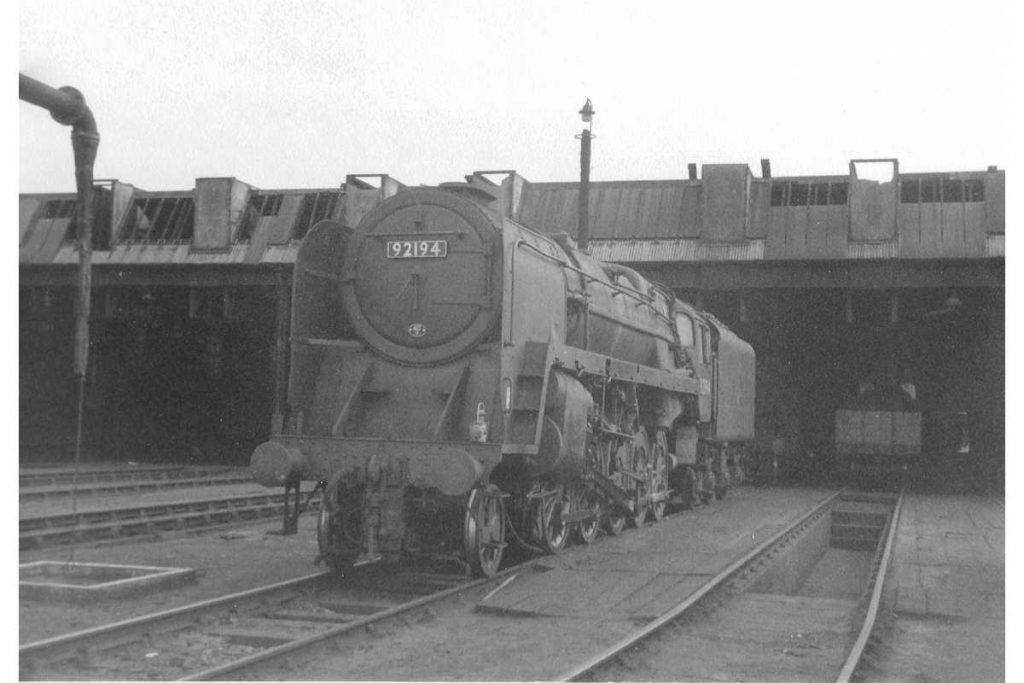
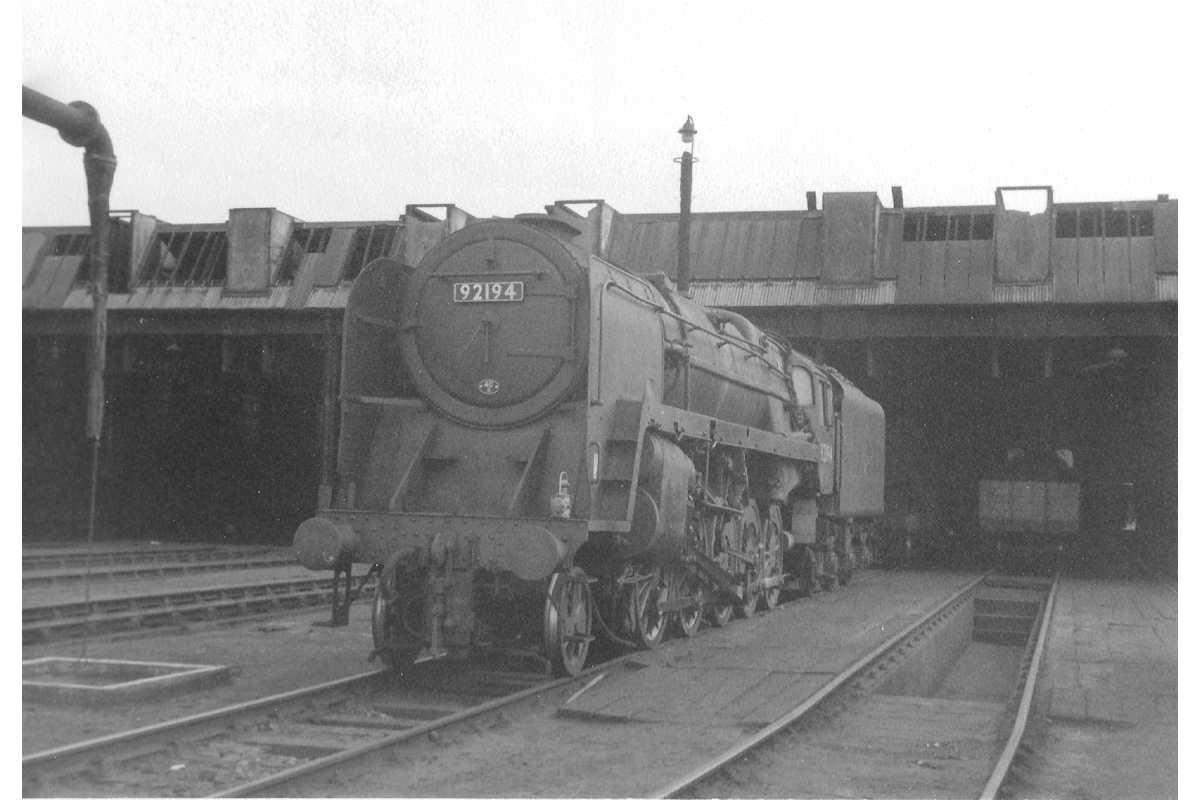
- On July 1st 1962, BR 9F 2-10-0 92124 stands outside Cambridge shed. Photo Copyright David Scudamore.
-
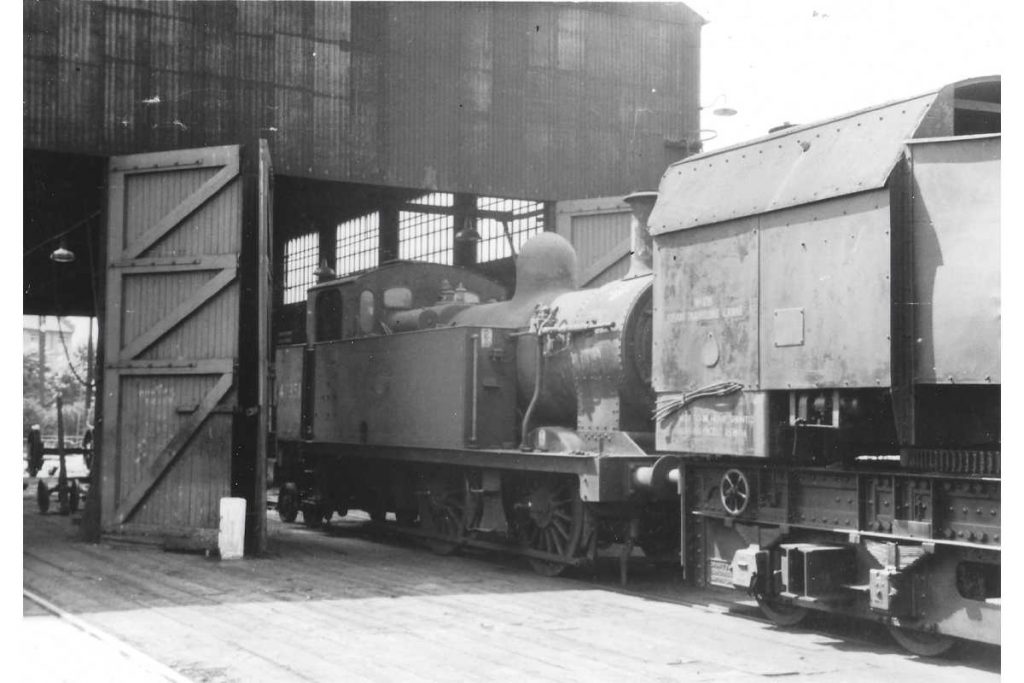
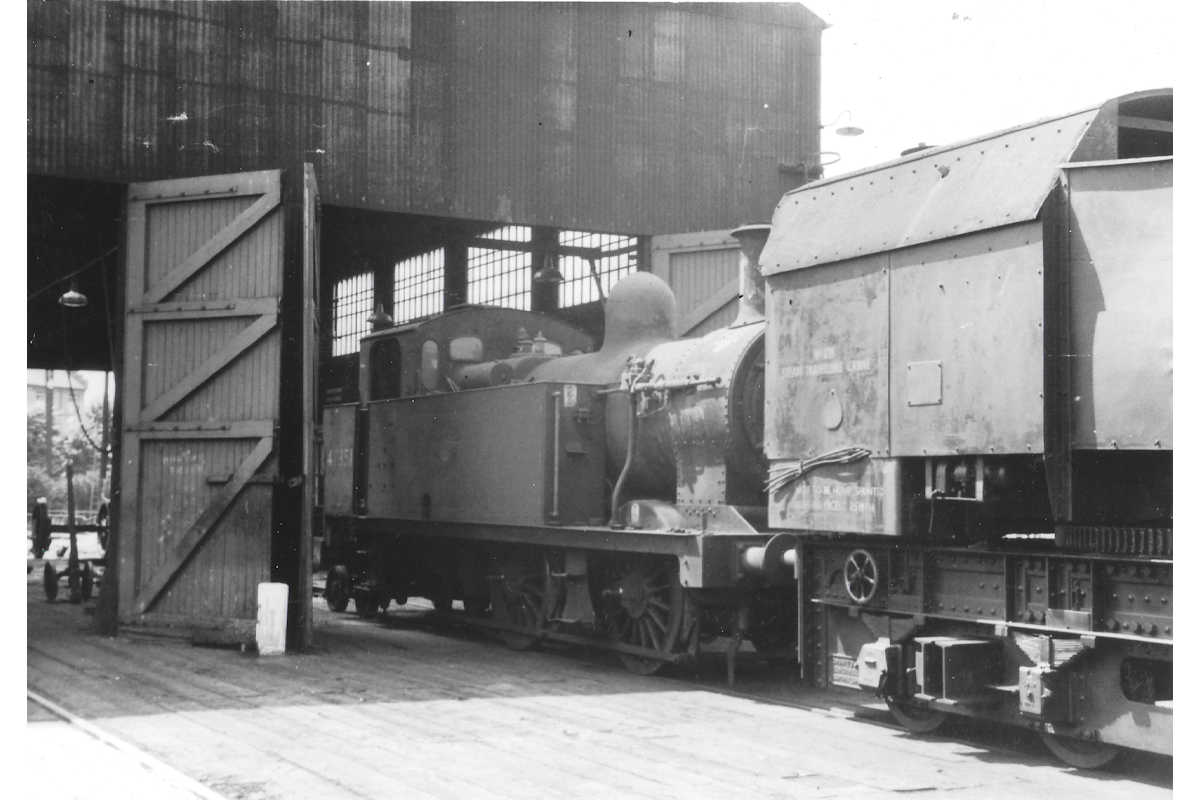
- LMS Jinty No. 47352 is seen in the Lift Shed at Cambridge Depot on 1st August 1962, just a year before its withdrawal. Photo Copyright David Scudamore.
-
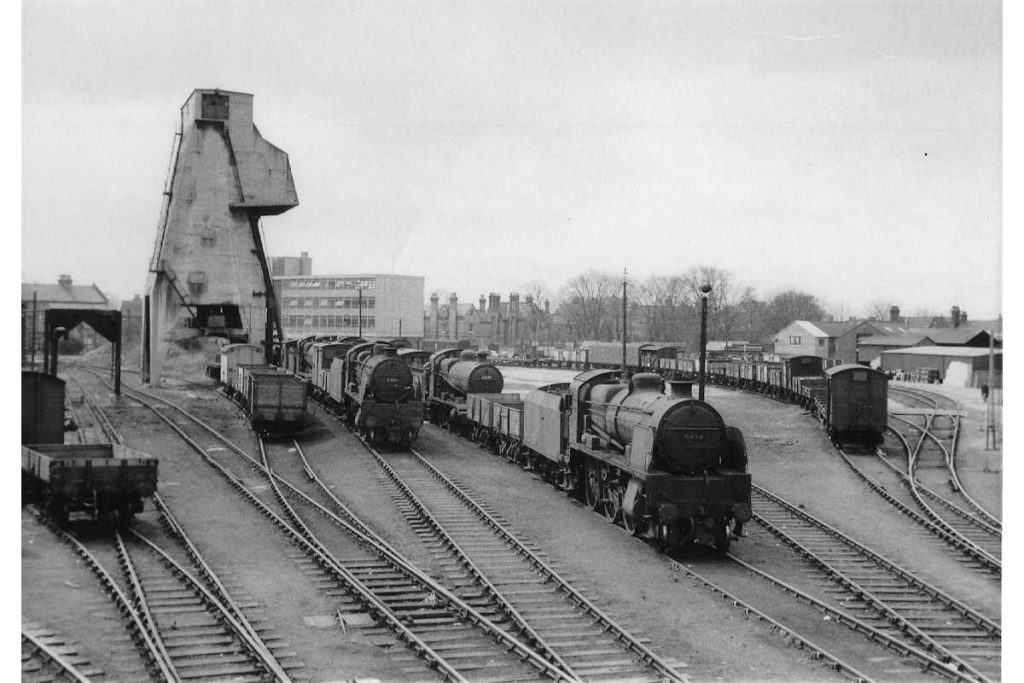
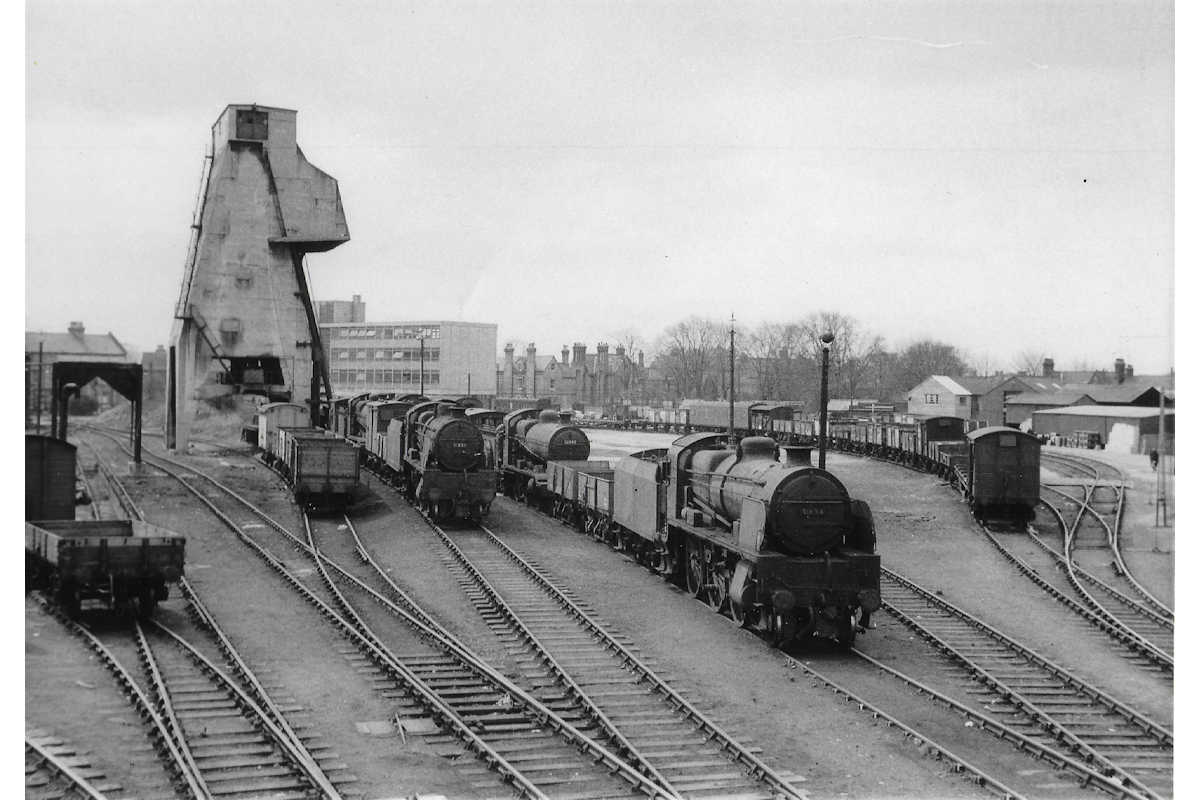
- A delightful panorama of Cambridge depot on 13th April 1964 shows a range of Southern motive power including U1 Class 31894, K Class 32343, N1 Class 31822, K Class 32337 and U1 Class 31896. Photo Copyright David Scudamore.
-
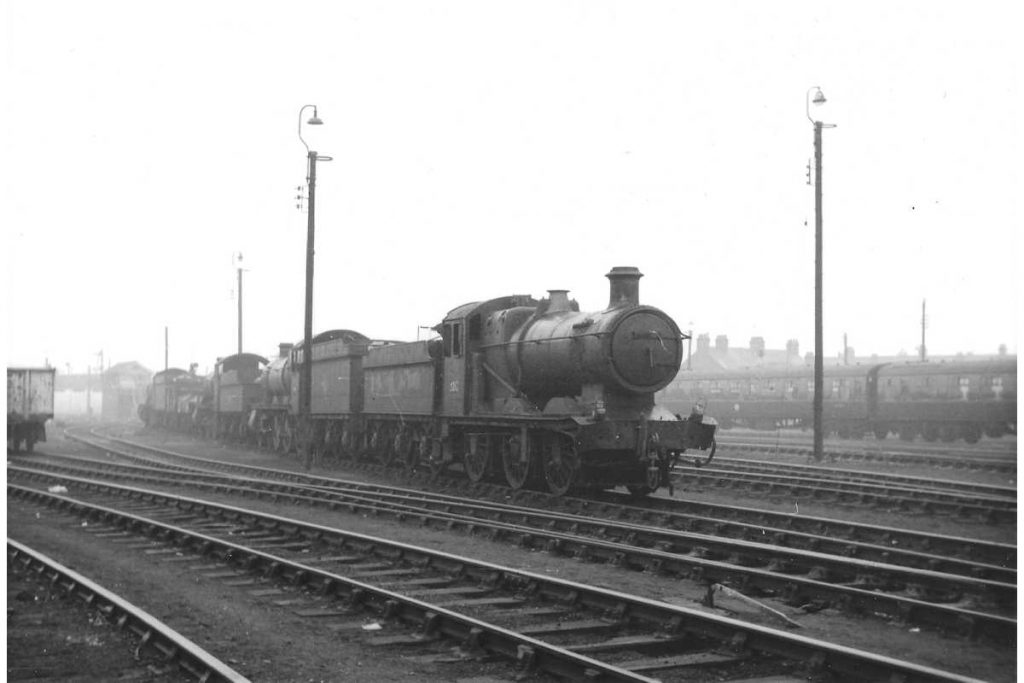
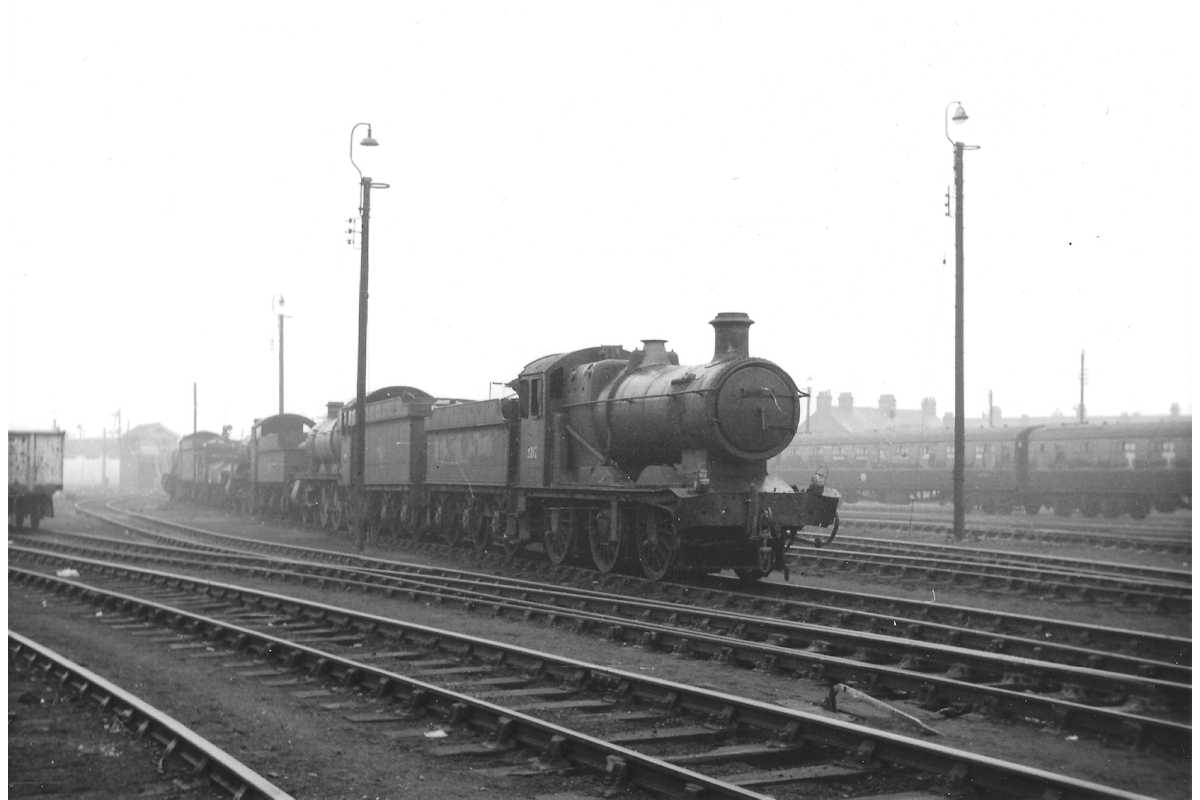
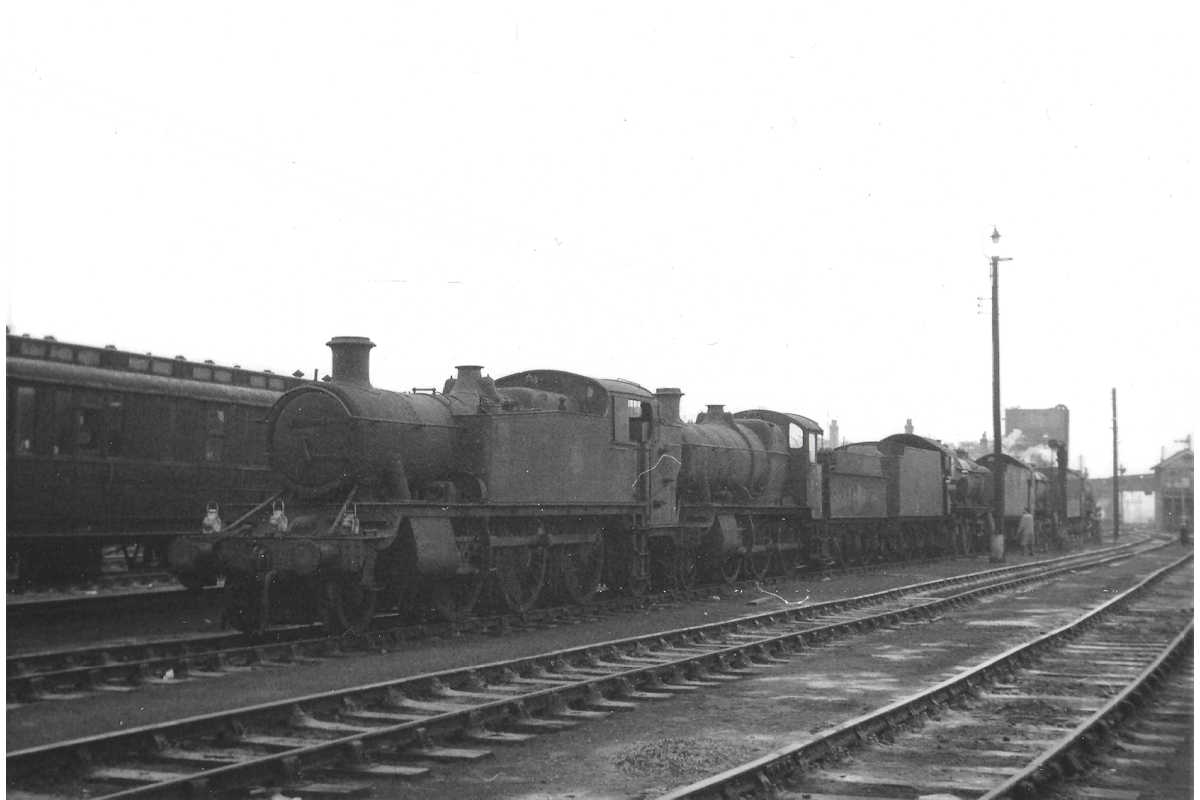
- Looking rather forlorn with its damaged front end, ‘Grange’ Class No. 6807 ‘Birchwood Grange’, 2251 Class No. 2283, 7200 Class No. 7203 and 2251 Class No. 3203 stand in ‘the dump’ to the North of Cambridge on their way to Ward’s scrapyard in Norwich on 2nd April 1964. Photo Copyright David Scudamore..
-
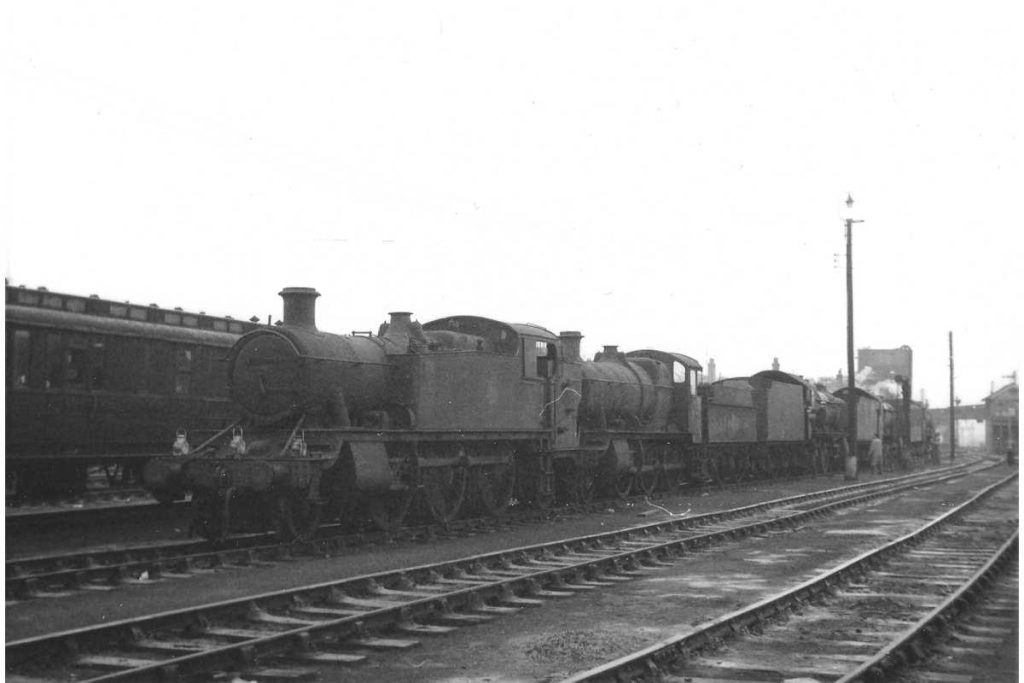
- Great Western 2-6-2 Tank engine 6109 heads a line of withdrawn locomotives on their way to Ward’s scrapyard at Norwich on 16th October 1963. Also in the line are 4300 Class No. 7324, County Class 1007 ‘County of Brecknock’ and 1018 ‘County of Leicester’ and LMS 8F 48661. Photo Copyright David Scudamore.
-
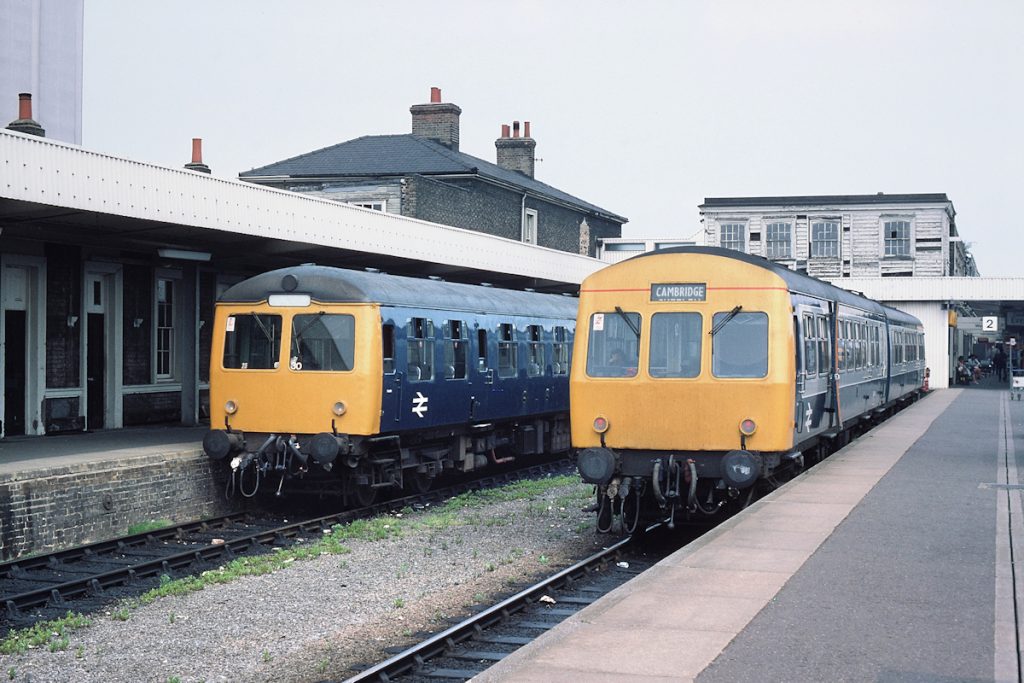
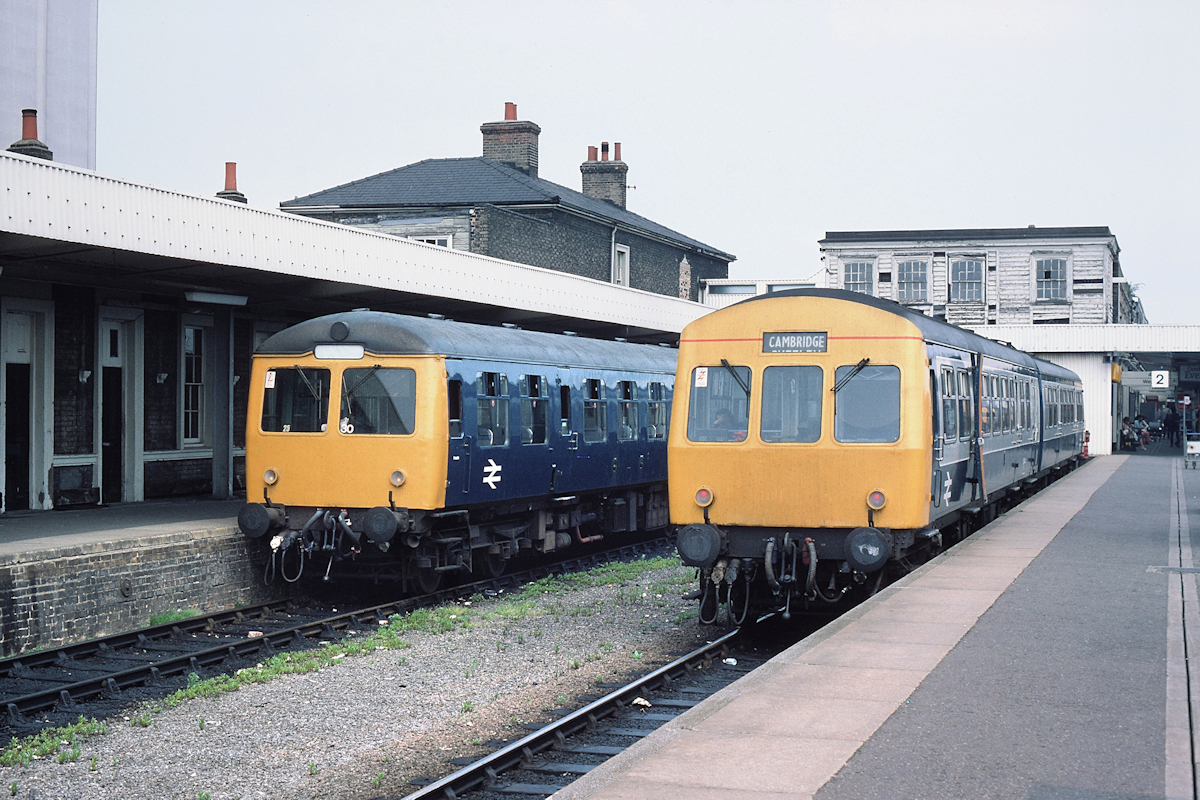
- In the South bays at Cambridge on 20th June 1984, Class 105 Cravens car E53373 forms the 13.33 to Bishops Stortford and Class 101 Metro-Cammell cars E51444 and E54068 form the 13.13 to Royston. With electrification through to Cambridge, services on both these lines now run through to Liverpool Street and Kings Cross/St Pancras respectively. Photo: Stewart Jolly.
-
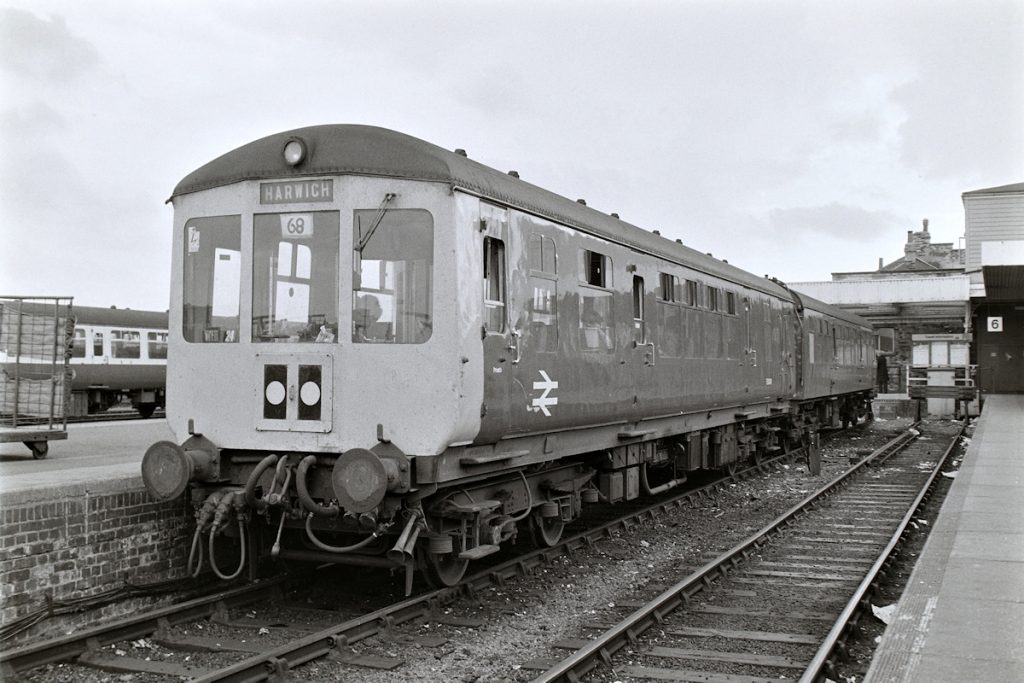
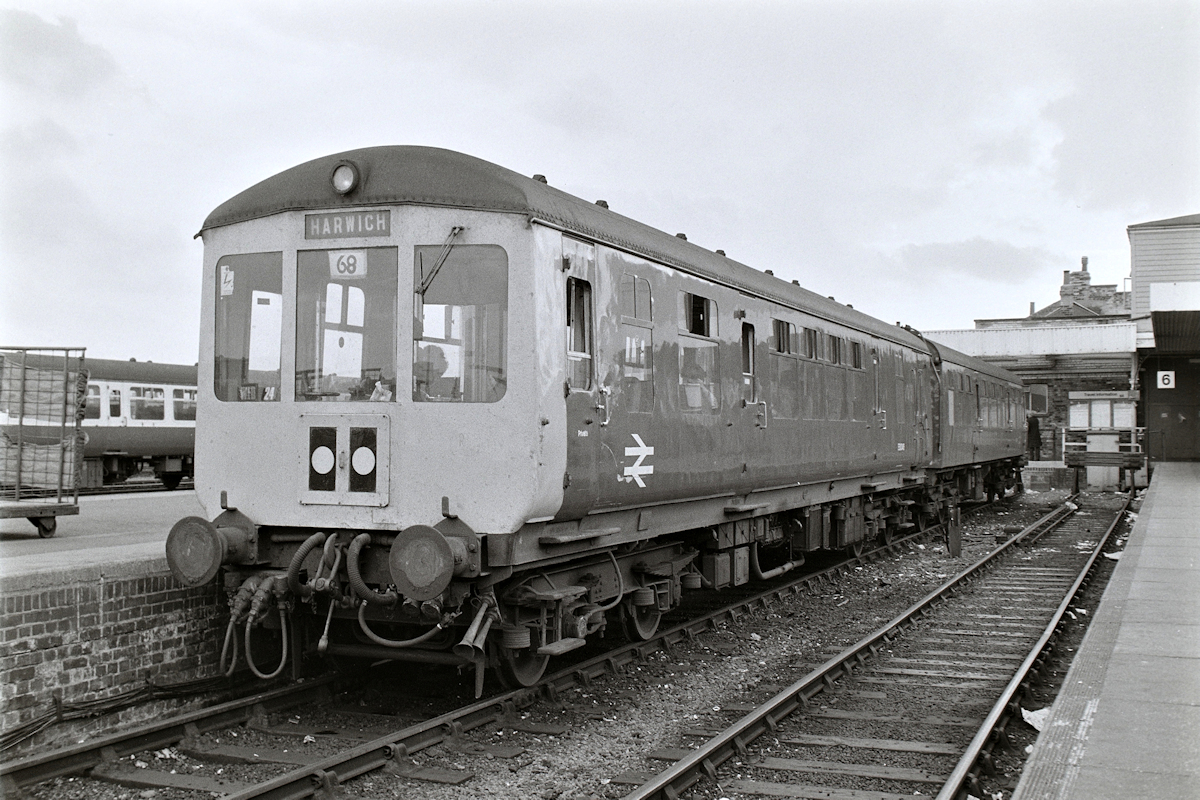
- Shortly before transfer of the last Gloucester RCW vehicles from Norwich to Longsight, Gloucester-Cravens unit E50346 and E56115 stands in the North bays at Cambridge on 22nd September 1980 with the 14.50 to Harwich Town. Photo: Stewart Jolly.
-
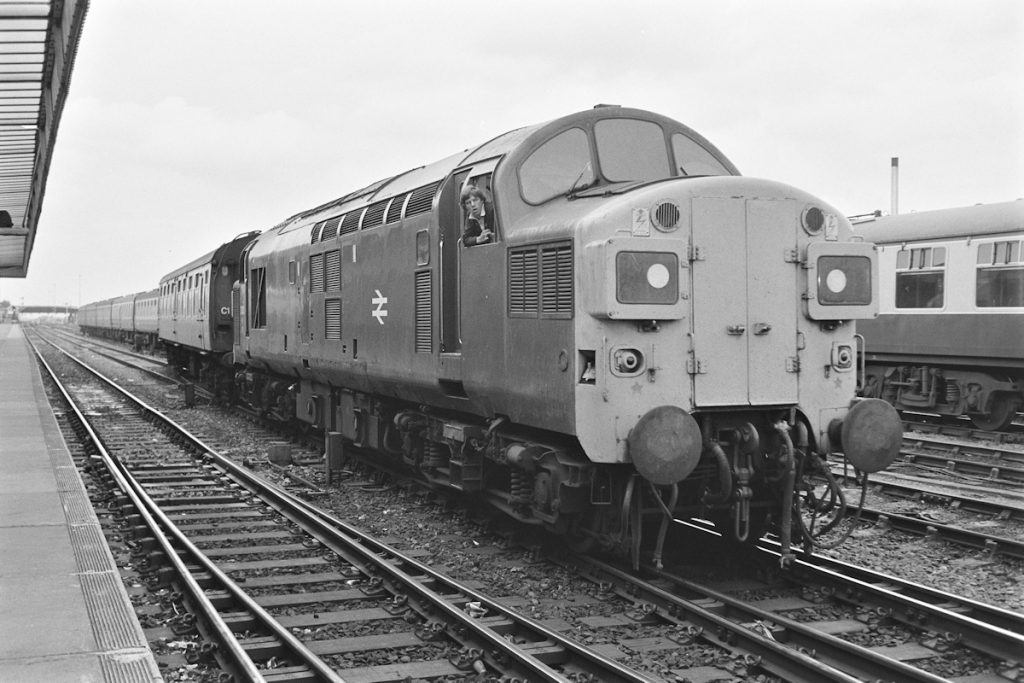
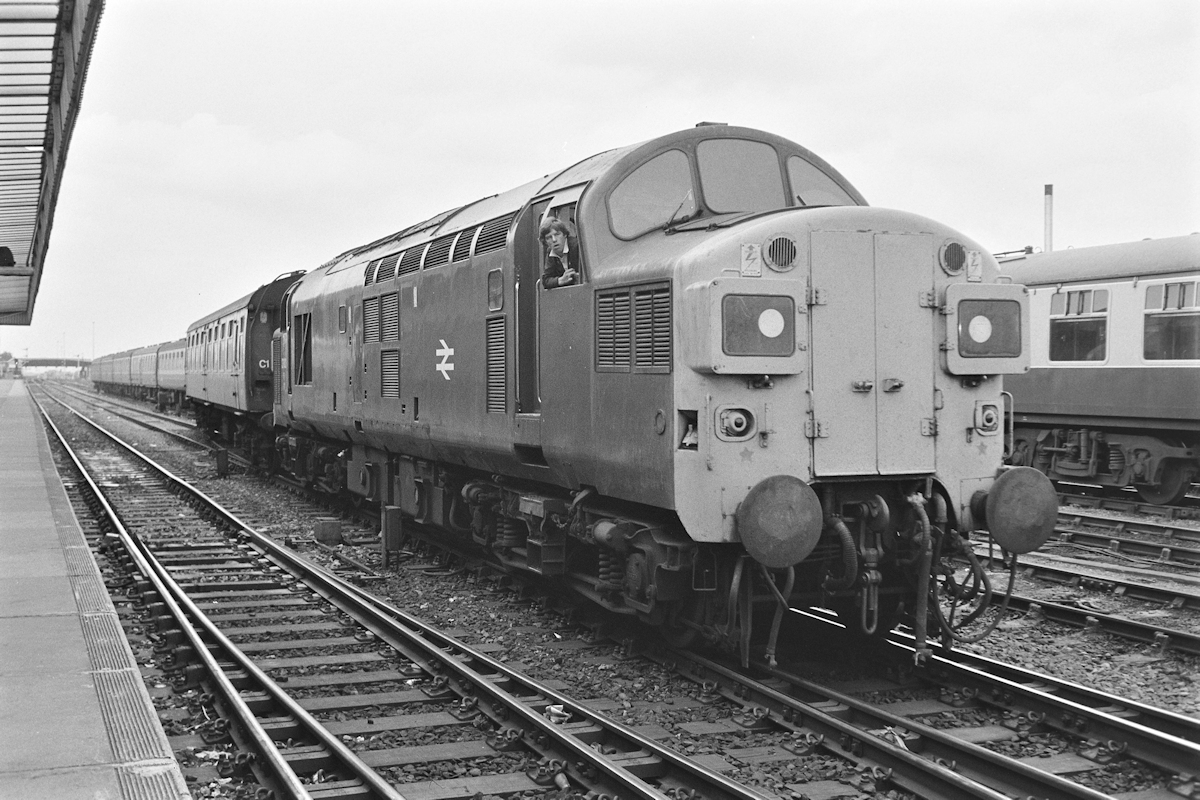
- On 22nd September 1980, 37102 eases slowly out of the carriage sidings and over the scissors crossing with the empty stock of the 14.39 to Liverpool Street. The destination board fixings on the compartment vehicle to the right were by this time a rare sight. Photo: Stewart Jolly.
-
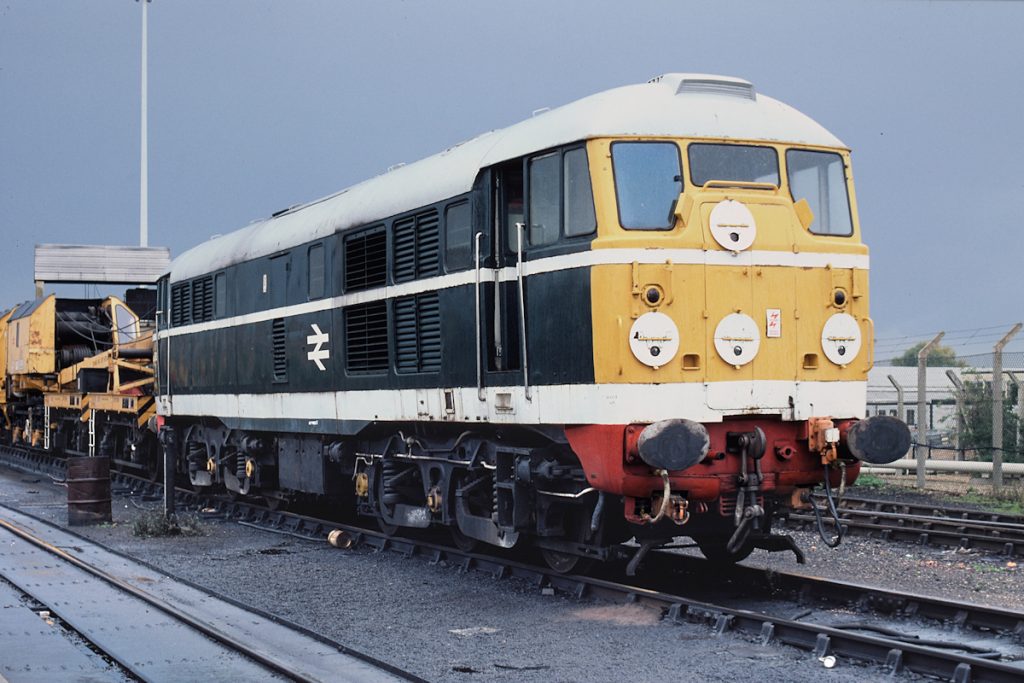
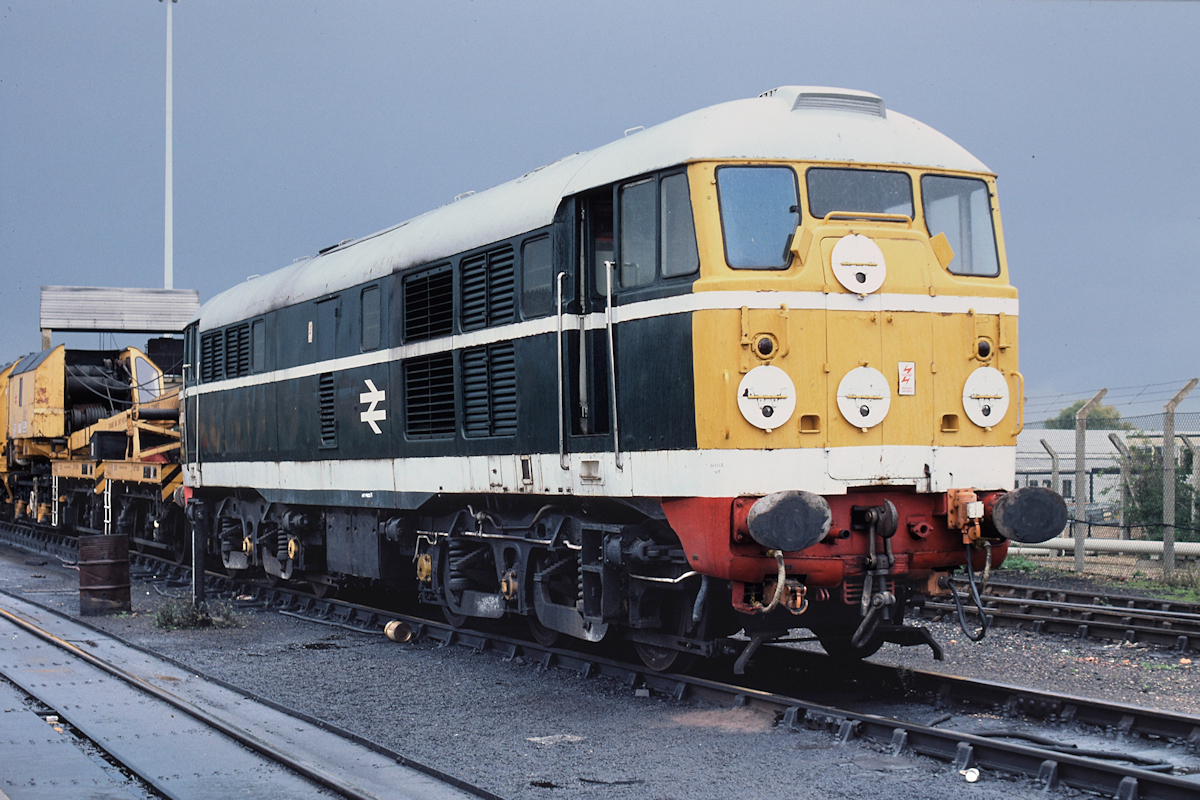
- ‘Toffee Apple’ Class 31 No. 31013 was withdrawn from Stratford in March 1979 and converted to Train Heating Unit No. ADB968013. It spent most its Departmental life at Norwich and Yarmouth before being transferred to Cambridge. The Unit is seen at Cambridge depot on 13th October 1982, shortly after transfer from Norwich. Photo: Stewart Jolly.
-
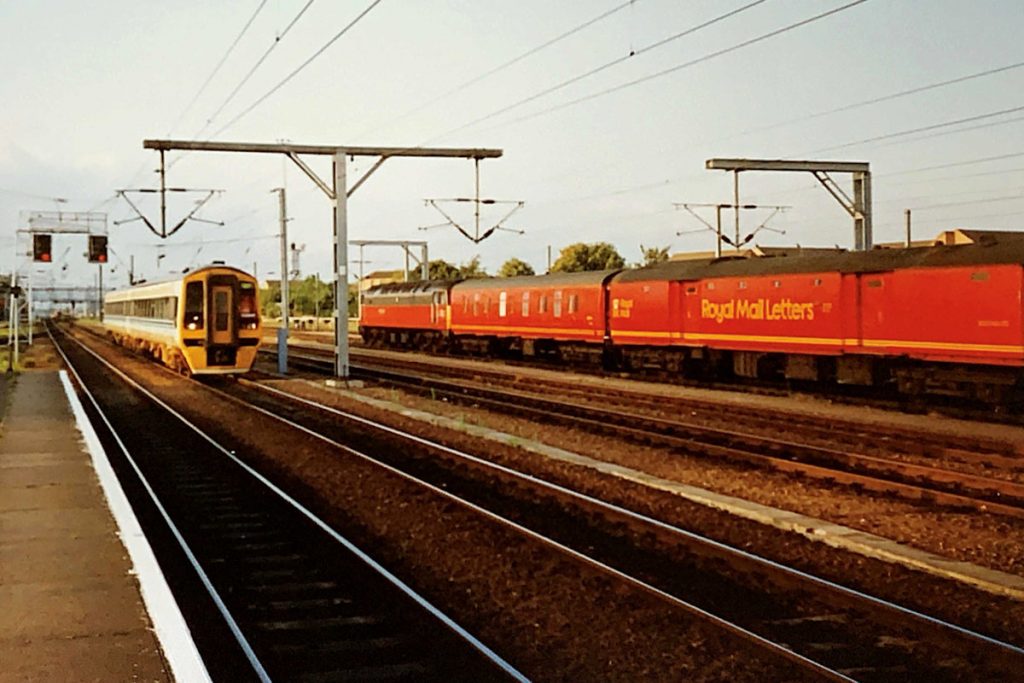
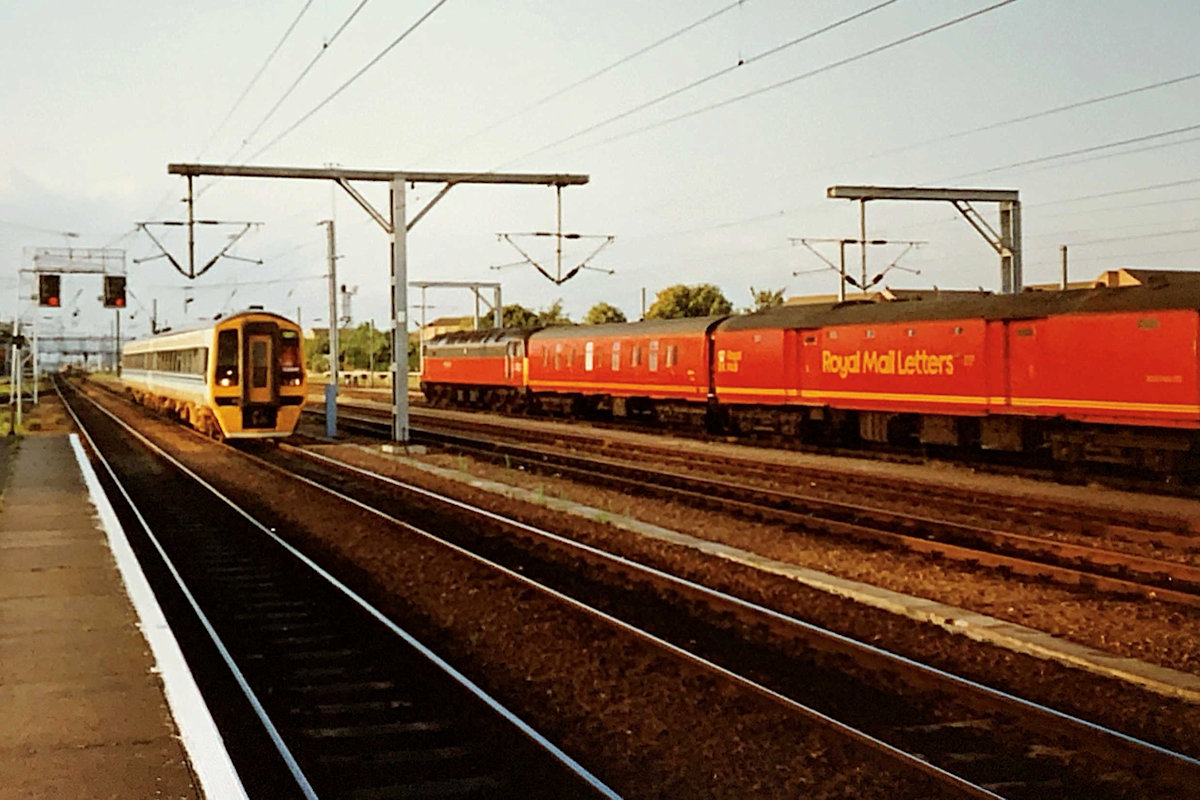
- The late 80s and early 90s were turbulent years for mail traffic on BR. Following the closure of Lincoln Depot in 1987, the Lincoln section of the Peterborough – Crewe TPO stabled during the day at Etches Park until 1988 and then with the main portion at Cambridge, until the withdrawal of the working in September 1991 and its replacement by the Peterborough-Carlisle ‘Borders’ TPO, which ran until 31st May 1996. On a sunny Summer’s evening at Cambridge, a Class 158 enters from the North as the empty stock of the TPO prepares to depart for Peterborough. Photo: Andy Dean.
-
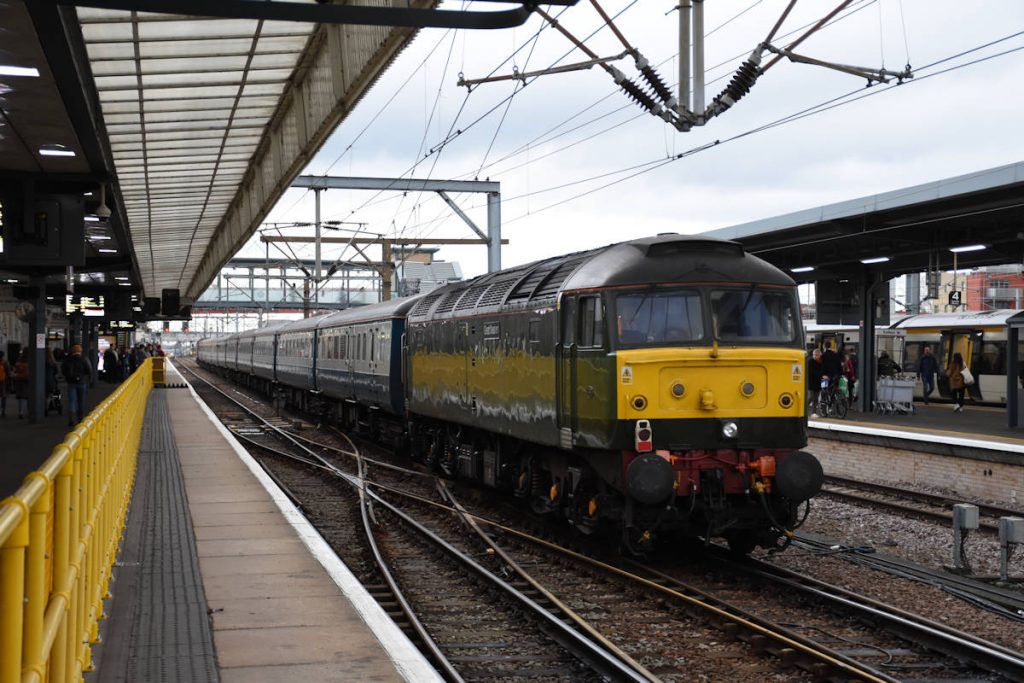
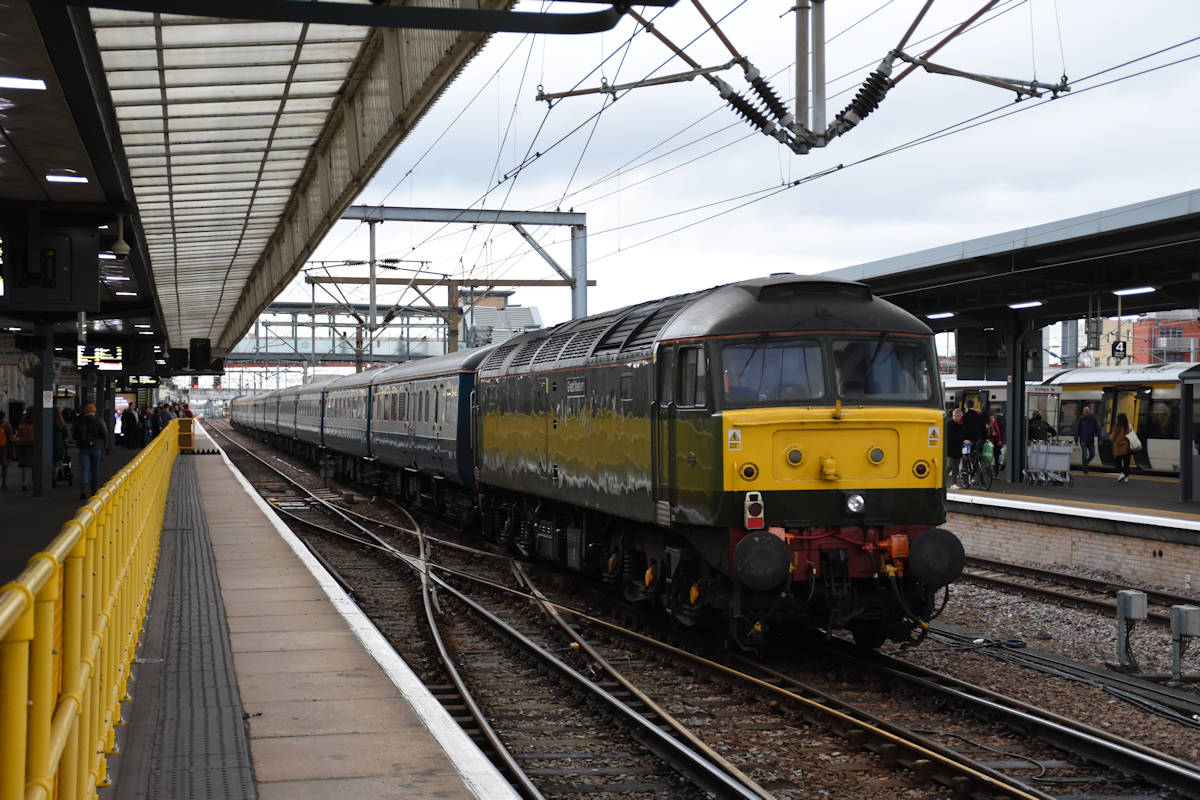
- On Saturday 18th February 2023, West Coast Railways Class 47s Nos. 47815 ‘Great Western’ and 47813 top-and-tail 1Z62, the 15.22 Liverpool Street to Peterborough. They are seen waiting on the Through Line at Cambridge whilst two Class 387s on 1T42, the 16.35 to Kings Lynn, clear the section ahead. Photo: Alan Jones.
-
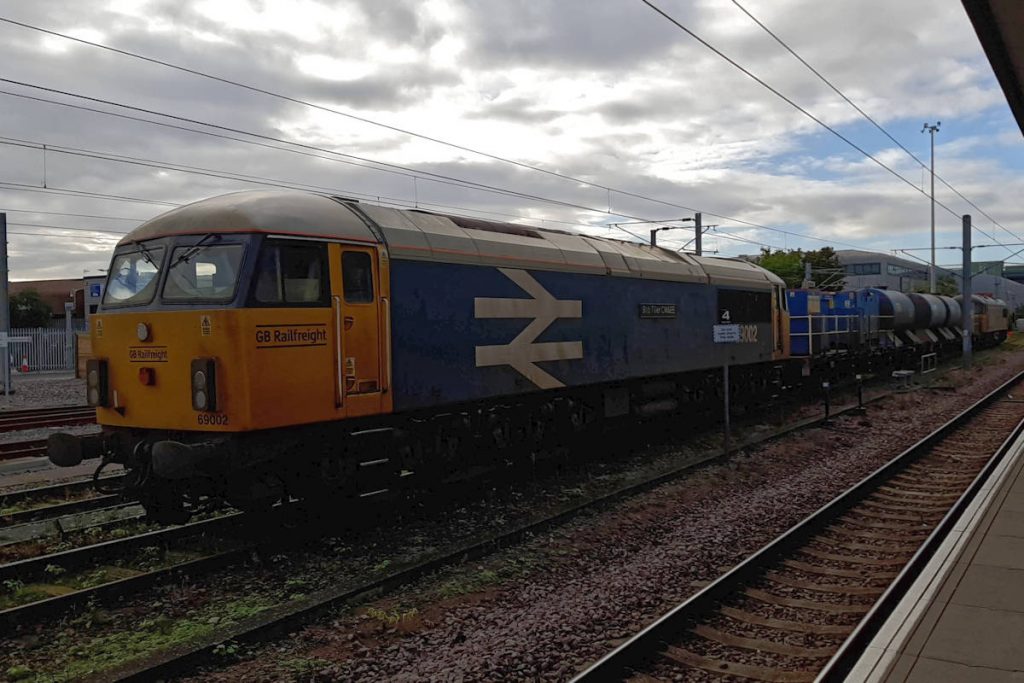
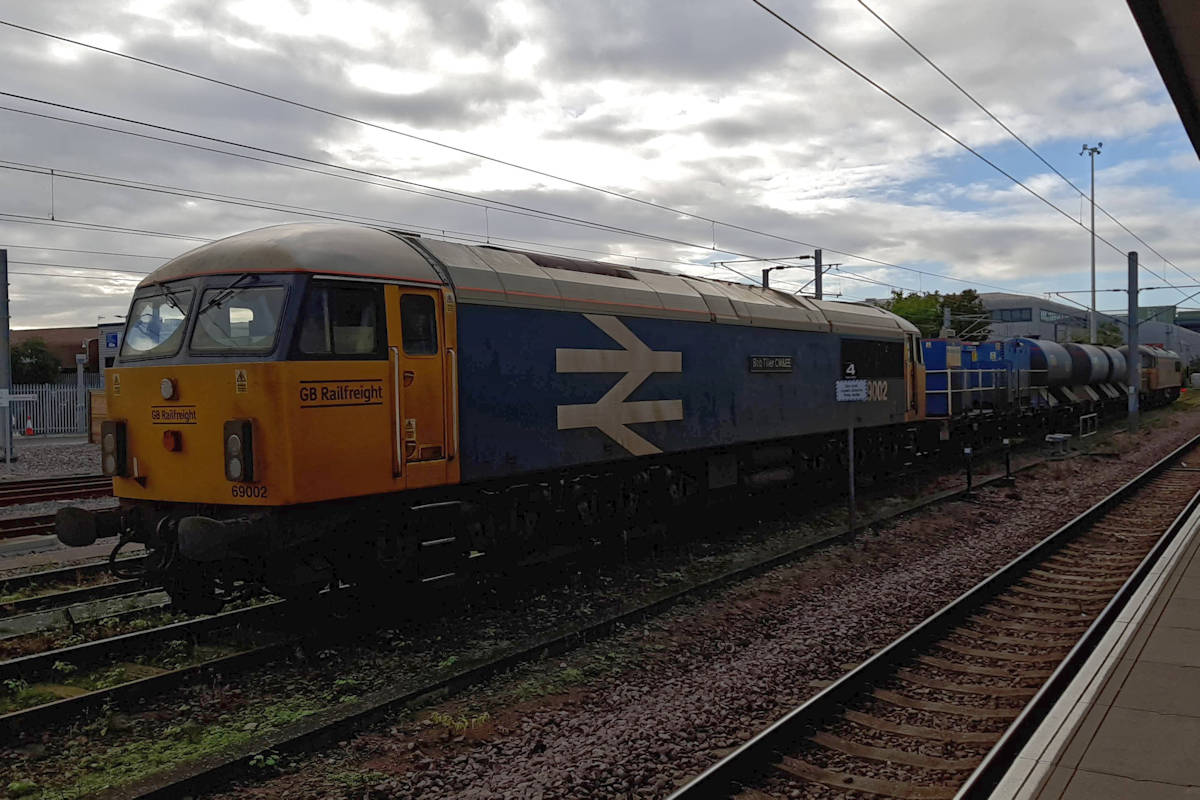
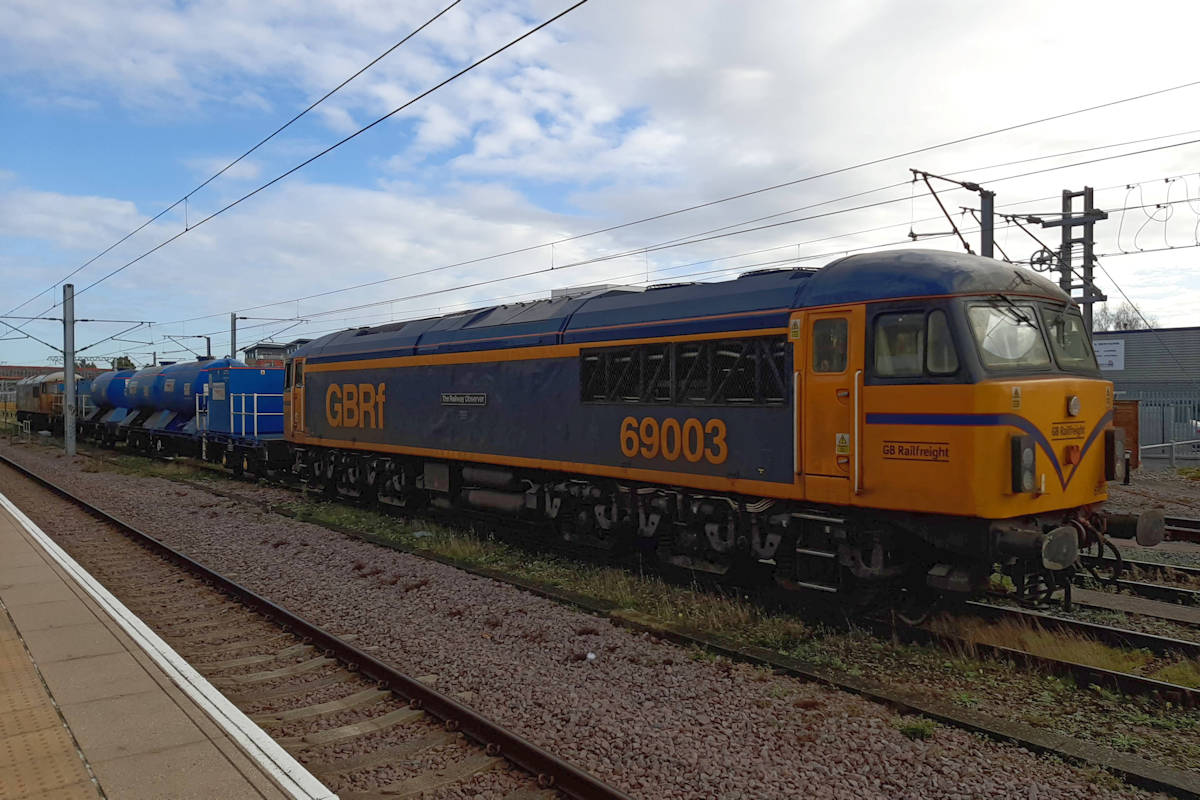
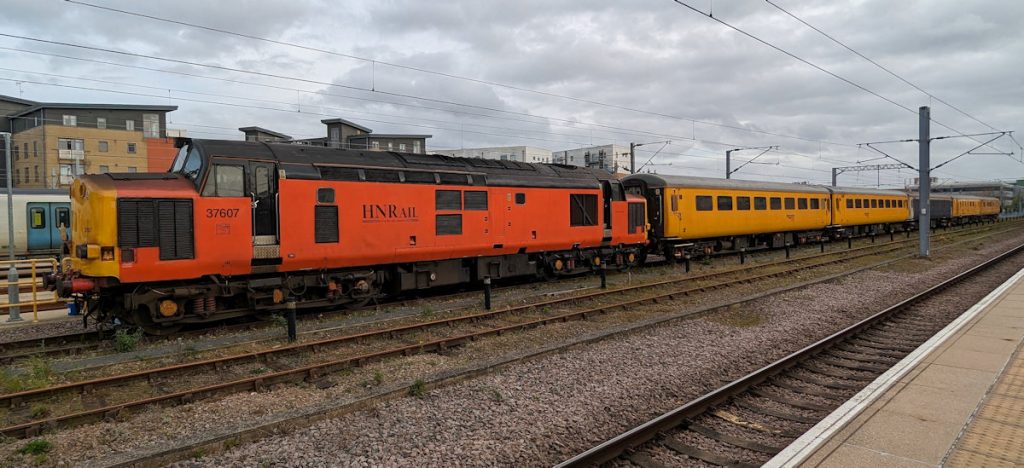
- On October 14th 2023, GB Railfreight Class 69s Nos. 69002 ‘Bob Tiller CM&EE’ and 69003 ‘The Railway Observer’ pause at Cambridge with a Rail Head Treatment Train (RHTT), returning to Broxbourne. GB Railfreight RHTTs are now a familiar sight in East Anglia, with the company having taken over these working from DRS. Photo: Tony Field.
-
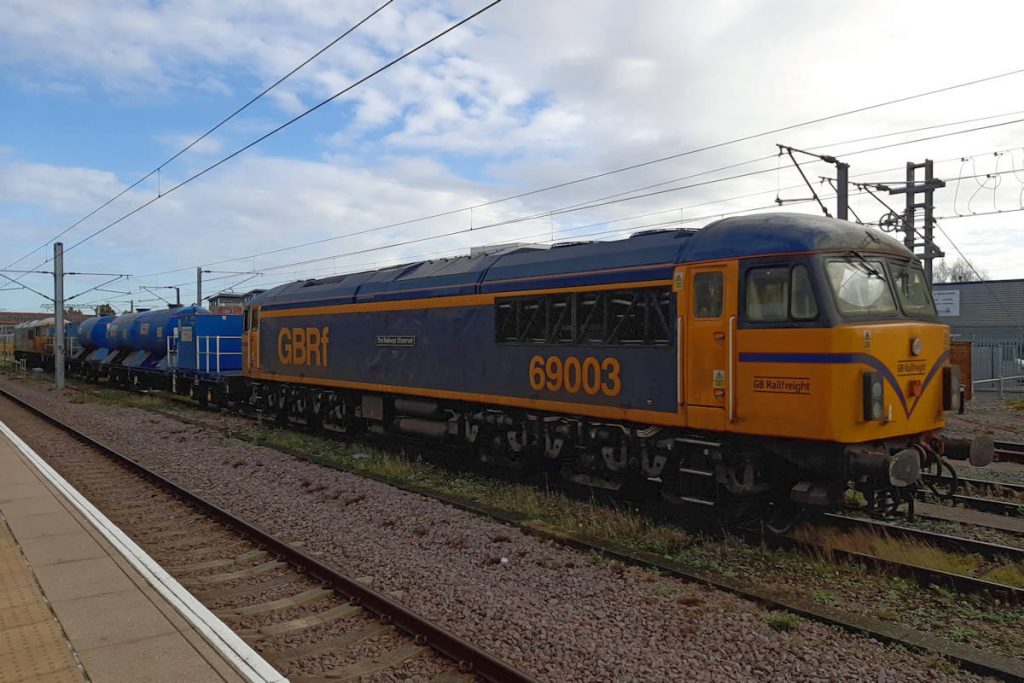
- GB Railfreight Class 69 No. 69003 was named ‘The Railway Observer’ at Barrow Hill’s hugely successful ‘150+2’ celebration event in the Summer of 2023. The locomotive is seen at Cambridge on October 14th 2023 with 69002 ‘Bob Tiller CM&EE’ on a Broxbourne-based Rail Heat Treatment Train. Photo: Tony Field.
-
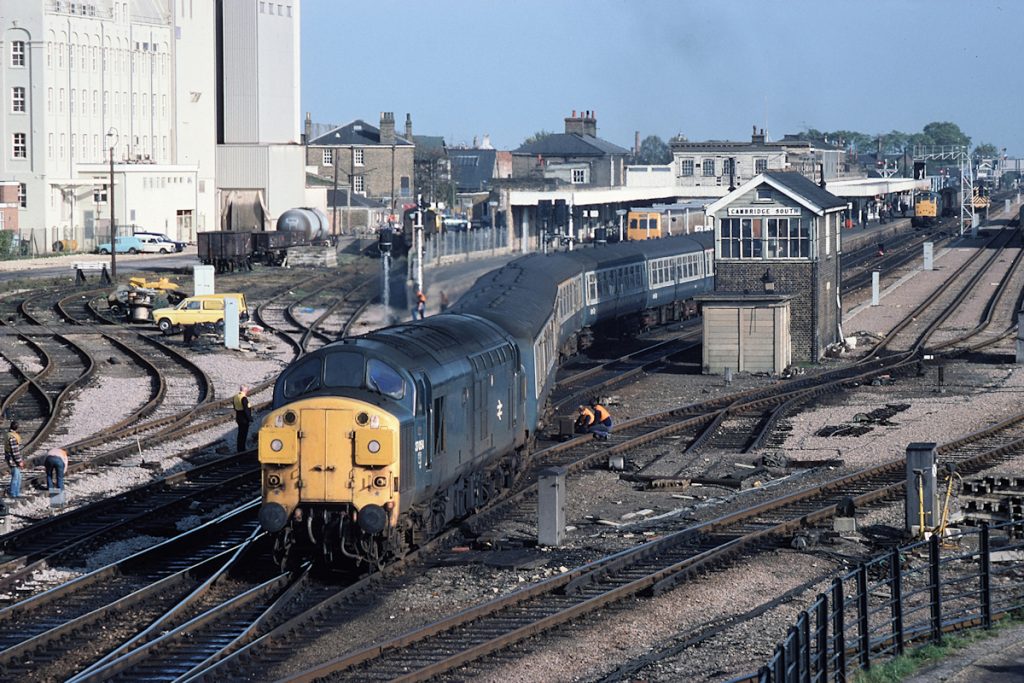
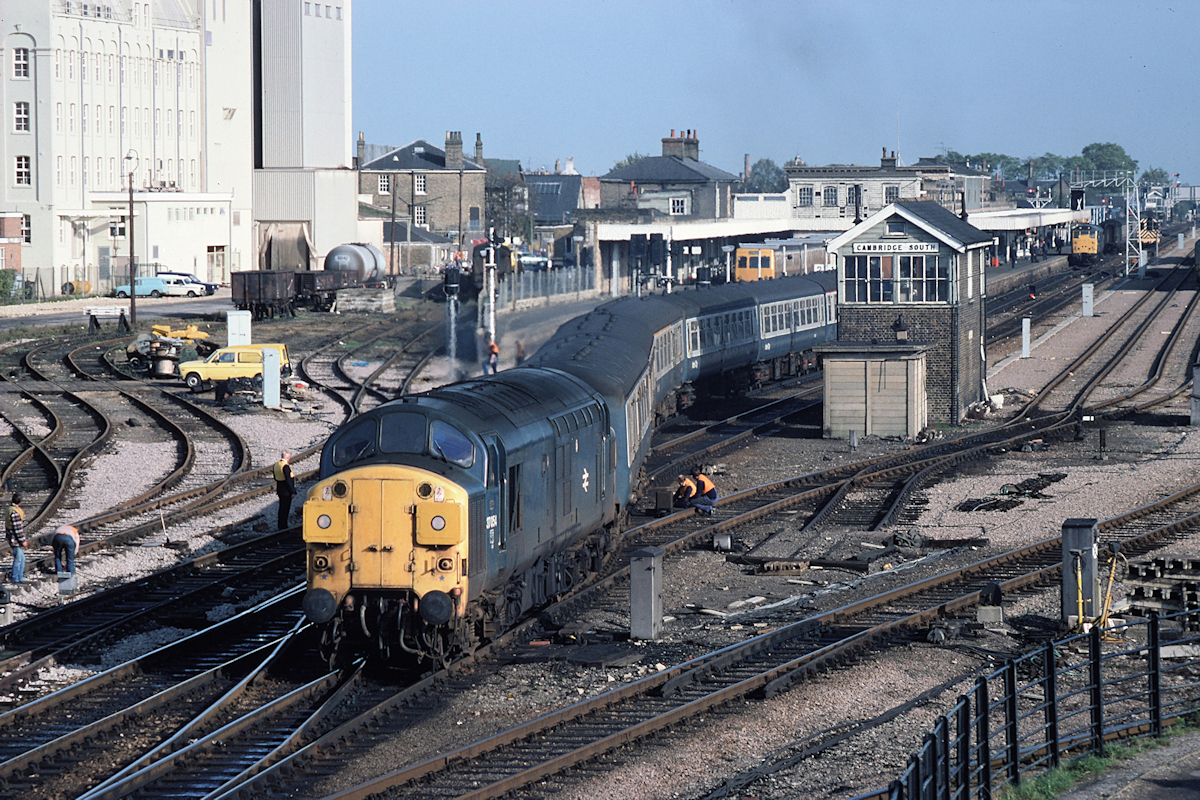
- During the re-signalling of Cambridge station, 37054 departs from the Southern end of the platform on 13th October 1982 and passes Cambridge South Box with the 09.35 Kings Lynn to Liverpool Street. Photo: Stewart Jolly
-
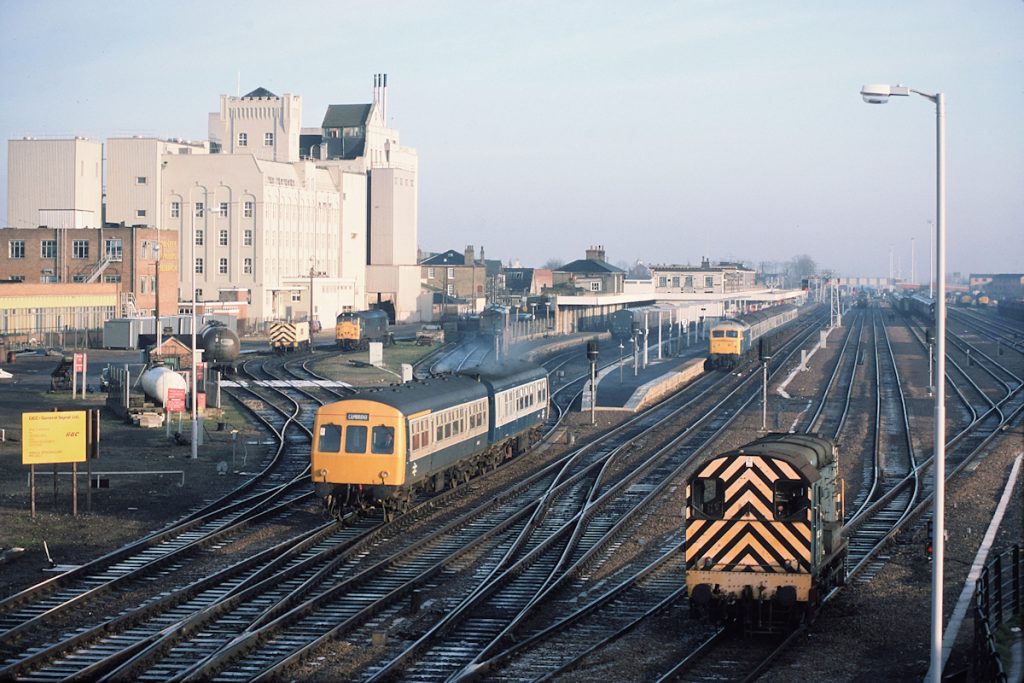
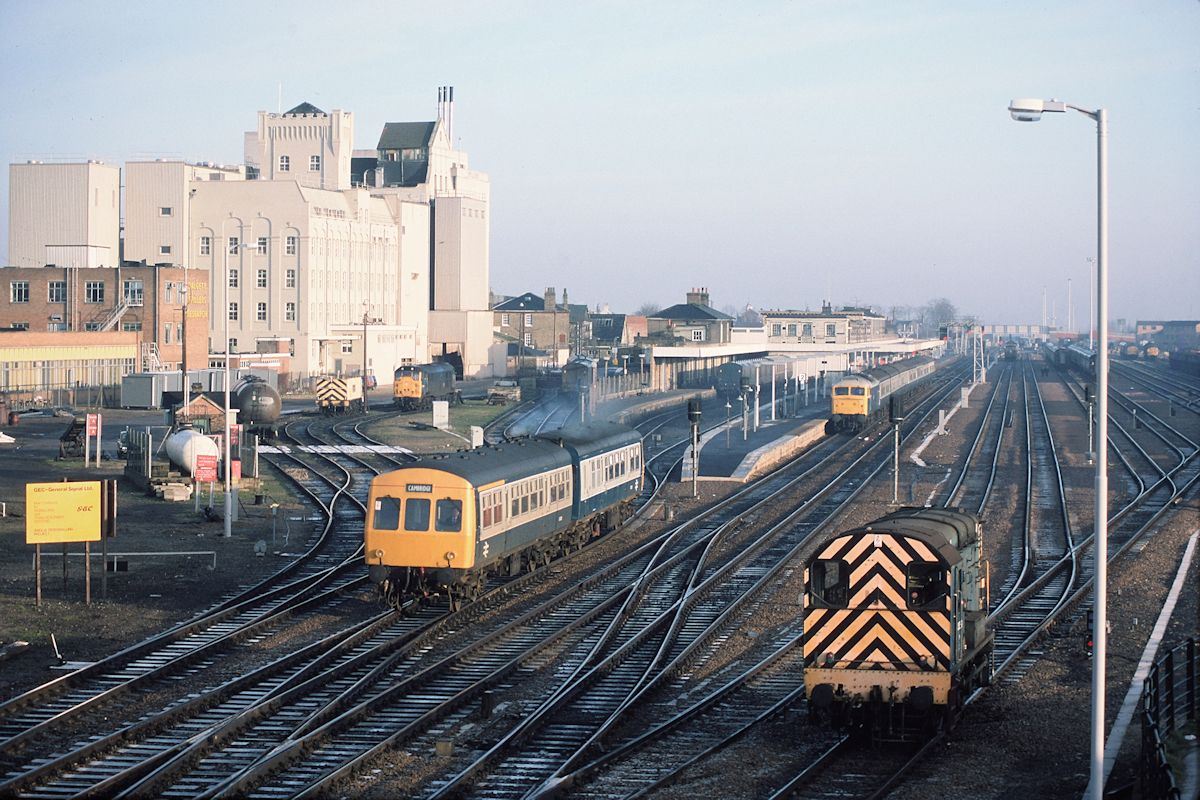
- Seen on January 30th 1984, the post-re-signalling landscape at Cambridge South is bleak compared to earlier days. Metro-Cammell cars E54382 and E51225 form the 09.13 to Royston and 47116 will depart shortly after with the 09.17 to Liverpool Street. Station Pilot 08529 awaits its next duty. Photo: Stewart Jolly.
-
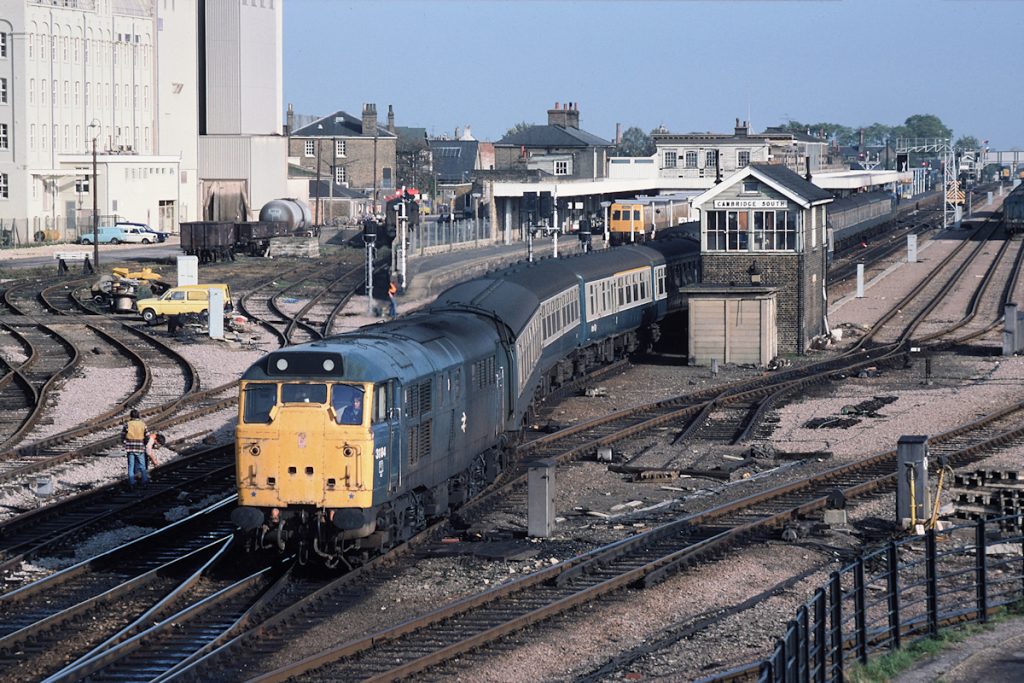
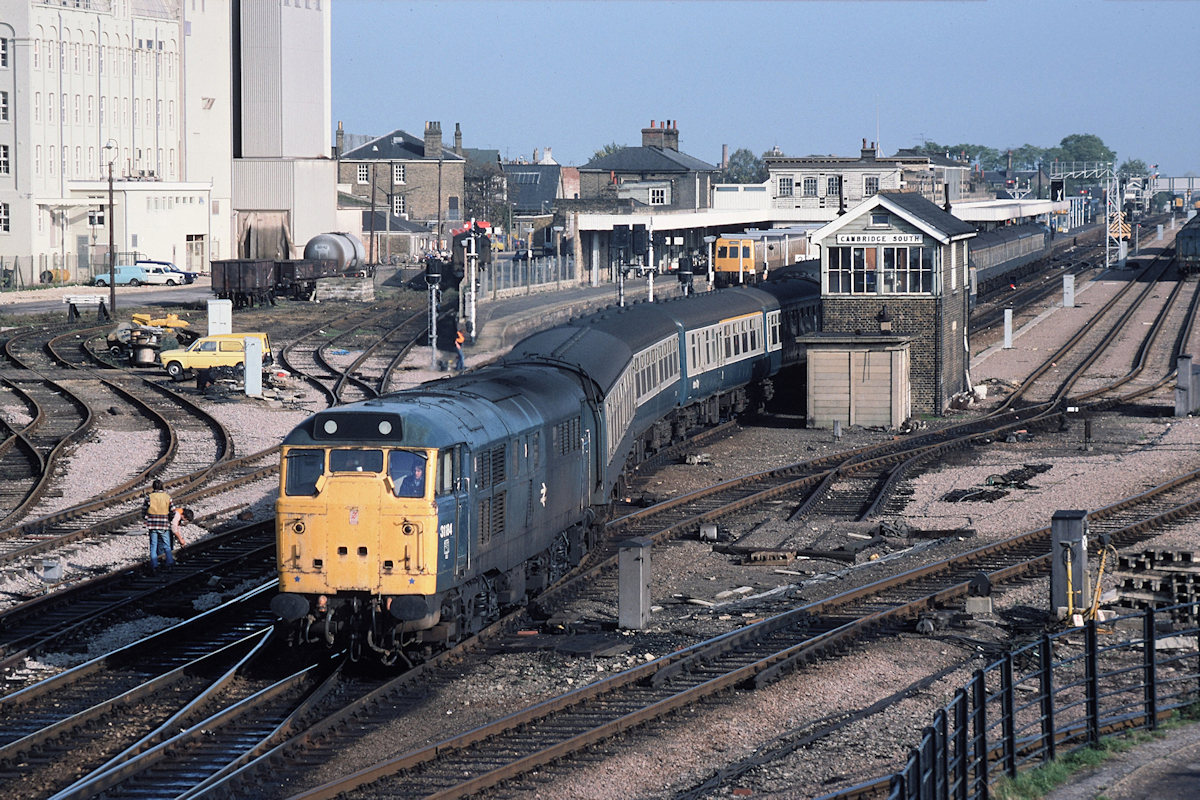
- Having departed from the Northern end of the platform and crossed over the scissors crossing, 31184 leaves Cambridge with the 10.44 to Liverpool Street on October 13th 1982. Photo: Stewart Jolly
-
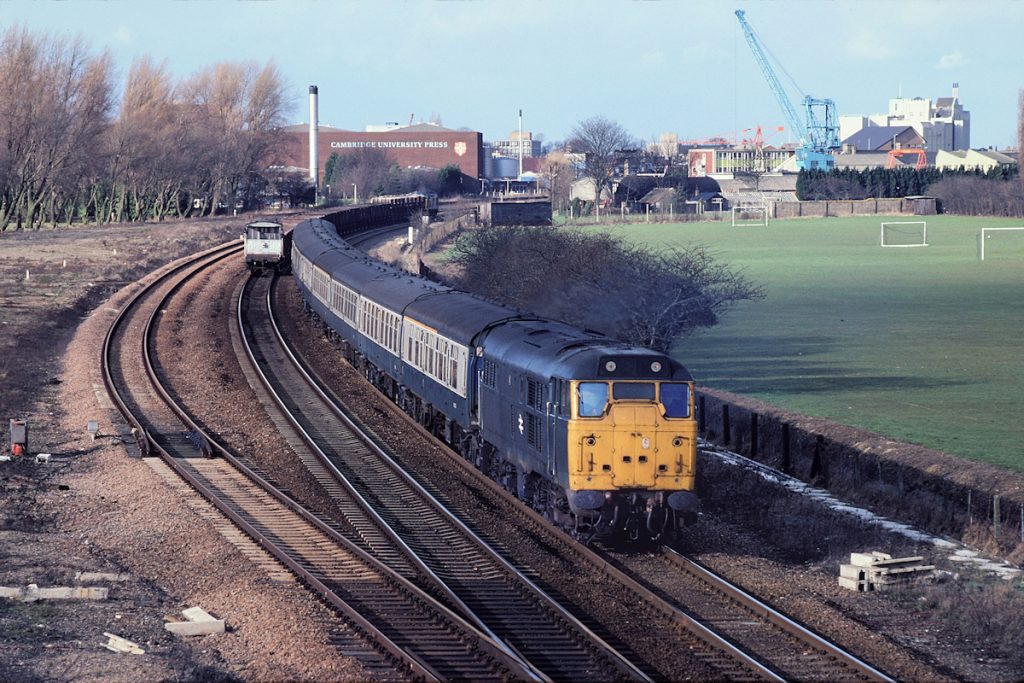
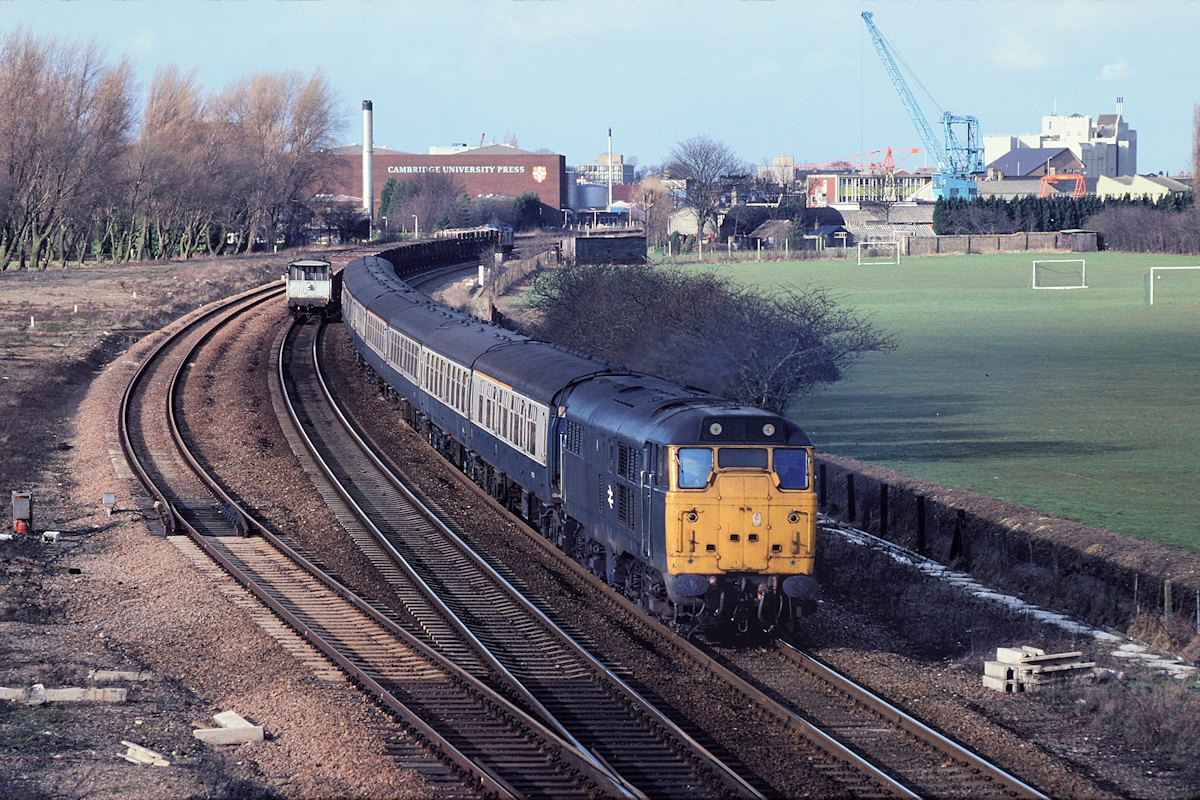
- Seen from Long Road, to the South of Cambridge, Brush Type 2 No. 31151 accelerates the 15.34 to Liverpool Street on 12th March 1982. Earlier in the day, 37173 had worked 8L07 to Newmarket and back before heading South to Barrington Cement Works at Foxton. The locomotive is seen on the Down line heading back from Barrington to the Yard. The former London & North Western Railway line to Bedford ran alongside the treeline to the left of the Cambridge University Press building. Photo: Stewart Jolly.
-
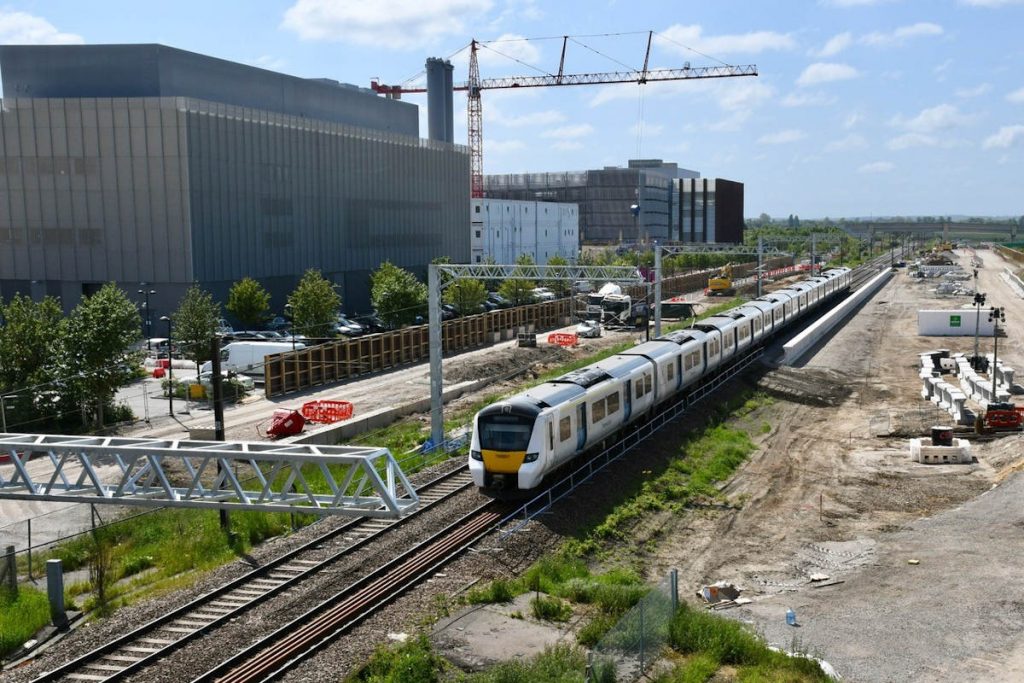
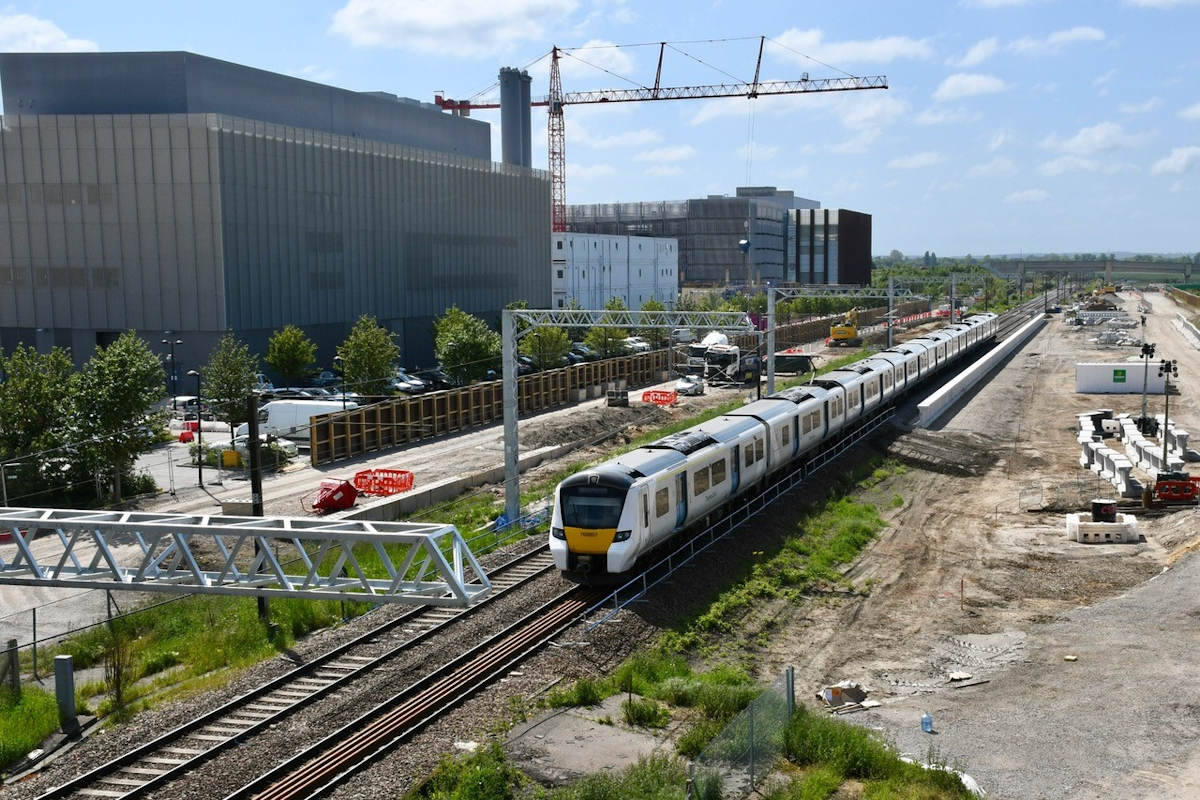
- Class 700 No. 700057 passes the site of the new Cambridge South station on 26th May 2023 with the 08.44 Brighton to Cambridge. Work started on the station in December 2022, at an estimated cost of £184M. On completion of the East-West route, the line South from Cambridge will be four tracks all the way to a re-modelled, higher-speed Shepreth Branch Junction. Photo: Michael Smyth.
-
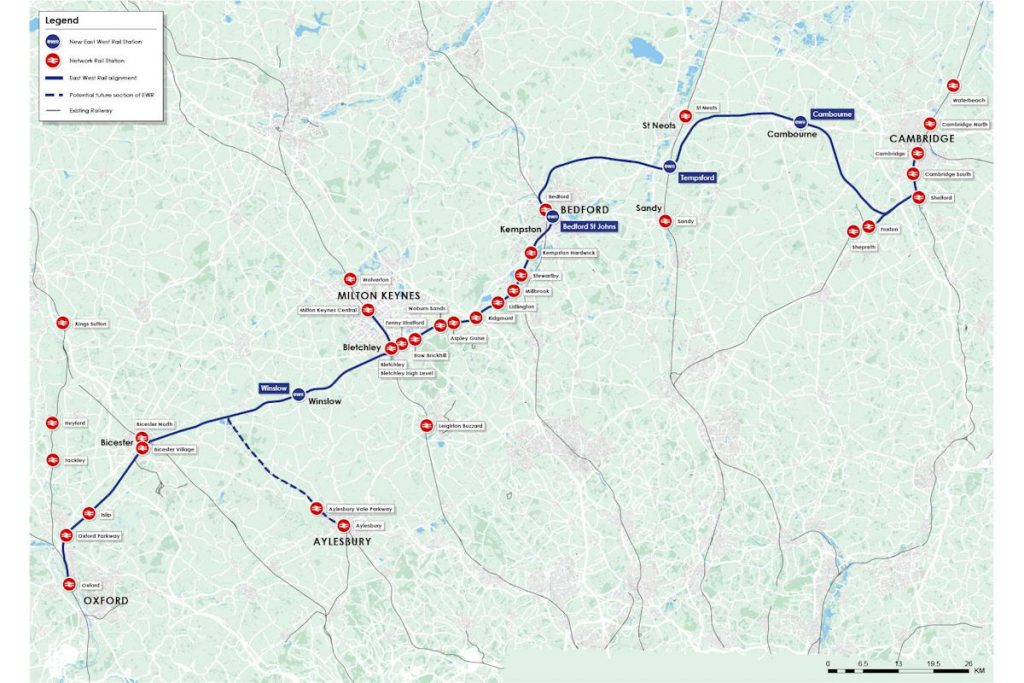
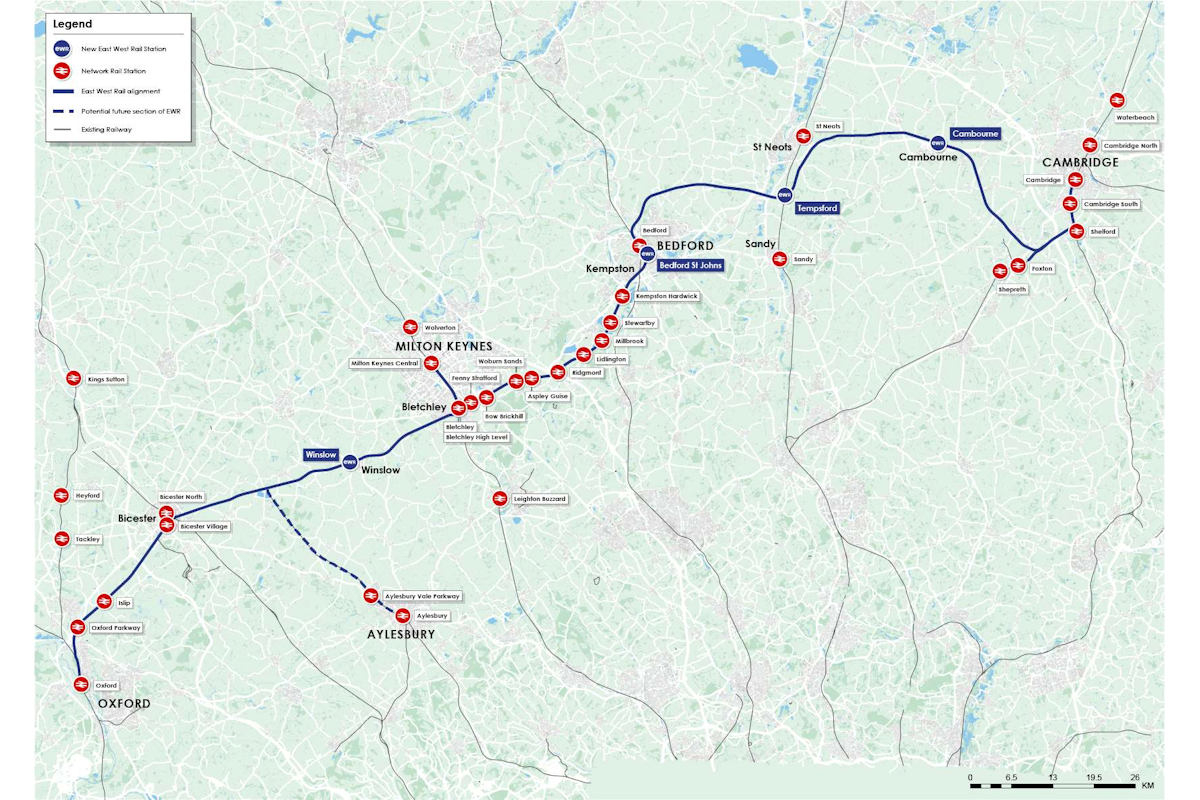
- The announcement on Friday 26th May 2023 of the route of the new East-West rail line is a significant step forward in the project. The route between Bedford and Cambridge is not without controversy, but the benefits of cross country travel without a change in London should be significant. Image: www.eastwestrail.co.uk
-
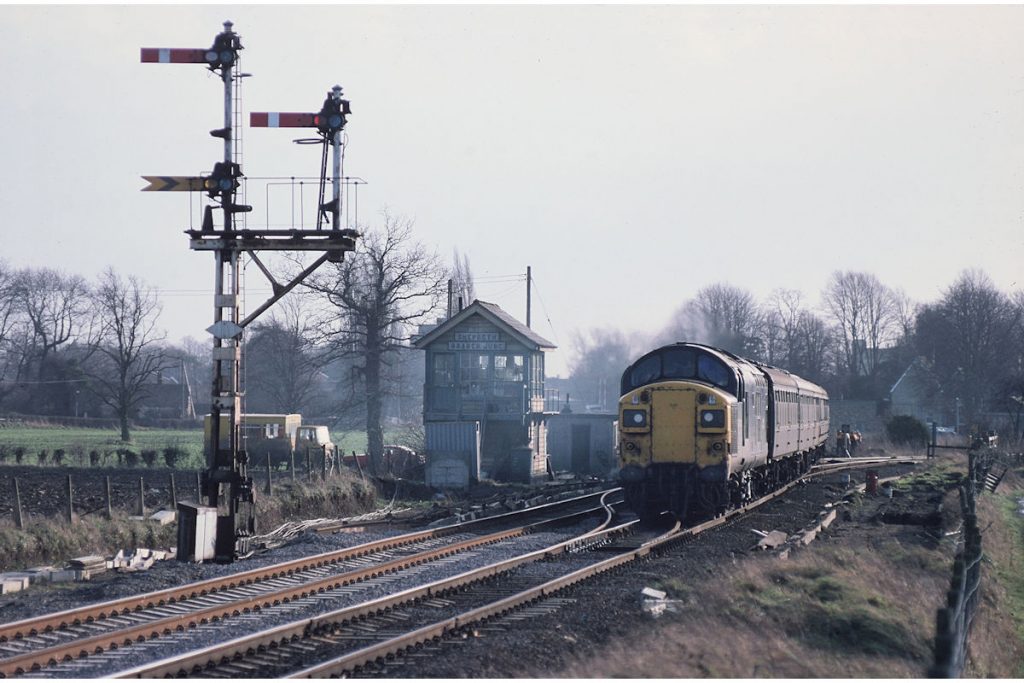
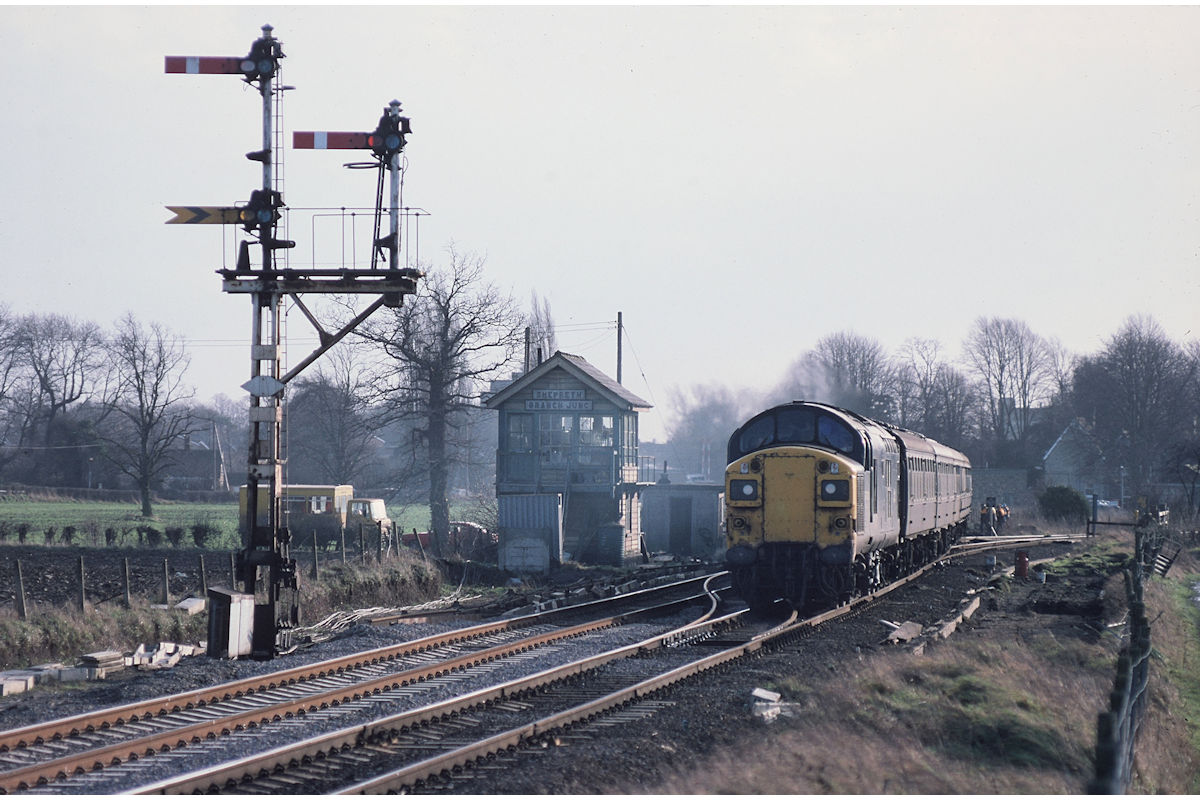
- Track renewal and re-signalling work is underway at Shepreth Branch Junction on 14th January 1983 as 37092, with plated-over gangway doors, races past with the 12.05 Liverpool Street to Cambridge. Photo: Stewart Jolly.
-
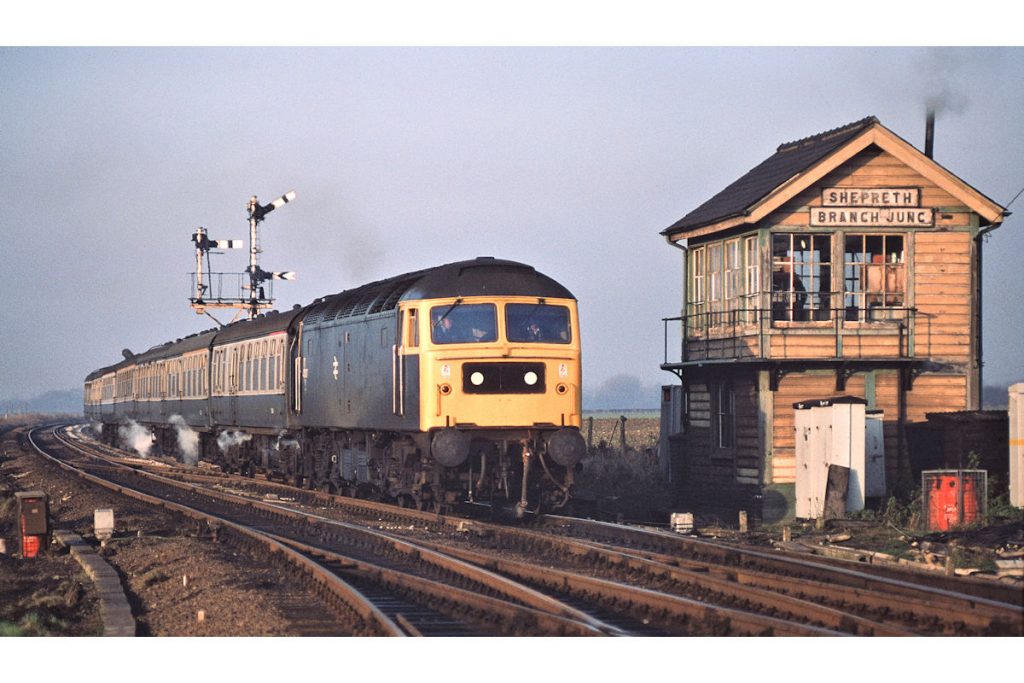
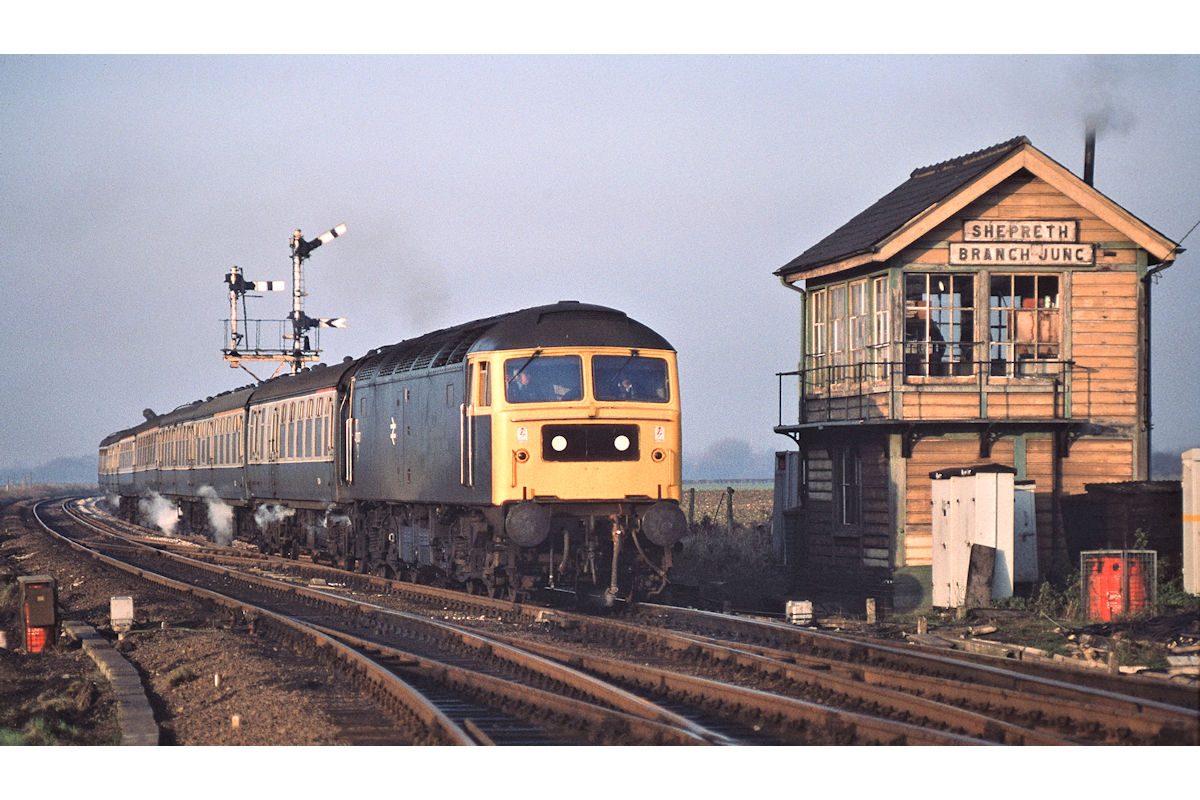
- On a cold, crisp 6th December 1982, 47007’s boiler is in good working order as it rushes South past Shepreth Branch Junction with the 13.44 Cambridge to Liverpool Street. The catering vehicle at the front of the formation is one of the early 80’s conversions of a BSO into a ‘Micro Buffet’ BSO(T), and re-numbered in the 9000-9017 range, which involved replacing one passenger seating bay with space for stowage of a trolley and a counter for serving food. Photo: Stewart Jolly.
-
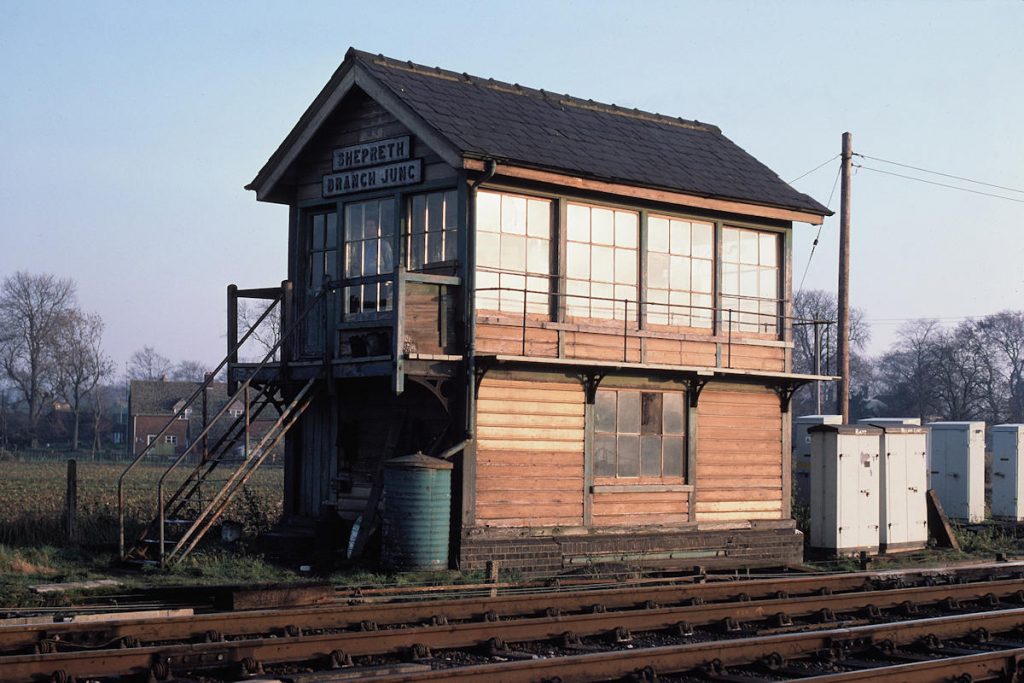
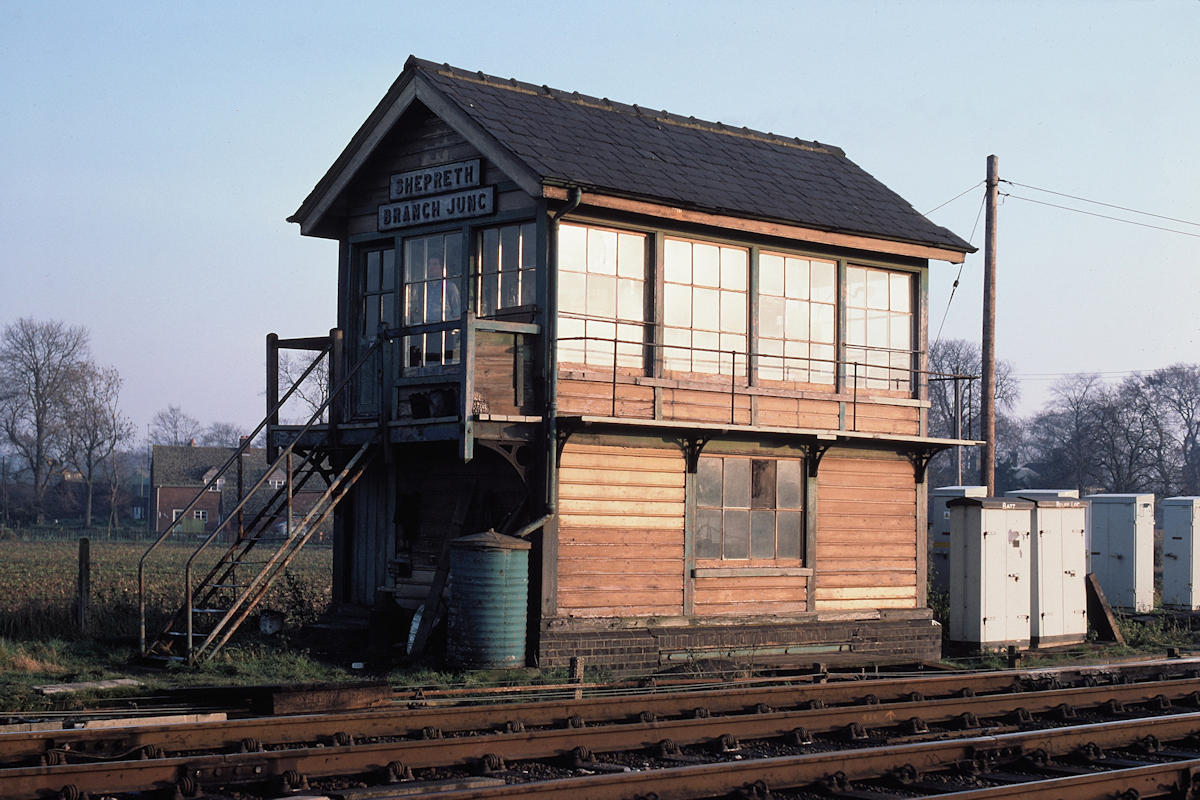
- A weathered but nonetheless very attractive Shepreth Branch Junction signal box is seen on 6th December 1982. Photo: Stewart Jolly.
-
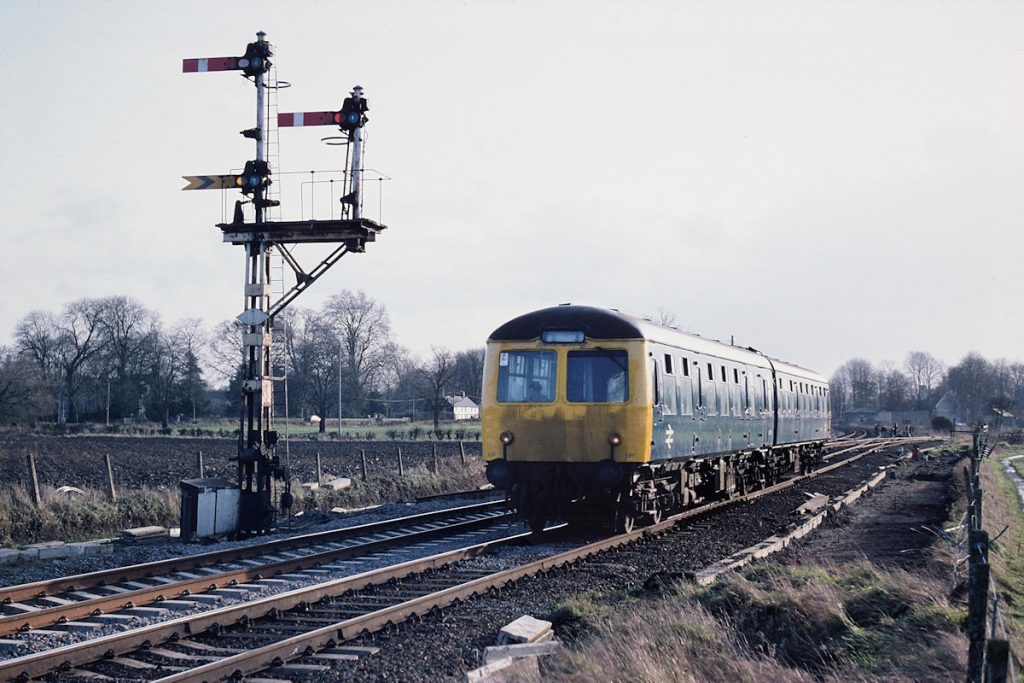
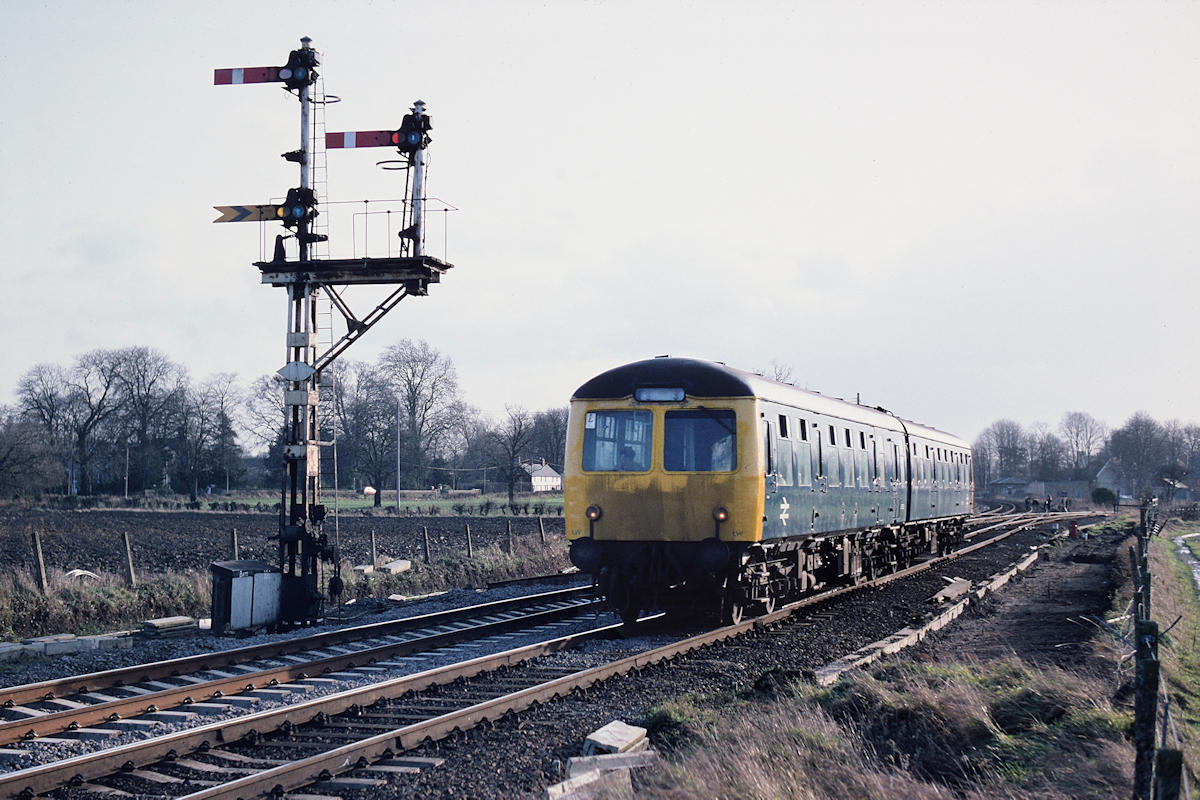
- Before the Great Northern route from Kings Cross was electrified through to Cambridge, electric services from the South terminated at Royston and a connecting Diesel Multiple Unit ran to Cambridge. The 13.03 from Royston, formed by Class 105 Cravens unit E51282 and E56461 has joined the main line and accelerates for the final run into Cambridge. Photo: Stewart Jolly.
-
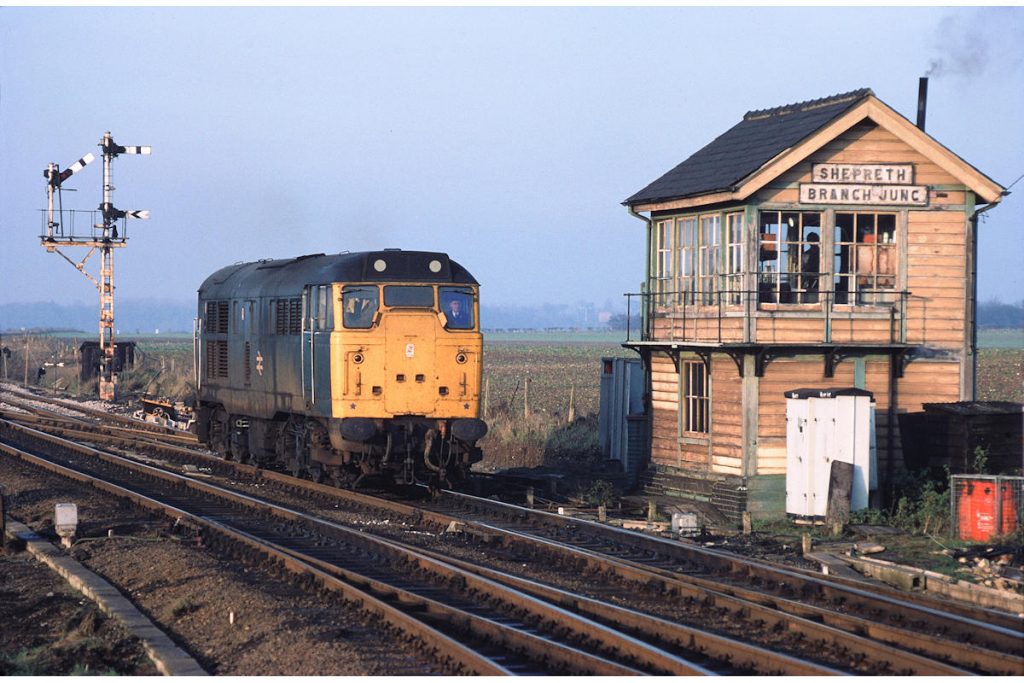
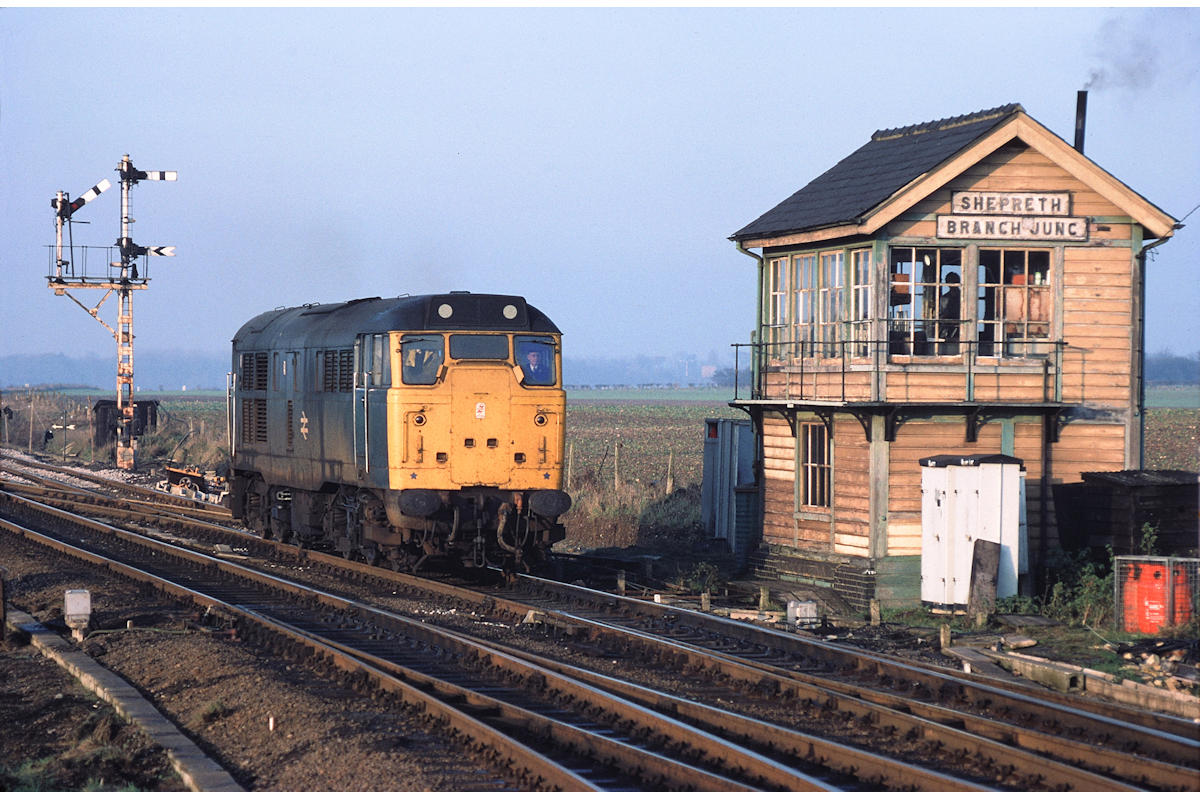
- The signalman has a good fire going as Brush Class 31 No. 31183 slows slightly for the Royston line at Shepreth Branch Junction on December 6th 1982. It is to be hoped the driver could remember the speed limit at this junction as the sign appears to have left its post! Photo: Stewart Jolly.
-
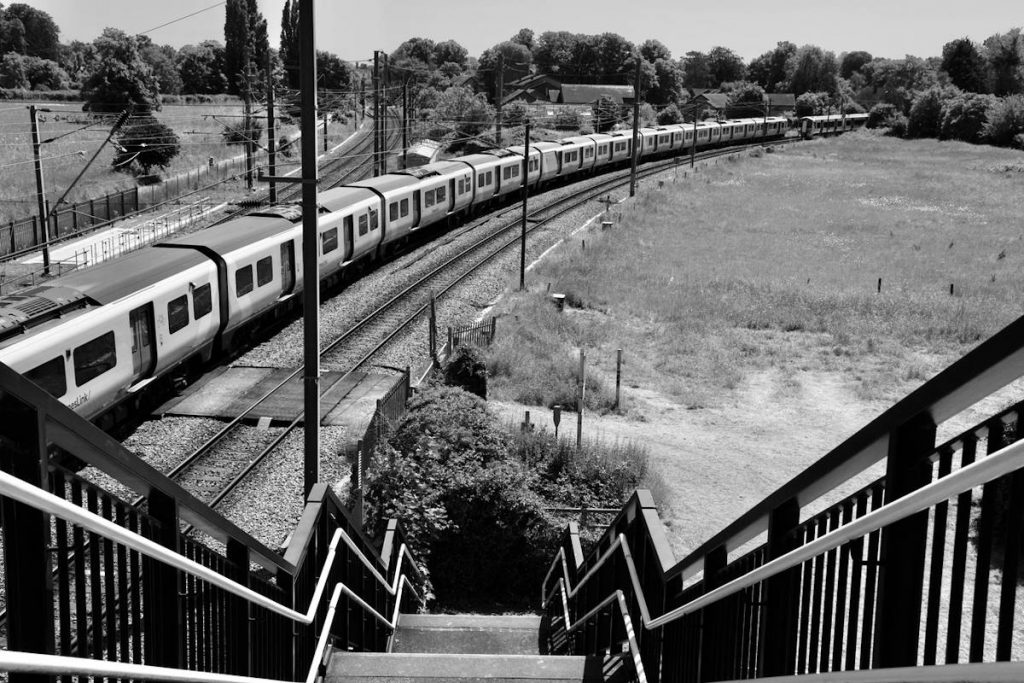
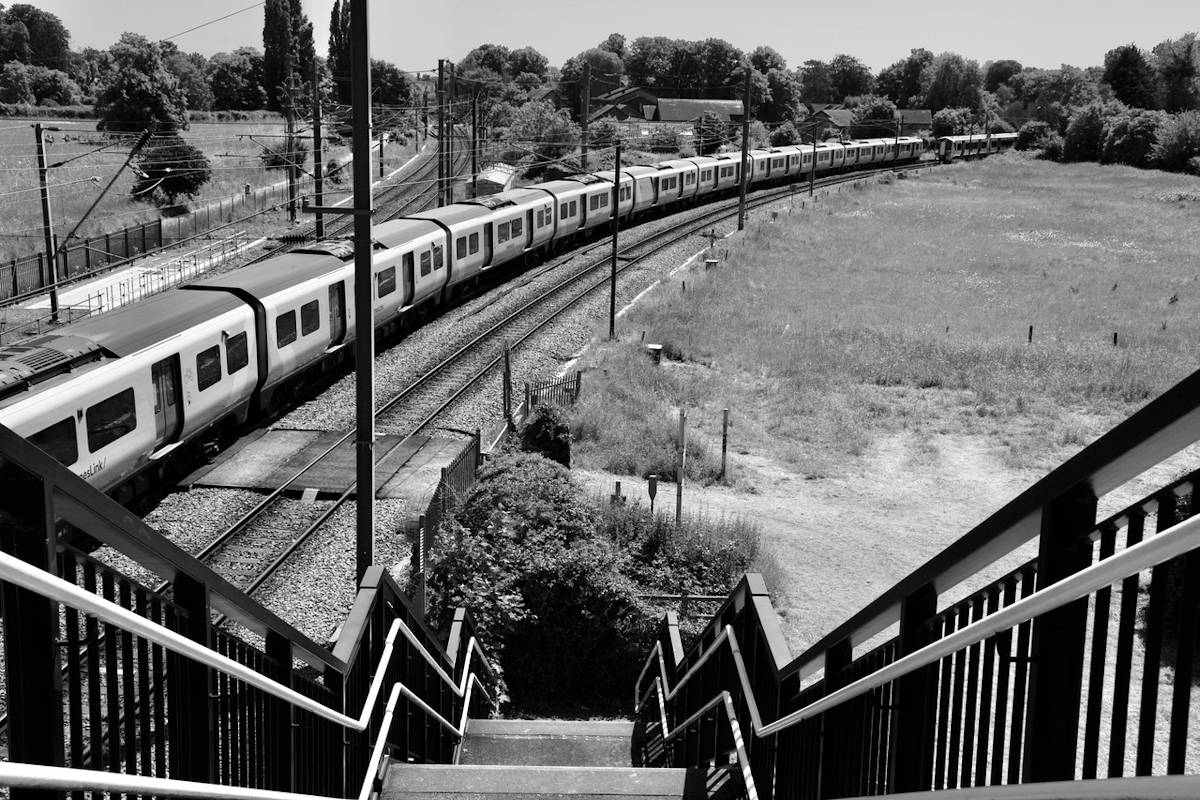
- In a style reminiscent of Colin Gifford, Thameslink Class 700 unit No. 700111 works 9S35, the 13.32 Cambridge to Brighton past Shepreth Branch Jc on June 8th 2023. With the elimination of unfitted freight trains, the Class 9 headcode has been applied to certain specific workings such as Thameslink’s cross-London services, to accommodate these new services within the existing four character train identification system. Photo: Michael Smyth.
-
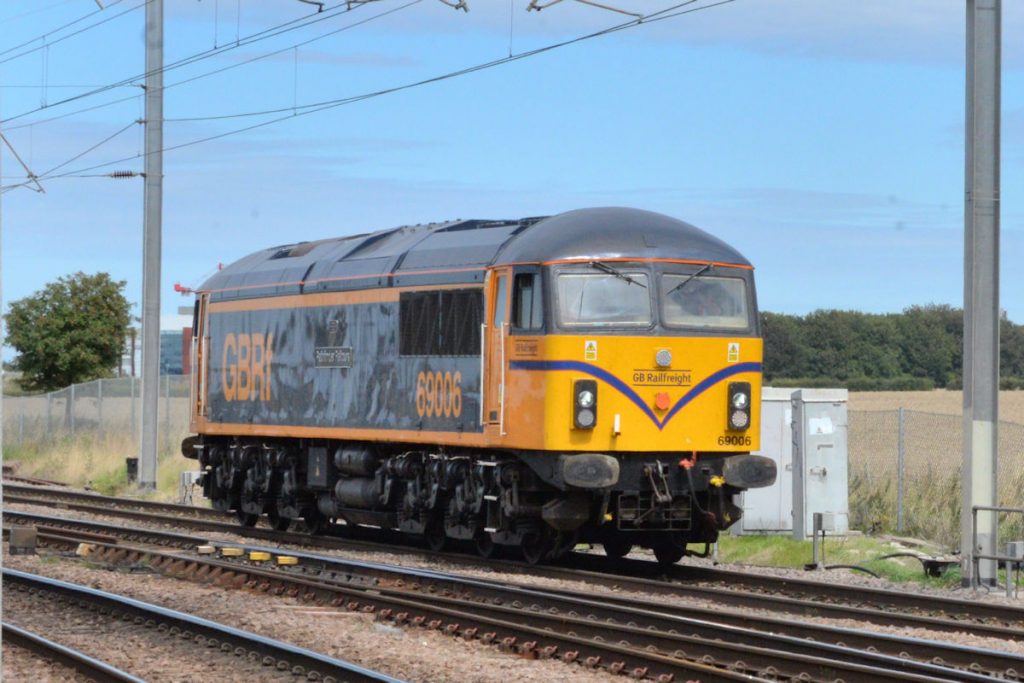
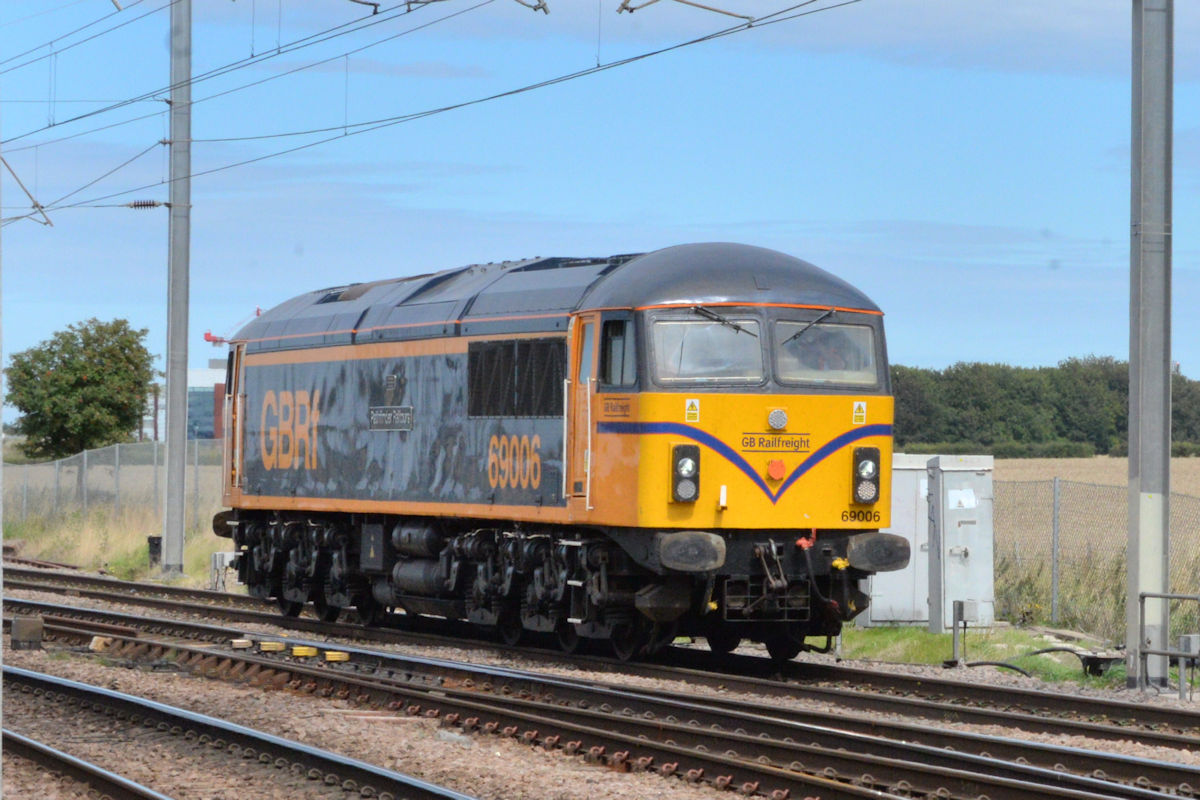
- GB Railfreight have been busy crew-training as they take over services in East Anglia from Direct Rail Services. On a sunny 23rd August 2023, Class 69 No. 69006 passes Shepreth Branch Junction on its way back to Broxbourne with such a working. Photo: Jim Crane.
-
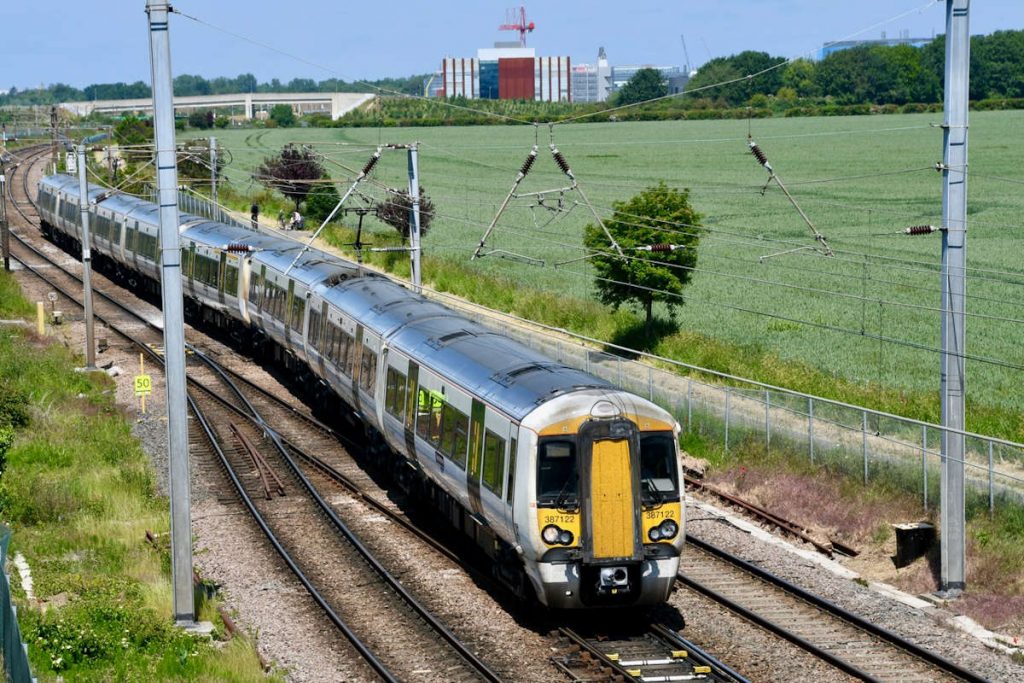
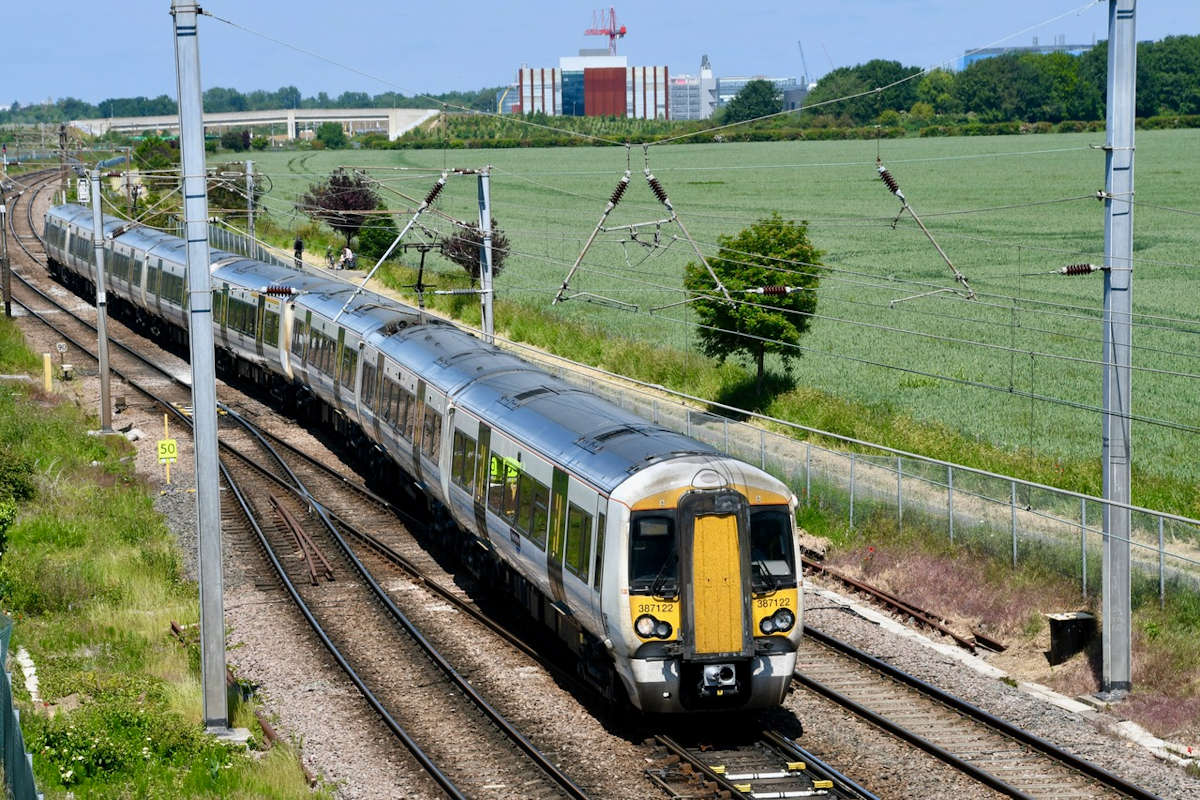
- Shepreth Branch Junction is about two miles South of Cambridge and is where the line to Kings Cross diverges from the line to Liverpool Street. Crossing over onto the Kings Cross route on June 8th 2023, Class 387 units Nos 387122 and 387117 work 1T29, the 11.42 Kings Lynn to Kings Cross. Beyond the bridge in the background is the site of the new Cambridge South station. Photo: Michael Smyth.
-
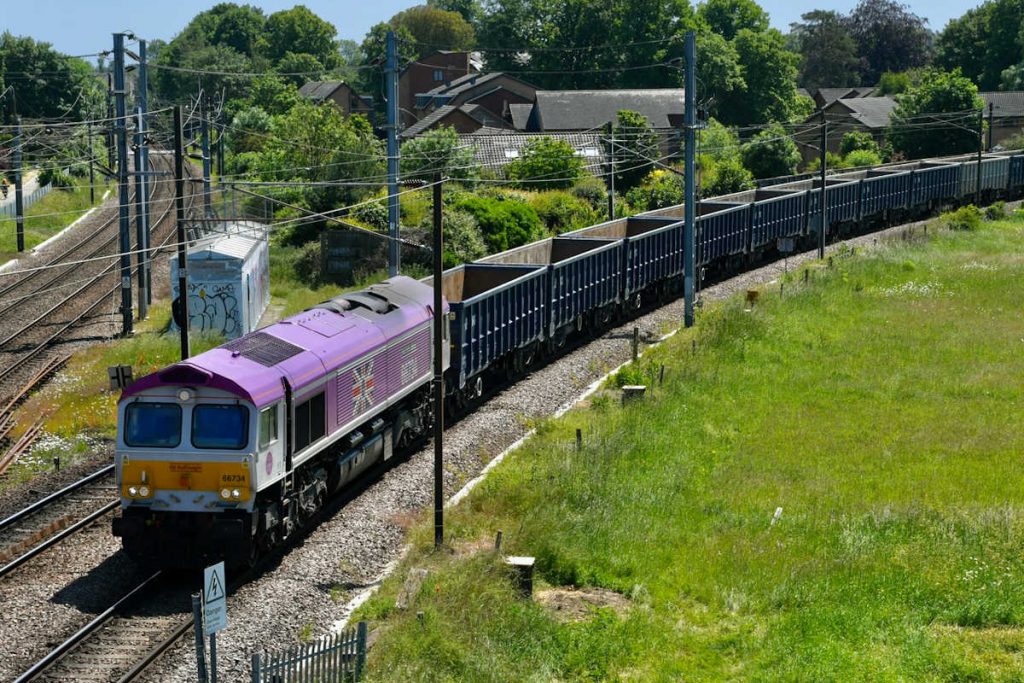
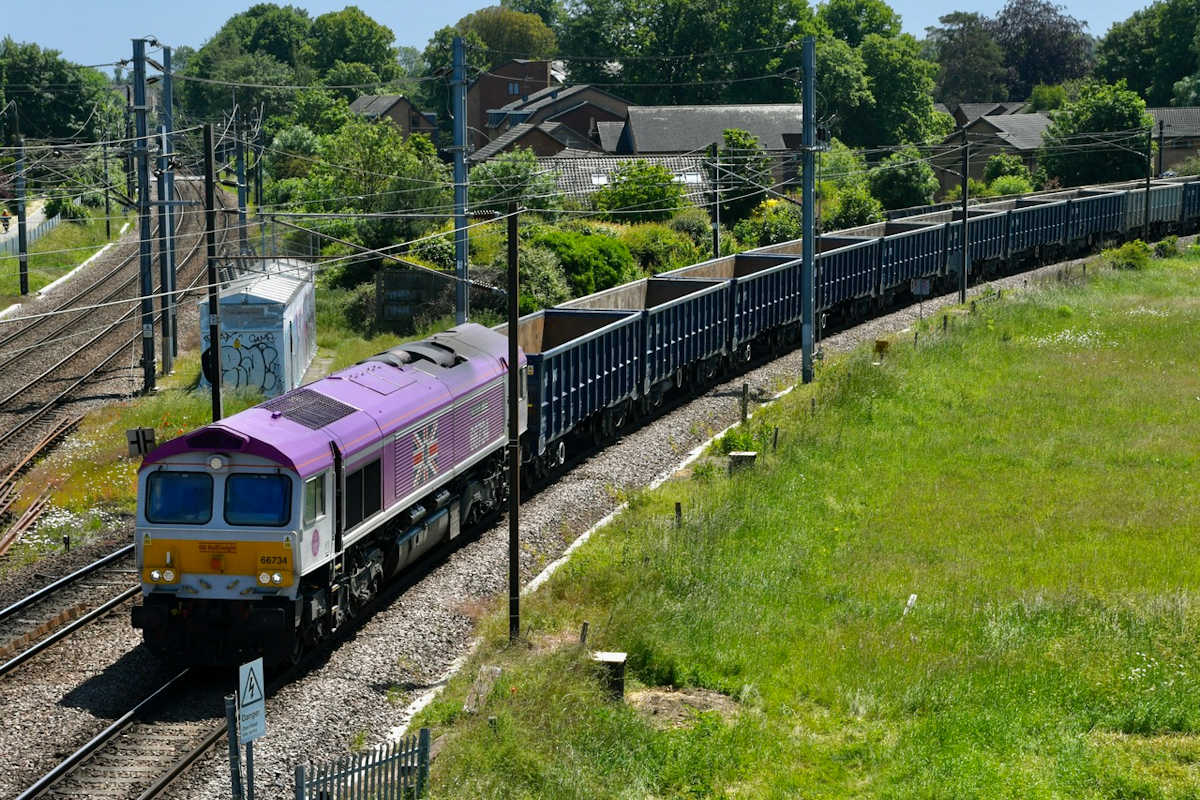
- With spoil empties from the HS2 project, Class 66 No. 66734 ‘Platinum Jubilee’ joins the Great Eastern main line from Liverpool Street to Cambridge at Shepreth Branch Junction on 8th June 2023 on its way from Barrington Quarry to Cambridge, to run round before heading back to Stratford and finally Willesden Euroterminal. Photo: Michael Smyth.
-
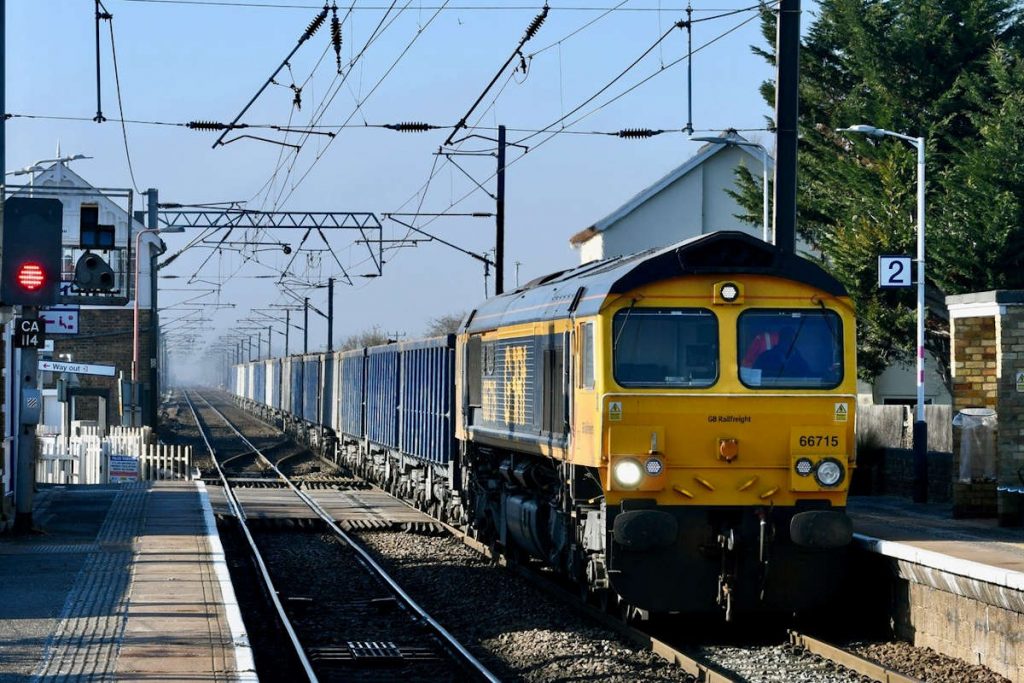
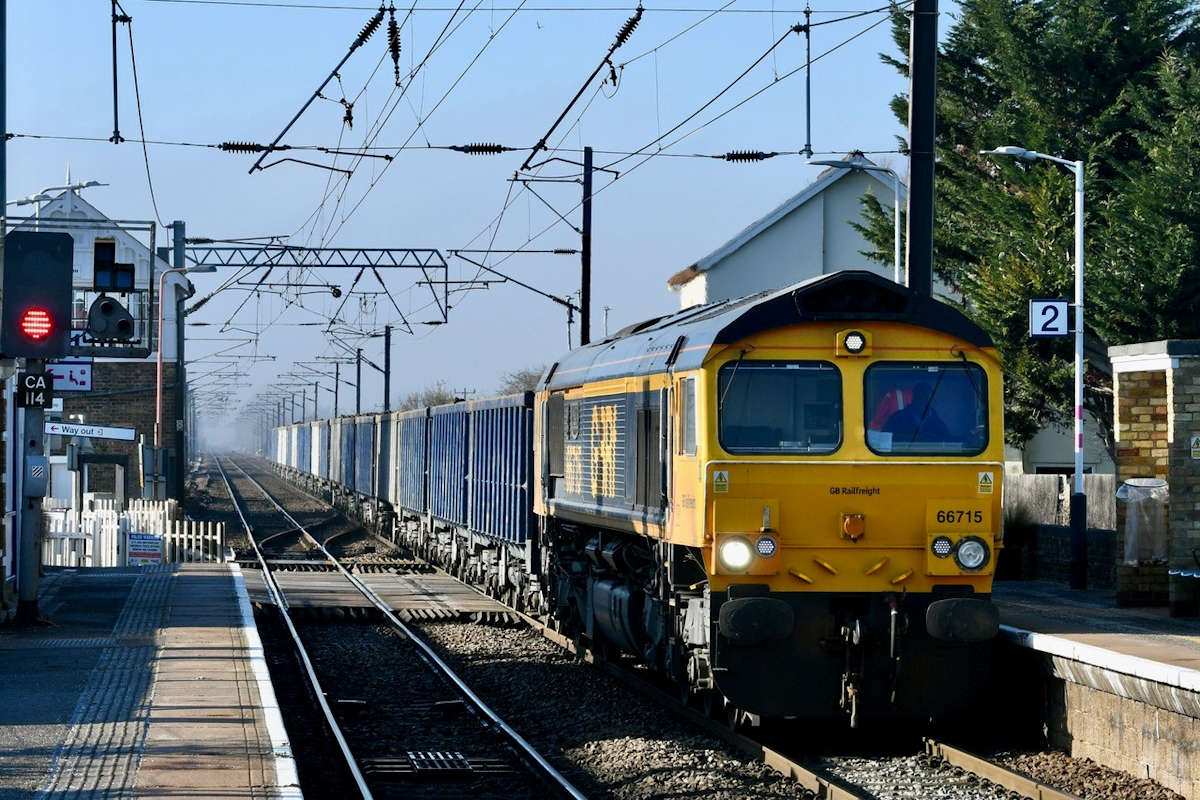
- The former quarry at Barrington is currently receiving two trainloads per day of spoil from tunnel boring machines working on HS2, originating from Willesden Euroterminal. On February 7th 2023, GB Railfreight Class 66 No. 66715 draws into Foxton station with 6L05, the 07.45 ex Willesden arriving at 11.15. Photo: Michael Smyth.
-
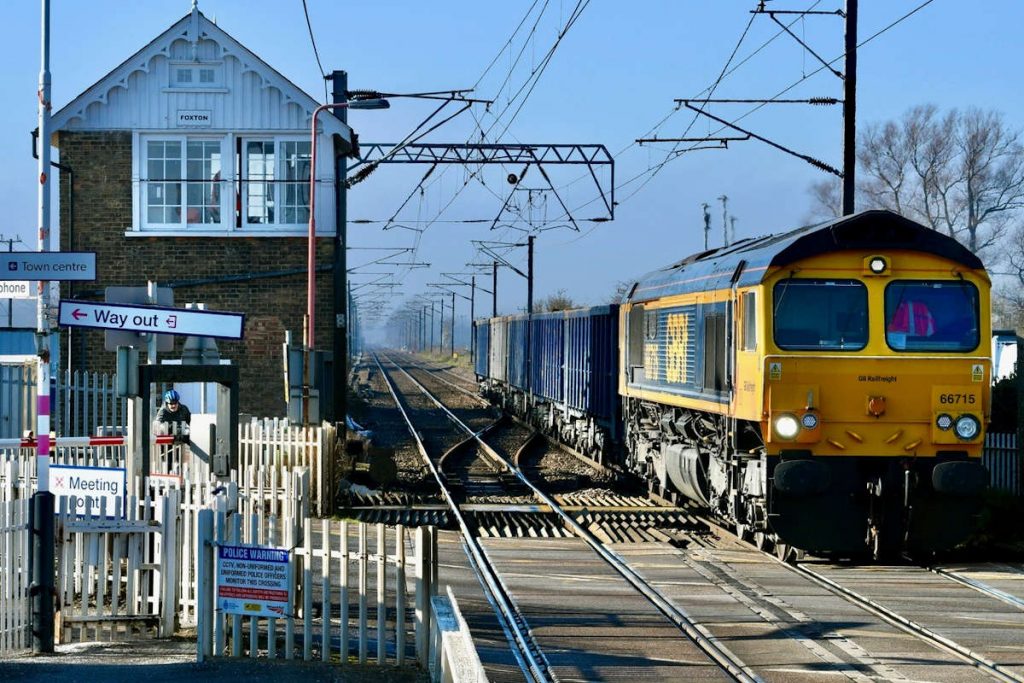
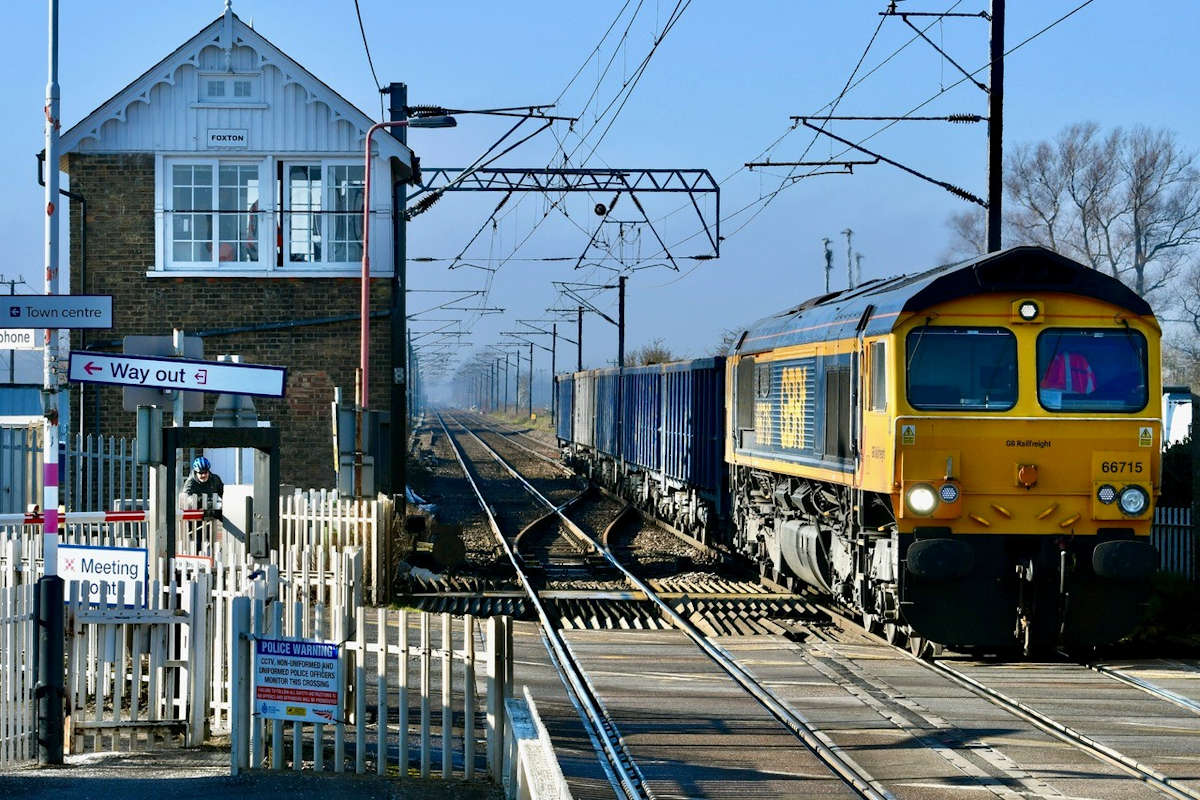
- At Foxton, the spoil trains from Willesden stop beyond the A10 level crossing and then reverse into the quarry branch, under control of shunting signals. The operation is controlled from the fine Great Northern Railway box, dating from 1878 and with with characteristic decorative bargeboards, although its levers were replaced with an electronic control panel in 1983. Photo: Michael Smyth.
-
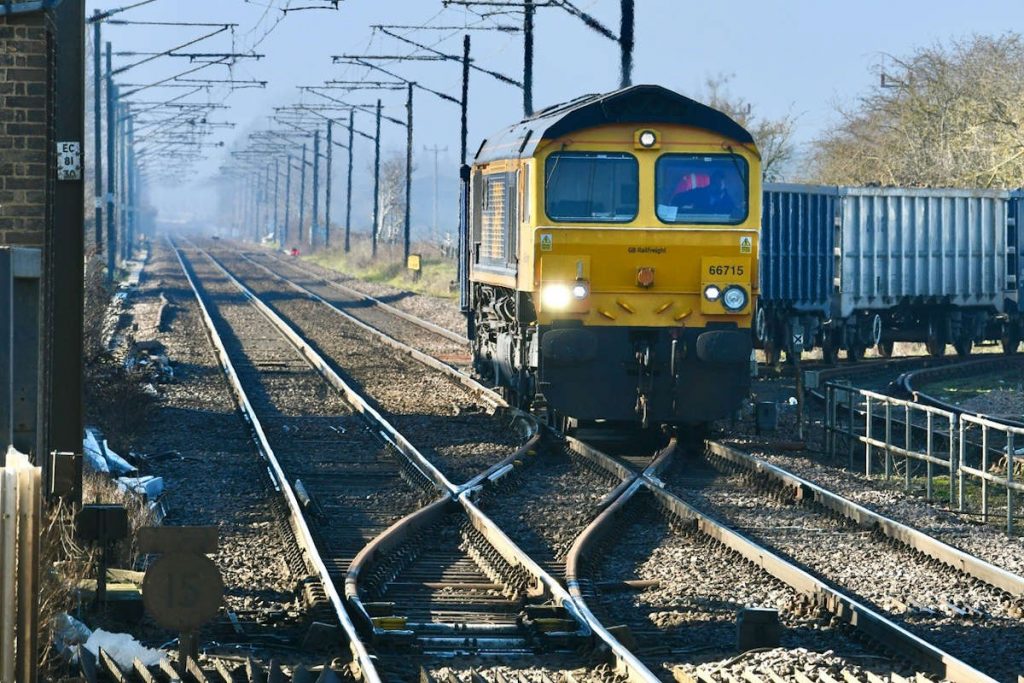
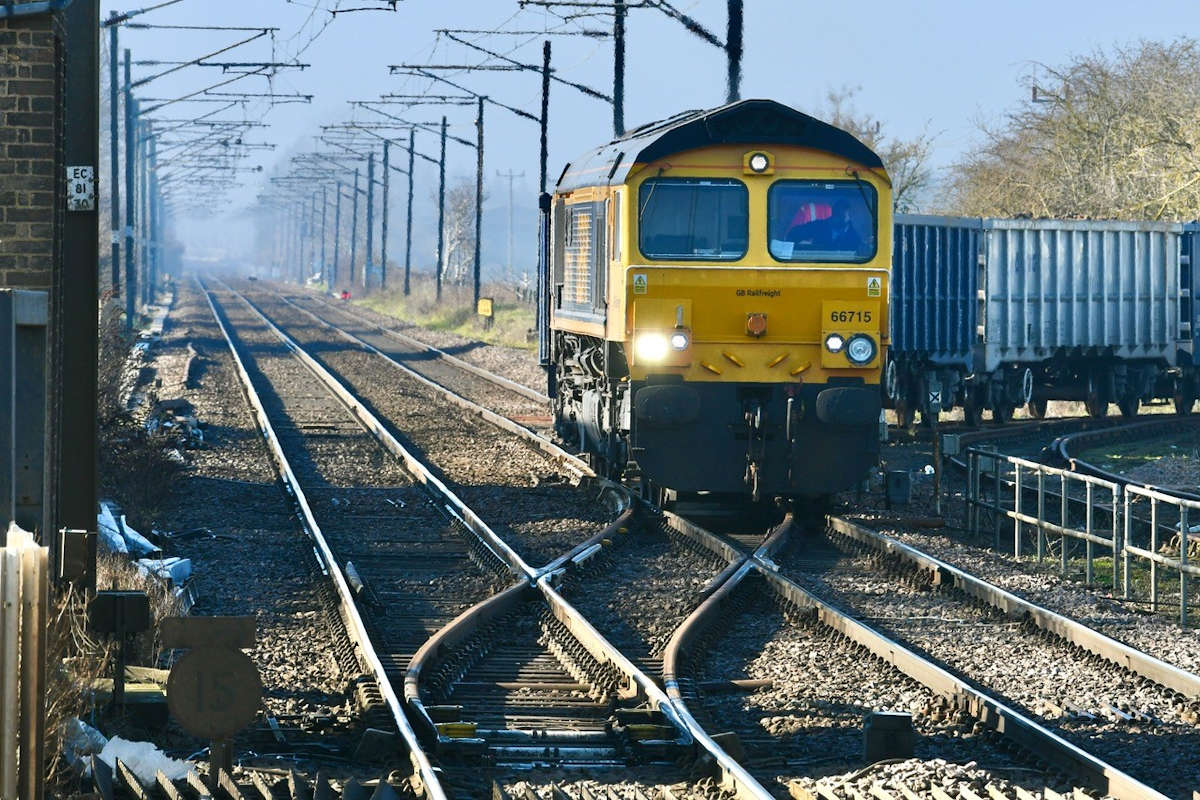
- 66715 backs 6L05 off the mainline and into the former quarry exchange sidings, where the train may be split. It is then worked forward over two gated crossings, which have to be unlocked by a shunter, and finally over an ungated crossing protected by traffic lights into the former quarry area, where there is a newly laid run round loop. 7th February 2023. Photo: Michael Smyth.
-
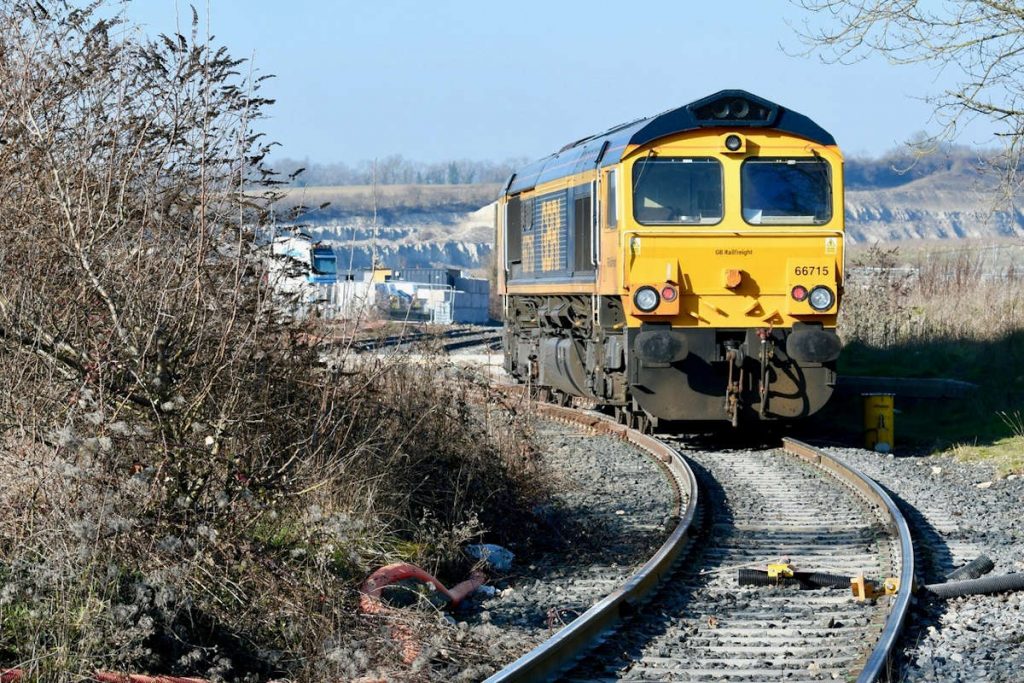
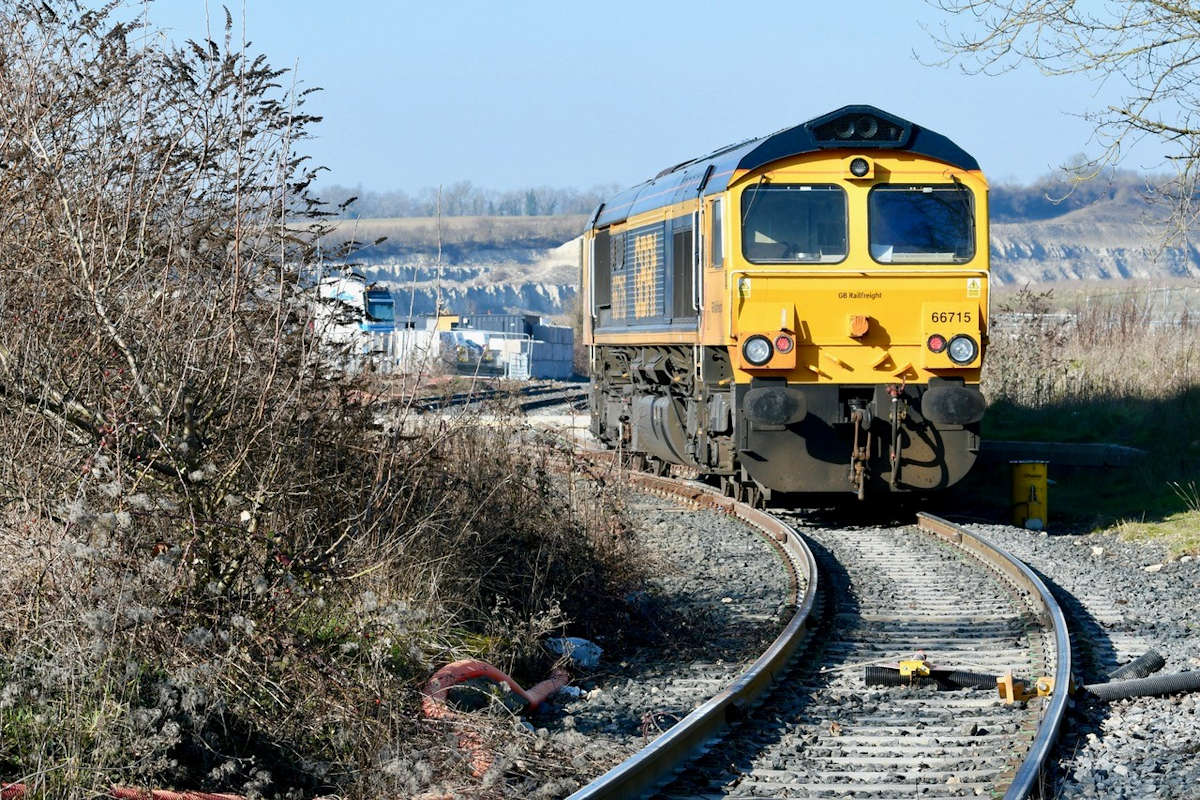
- Having propelled 6L05, the 07.45 Willesden to Foxton spoil working, into the exchange sidings GB Railfreight Class 66 No. 66715 is seen light engine in the quarry sidings. It will later depart with the empties to Cambridge to run round and thence back to Willesden. The disused quarry face can be seen in the background. 7th February 2023. Photo: Michael Smyth.
-
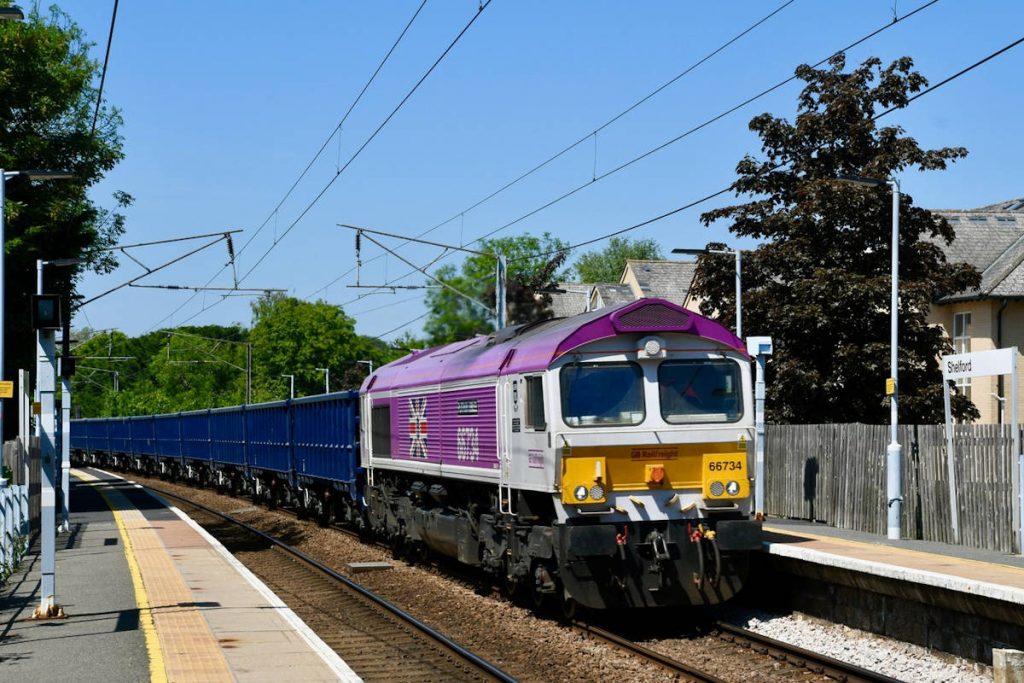
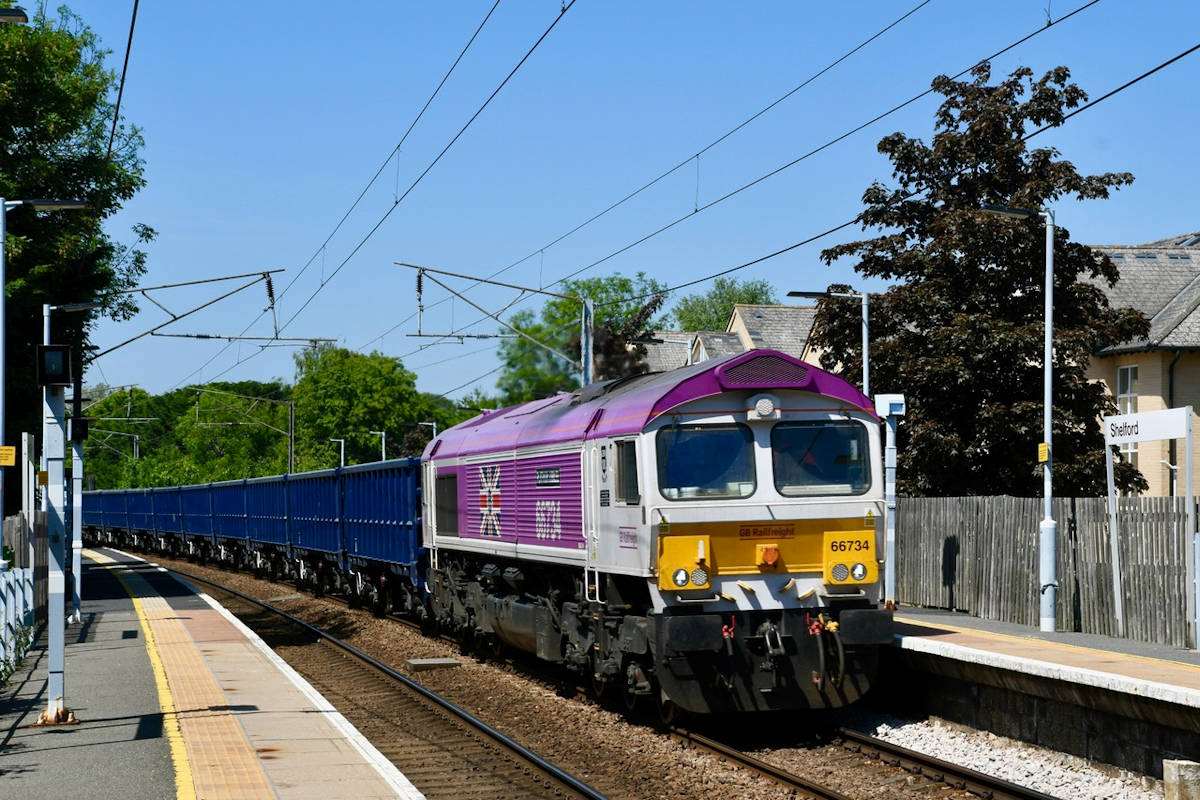
- Having run round at Cambridge station, Class 66 No. 66734 ‘Platinum Jubilee’ heads South through Shelford on 8th June 2023 with 6M04, the 11.57 Barrington Quarry to Willesden Euroterminal spoil empties from the HS2 project. Photo: Michael Smyth.
-
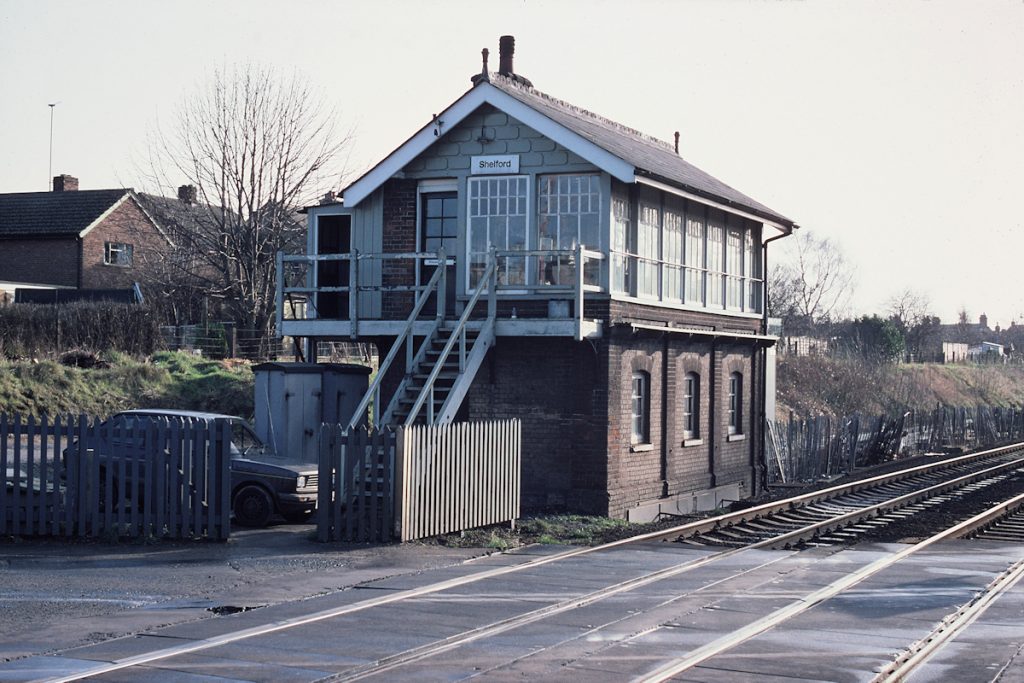
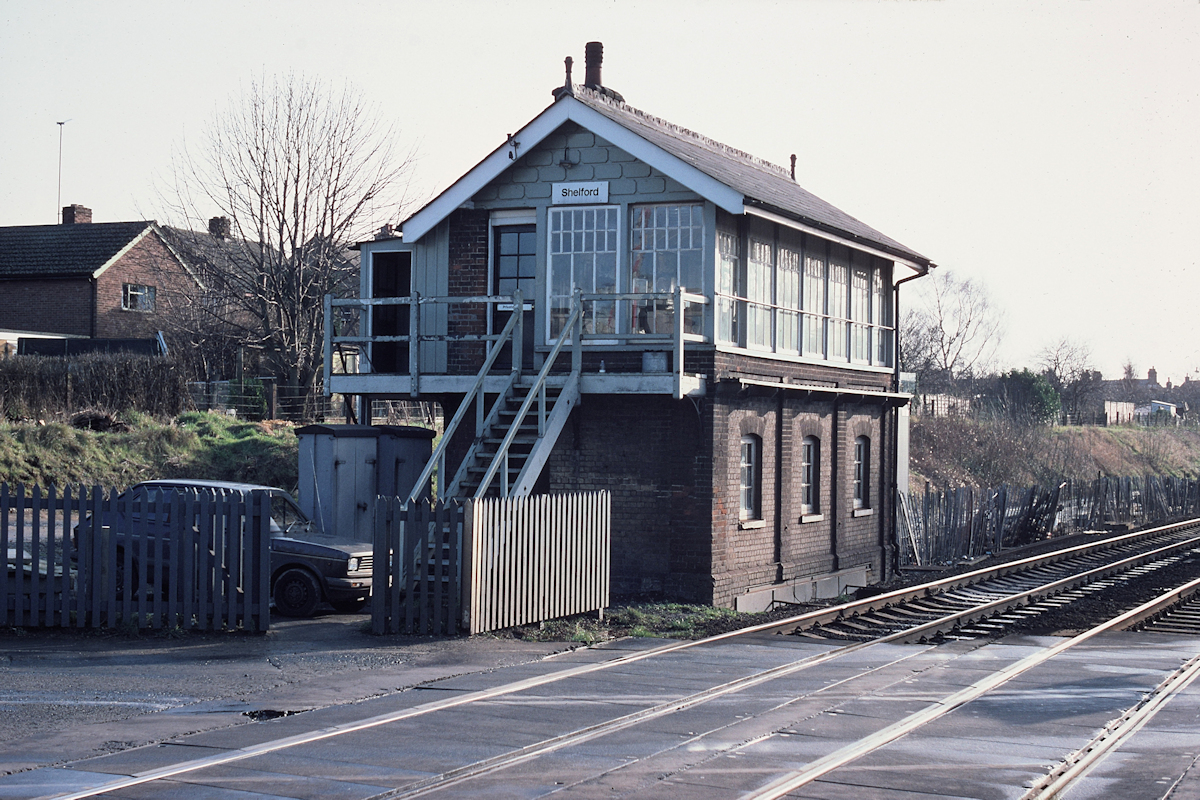
- The station immediately to the South of Shepreth Branch Junction is Shelford, where the solid brick signal box contrasts with the all-wooden structure at the junction. It is seen on January 14th 1983 is a weak Winter sun. Photo: Stewart Jolly.